
Stock Markets June 16, 2026 05:43 AM

SoftBank and OpenAI JV Unveils AI-Powered 'Patching as a Service' for Japan

New offering aims to protect critical infrastructure from AI-enabled breaches as workforce expands to support rollout

By Priya Menon
Share
Twitter Reddit Facebook LinkedIn

SoftBank Group has introduced a cybersecurity service built on OpenAI models, named 'Patching as a Service', to address breaches facilitated by artificial intelligence. The product will be deployed in Japan through a joint venture formed last November between SoftBank Corp and OpenAI. Company executives outlined plans to scale staffing from about 50 people to roughly 1,000 and reiterated the strategic importance of defending Japanese infrastructure, while noting broader security concerns linked to advanced AI models.

SoftBank and OpenAI JV Unveils AI-Powered 'Patching as a Service' for Japan
Summarize with
ChatGPT Perplexity Claude Grok Gemini

Key Points

  • SoftBank launched 'Patching as a Service', an AI-driven cybersecurity product, to be rolled out in Japan through a joint venture with OpenAI created last November.
  • SoftBank founder Masayoshi Son emphasized the service's role in defending critical Japanese infrastructure and described leveraging OpenAI technology as an obligation.
  • SoftBank's committed investment in OpenAI is slated to total $64.6 billion by the end of 2026; the rollout team will expand from about 50 people to roughly 1,000.

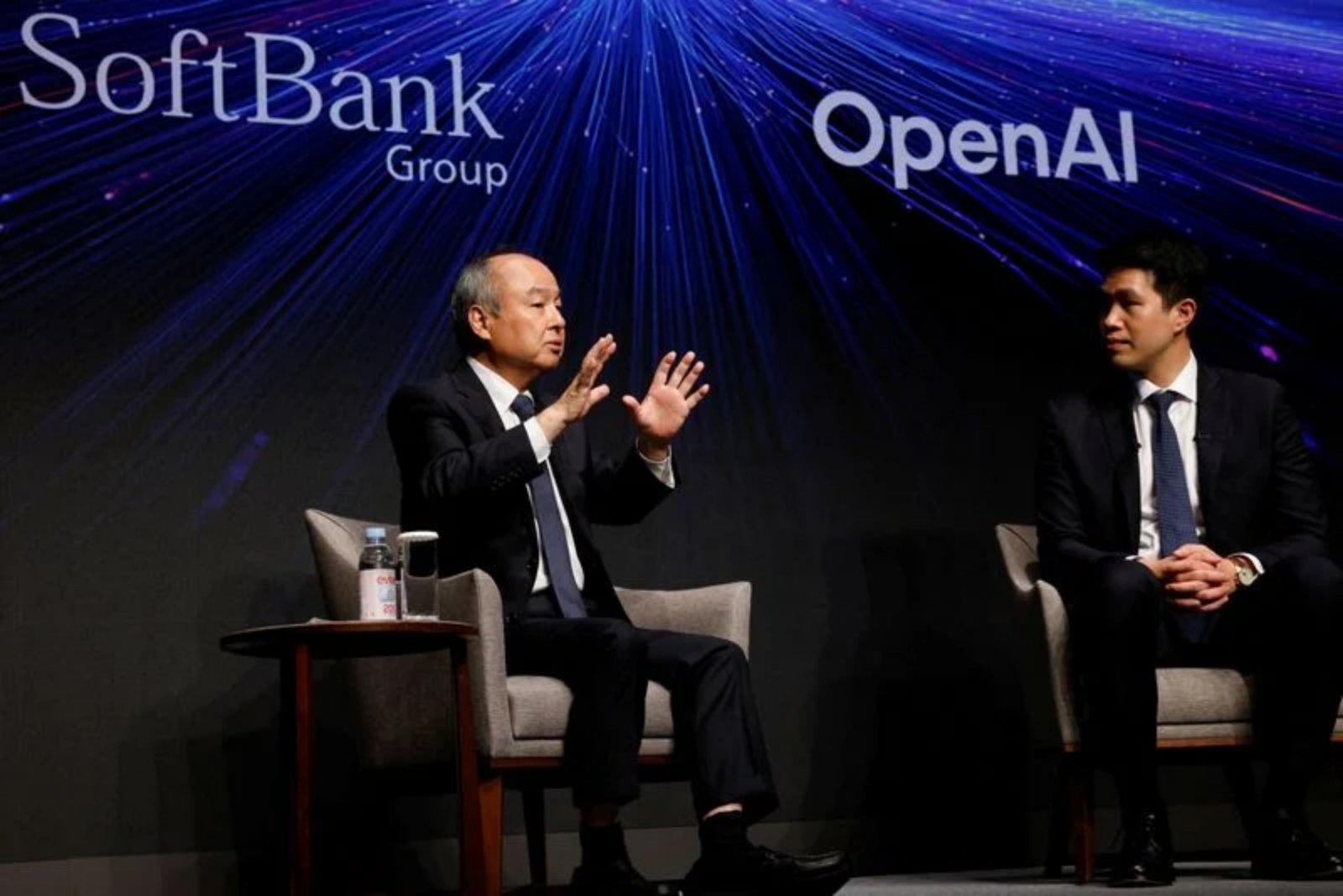
SoftBank Group on Tuesday announced the launch of a cybersecurity product intended to counter breaches enabled by artificial intelligence. Branded "Patching as a Service," the offering is slated for deployment in Japan through the joint venture created in November between SoftBank Corp, the group's domestic telecommunications unit, and OpenAI.

The move tightens the two firms' collaboration on AI integration services for Japanese enterprises and arrives amid heightened concern over the security implications of advanced AI tools. Company executives presented the product at an event for enterprise clients in Tokyo.

Masayoshi Son, SoftBank founder and chief executive, framed the initiative as a defensive measure for national infrastructure, saying, "We want to create a system where we will be able to defend critical Japanese infrastructure." Son added, "We want to leverage the new weapon of OpenAI to defend, we see this as our obligation."

The launch follows recent actions by other governments focused on national security risks tied to advanced AI. Last week, the U.S. government suspended access to Anthropic's Fable 5 and Mythos 5 models for foreign nationals over national security concerns - a development referenced during the broader industry discussion about AI-related threats.

SoftBank Group is also a major financial backer of OpenAI. The companies disclosed that SoftBank's cumulative committed investment in OpenAI is projected to reach $64.6 billion by the end of 2026.

Operationally, SoftBank Corp's chief executive Junichi Miyakawa said about 50 people are currently working on the product rollout. That workforce is planned to expand to roughly 1,000 employees as deployment progresses across Japan, according to Miyakawa's remarks at the presentation.

The initiative underscores a focus on using AI tools to fortify defenses against AI-enabled cyber threats rather than solely as offensive capabilities. The product will be provided domestically through the SoftBank-OpenAI joint venture, reflecting a targeted approach to protecting Japanese enterprise and critical infrastructure clients.


Context and focus

The new service positions the joint venture to offer AI-driven cybersecurity to corporate and infrastructure operators inside Japan, leveraging OpenAI models under SoftBank's commercial and strategic umbrella. Company statements highlighted both the need to address new security vectors created by AI and a commitment to scale human resources to support enterprise deployments.

Risks

  • Security concerns tied to advanced AI models - highlighted by recent U.S. restrictions on Anthropic's Fable 5 and Mythos 5 - underline uncertainty about how AI capabilities could be misused, affecting sectors that rely on digital infrastructure.
  • Execution and scaling risks as the product deployment grows from an initial team of around 50 to about 1,000 people, with implications for operational readiness in telecommunications and enterprise services.
  • Dependence on AI model performance and integration raises potential implementation and reliability uncertainties for clients in critical infrastructure and corporate IT environments.

More from Stock Markets

SpaceX to Buy Cursor Creator Anysphere in $60 Billion All-Stock Deal Jun 16, 2026 SpaceX to Acquire Anysphere for $60 Billion to Strengthen Enterprise AI Push Jun 16, 2026 Deutsche Bank Upgrade Drives GEA Shares Higher as Fundamentals Hold Steady Jun 16, 2026 Brenntag Shares Slip After Deutsche Bank Cuts Rating and Price Target Jun 16, 2026 Goldman Says Tesla's Q2 Deliveries Appear to Be Outpacing Street Estimates Jun 16, 2026