
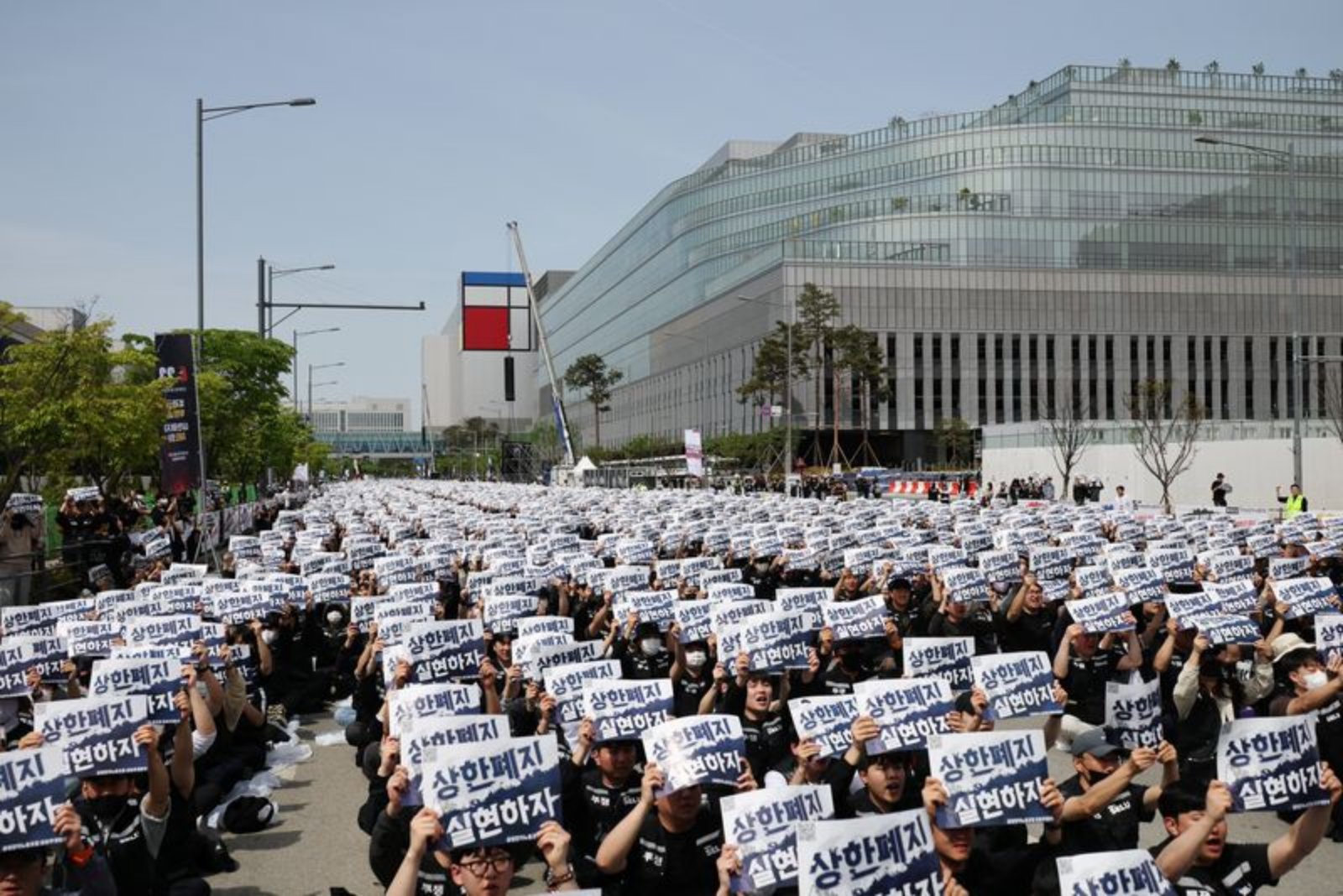
SEOUL, May 12 - Negotiations between Samsung Electronics and its labour union reached an impasse on Tuesday as union representatives issued an ultimatum: absent a mediation proposal within two hours, they would walk away from ongoing pay talks. The discussions, which have been carried out under a government-mediated framework, have not succeeded in bridging the divide between the two sides after lengthy sessions.
According to union representative Choi Seung-ho, Samsung has proposed allocating 10% of operating profit to a performance bonus pool. Choi told reporters the union had been waiting for a mediation proposal for three hours and indicated the possibility of abandoning talks if no proposal materialized within the two-hour window.
The union is pressing for a more generous arrangement. Its demands include a commitment from the company to dedicate 15% of operating profit to the performance bonus pool, elimination of the existing cap on bonus pay that is set at 50% of annual base salary, and a pledge that any agreed changes would remain in place beyond the current year. The union framed these requests as responses to what it describes as a significant shortfall in bonus pay relative to a rival employer.
Workers at Samsung have voiced anger about a widening bonus gap with SK Hynix. That rival company removed its bonus cap last year, and the union says bonuses at SK Hynix were more than three times higher than those paid by Samsung, a development that helped fuel a surge in Samsung union membership.
Union frustration has been amplified by Samsung's strong financial performance. The company recorded record profits as demand for chips rose in tandem with the AI boom, and last week reached a market capitalisation above $1 trillion, becoming only the second Asian company to do so after TSMC, according to the information cited in the talks. Samsung did not immediately respond to requests for comment.
Context for markets and industry
- The dispute centers on bonus structures tied to operating profit, a matter that directly affects employee compensation and company cost allocation.
- Sectoral dynamics in semiconductors are relevant, as competition over talent and rewards between chipmakers is a central grievance cited by union members.