
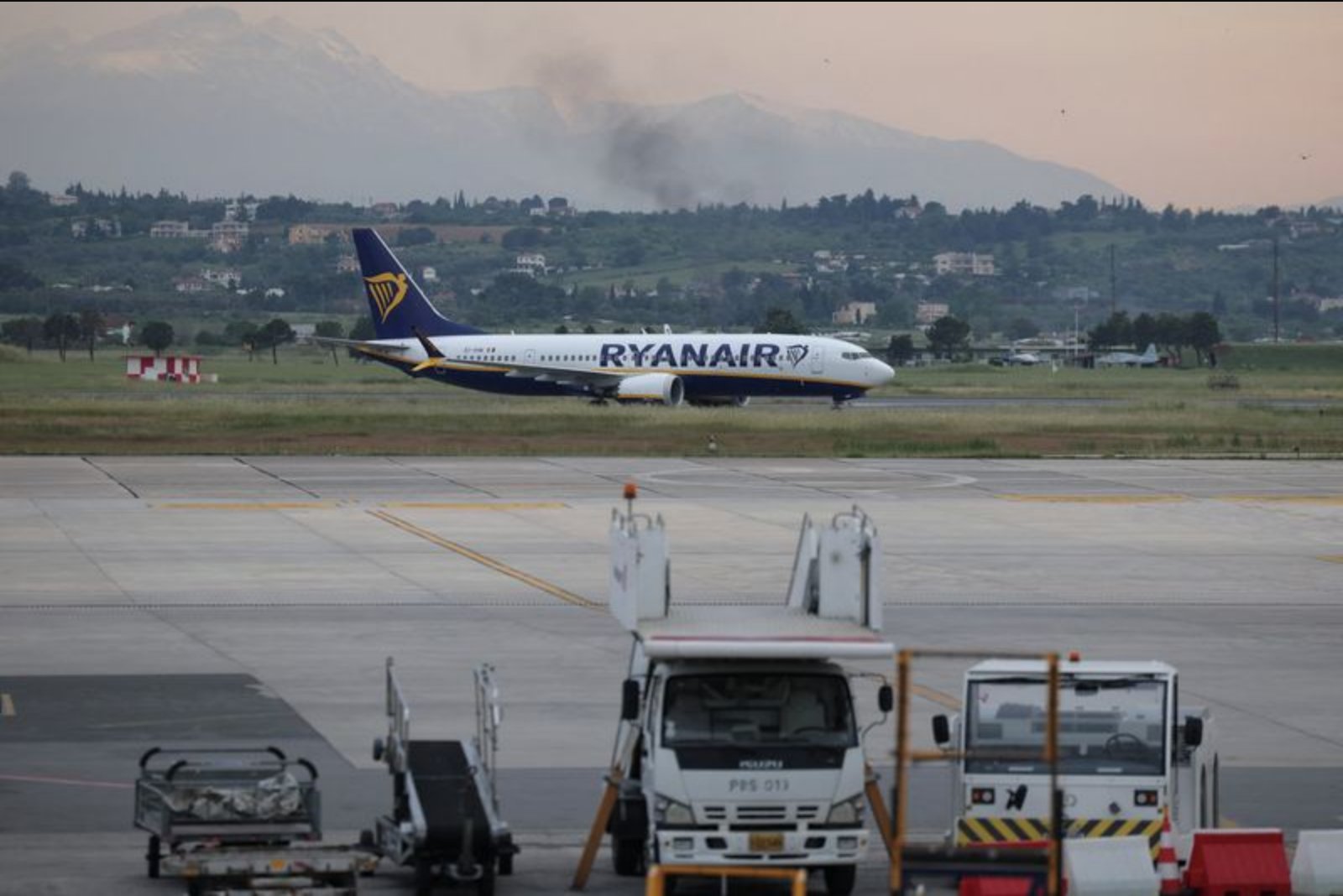
Ryanair has confirmed it will shut its Thessaloniki operating base for the upcoming winter season and scale back services to the northern Greek city after negotiations with airport operator Fraport stalled over higher charges, the carrier said on Friday.
Speaking to reporters in Athens, Ryanair’s Chief Commercial Officer Jason McGuinness said there has been no progress in talks with Fraport, which he said has increased fees across several Greek airports. "Fraport Greece continued to increase charges, which are now 66% above pre-Covid level," McGuinness said.
Under the announced changes, Ryanair will remove three aircraft currently based in Thessaloniki, cutting 500,000 seats and suspending 10 routes this winter. The carrier, which operates 95 hubs across Europe where it houses aircraft and bases cabin crew, also said it will reduce capacity at Athens for the winter season. Combined, the reductions across Greece amount to a loss of 700,000 seats and 12 routes.
Operations at the island airports of Chania and Heraklion will be suspended during off-peak months, McGuinness said. Aircraft freed by the cuts will be redeployed to markets in Albania, Italy and Sweden, "where airports have passed on their government’s aviation tax savings, resulting in more connectivity, tourism and jobs this winter," he added.
Fraport Greece pushed back on claims linking Ryanair’s decision to airport fees or the Airport Development Fee (ADF) imposed by the Greek State. In a statement, Fraport said any such claims "are entirely unfounded." It maintained that "The decision to reduce winter operations at Thessaloniki Airport Makedonia is exclusively related to Ryanair’s commercial strategy, business model, and profitability considerations."
Ryanair last month announced the closure of its base in Berlin, citing higher fees and taxes. The airline did not say on Friday whether the Thessaloniki move would result in job losses among the roughly 100 employees who work at the local base.
Ryanair warned that its exit could have a severe local impact: the carrier provided 90% of Thessaloniki’s international capacity last year, and McGuinness said the withdrawal could be "devastating for the city." Greek media and municipal authorities had already flagged the potential closure and expressed concern about the consequences for tourism-related employment.
The company framed its reallocations as a response to different airport and government pricing decisions in other markets, while Fraport framed the issue as an internal commercial choice by Ryanair. Beyond Thessaloniki and Athens, the carrier has signalled seasonal service suspensions at other Greek airports, reflecting a shift in where it sees the most favorable cost structures and regulatory settings for winter operations.
The changes underscore a direct operational response from a major low-cost carrier to perceived shifts in airport charging and taxation within a key tourism market. For Greece, where inbound tourism is a significant economic driver, the move raises questions for local connectivity and seasonal tourism employment in affected cities and islands.
Facts at a glance
- Ryanair will close its Thessaloniki base this winter and cut flights after talks with Fraport made no progress.
- Three aircraft will be removed from Thessaloniki, reducing 500,000 seats and 10 routes this winter; combined reductions across Greece total 700,000 seats and 12 routes.
- Operations at Chania and Heraklion will be suspended during off-peak months; aircraft will be reallocated to Albania, Italy and Sweden.