
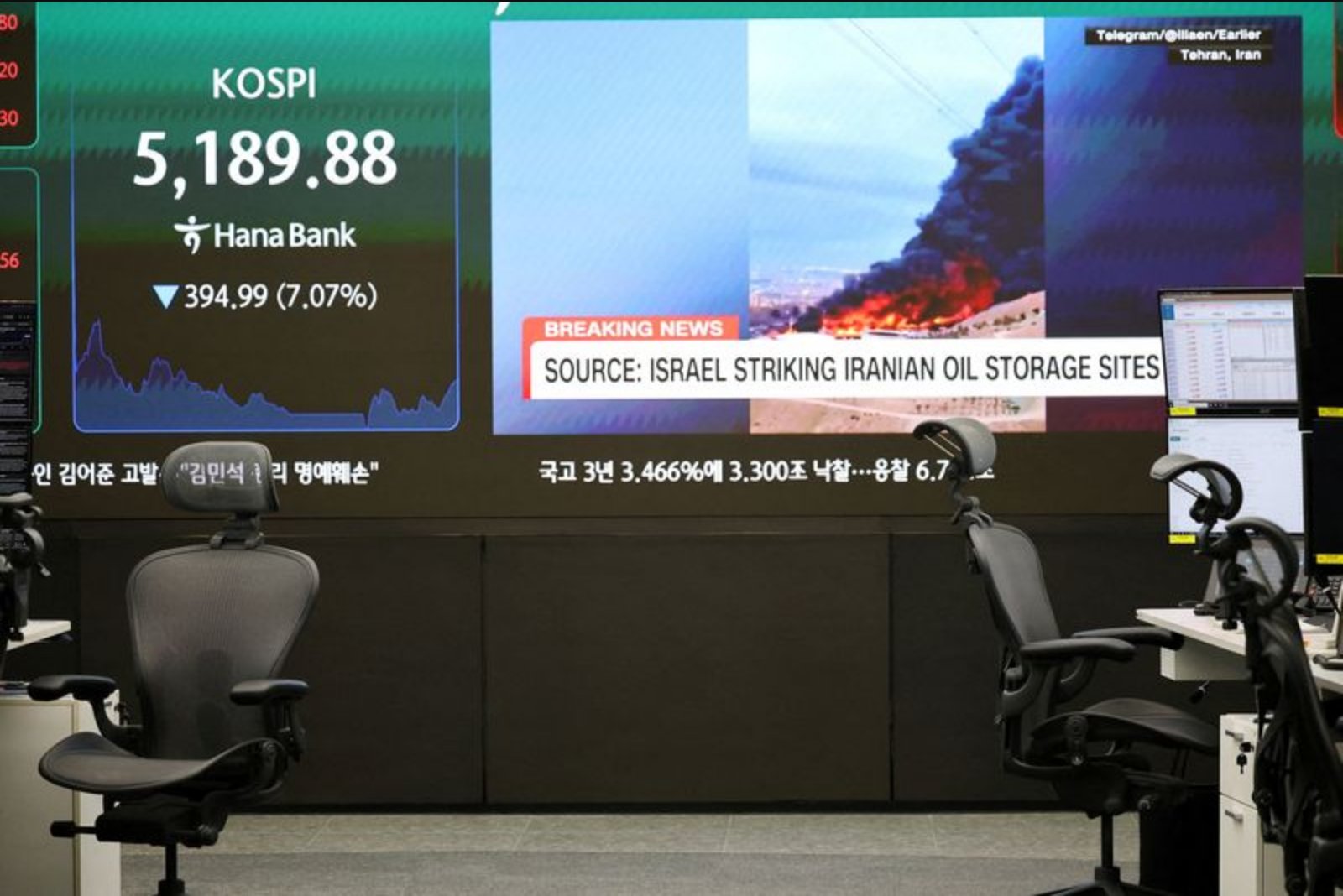
SEOUL/SINGAPORE, March 9 - Retail participants across Asia responded to a dramatic rise in oil prices by stepping up purchases financed with margin and other borrowed cash, according to traders and dealers in the region. The move came as an energy-driven shock sent crude sharply higher and pressured most other assets, leaving the dollar among the few havens.
Benchmark crude briefly climbed to nearly $120 a barrel on Monday, a surge that accompanied broad falls in stock markets, sovereign bonds and precious metals on fears of a prolonged conflict in Iran. Despite the market rout, small investors in Seoul emerged as net buyers for the session, according to local trading data.
Retail investors in Seoul were net purchasers on Monday to the tune of 4.6 trillion won ($3 billion), bringing their cumulative month-to-date purchases to 15.2 trillion won. The activity included individuals using borrowed funds to increase exposure or to replenish positions that had lost value.
One such investor, Kwon Soon-kuk, 34 and based in Seoul, sold about 60 million won worth of holdings in a defence company, Hyundai Rotem, and other names before buying quality blue-chips such as Samsung Electronics that he viewed as attractive on the dip. "No matter how much it fluctuates up and down, it will eventually go the way it is headed towards," he said as losses in the Kospi extended to as much as 8.8%.
Brokers reported that clients have been making fresh margin calls and adding to positions even after suffering intraday losses. That behaviour reflects a pattern that became common after retail trading surged during pandemic lockdowns - an inclination to buy market dips that has often paid off in prior multi-year rallies and has encouraged heavier turnover and greater influence from the retail cohort.
Activity was not confined to Korea. Chinese investors routed trades into Hong Kong through the Stock Connect program at unprecedented levels, with buying through the link reaching a record HK$37 billion ($4.73 billion) on Monday as retail buyers chased perceived bargains. The Hang Seng Index fell 1.3% while a gauge of Chinese companies listed in Hong Kong dropped 0.5%, a relatively mild decline compared with other major Asian benchmarks.
Platforms and brokers reported higher client demand for buying the dip. Michael McCarthy, CEO of Moomoo Australia, said the most common question he receives is, "When do I buy the dip?" He noted that volumes on his platform rose about 25% compared with Friday's trading, and that nearly 55% of trades by dollar value on Monday were buys. Most trading on Moomoo was concentrated in Australian stocks and exchange-traded funds, McCarthy added.
The jump in energy prices also reinvigorated demand for trading in oil and gas products. Kyle Rodda, a senior market analyst at Capital.com in Melbourne, said the firm had observed an "extreme surge" in activity in its energy products, with trading in oil and gas more than 1000% above average. He added that the volatility itself was a clear draw for many traders, and that other data pointed to dip-buying in U.S. indices as well as in the Nikkei and the DAX.
At CMC Markets, Asia and Middle East head Christopher Forbes said clients were adding leveraged oil positions, buying dollars and shifting out of crypto into harder assets such as real estate or gold. "They’re positioning for higher oil prices ... they’ve made good money from $62 to here in a short period, and expect the trend is higher, even with some profit taking," he said.
Market stress was evident across multiple venues. Tokyo’s indices slid over 5% at one point, with turnover there hitting its highest level in more than four months. Brent futures recorded one of their largest single-session gains on record as oil rallied sharply.
Even as many retail accounts increased exposure, platform operators warned that most client portfolios suffered losses on Monday. Moomoo Australia reported that a majority of its customers' portfolios were down for the session.
Sentiment measured on social and discussion platforms also reflected the focus on energy. SwaggyStocks, which tracks mentions and sentiment on the widely followed r/WallStreetBets Reddit thread, registered oil as the leading topic with more than 1,650 mentions over a recent 12-hour period.
Market strategists noted the paradox of retail activity in the midst of what some saw as a broader macro risk. "The oil shock is big enough to make investors worry about a broader macro hit," said Charu Chanana, chief investment strategist at Saxo Bank in Singapore. Yet retail traders’ attention often quickly pivoted between fear and the prospect of quick profits.
Huh Jae-hwan, an analyst at Eugene Investment Securities in Seoul, explained the mindset succinctly: "Retail investors are buying at low prices on expectations that stock prices will recover fast when the crisis goes by."
Across the region and on various trading venues, market participants described a mix of panic-driven selling and opportunistic buying. Broker reports and platform metrics pointed to increased margin usage, elevated volumes and record cross-border buying into Hong Kong as the most tangible signs of retail engagement on a day marked by an energy-driven shock to financial markets.
($1 = 1,492.7000 won)
Summary
Retail investors across Asia increased leveraged purchases as oil prices surged and markets broadly declined. Seoul saw net retail buying of 4.6 trillion won on Monday, pushing month-to-date purchases to 15.2 trillion won, while Hong Kong Stock Connect buying hit a record HK$37 billion. Brokers reported elevated margin use and platforms registered significant volume gains, even as many client portfolios incurred losses.