
Raymond James' latest monthly industry monitor reported a 2% drop in the infrastructure and construction sector in March 2026, compared with a 4% decline in the broader TSX composite during the same month.
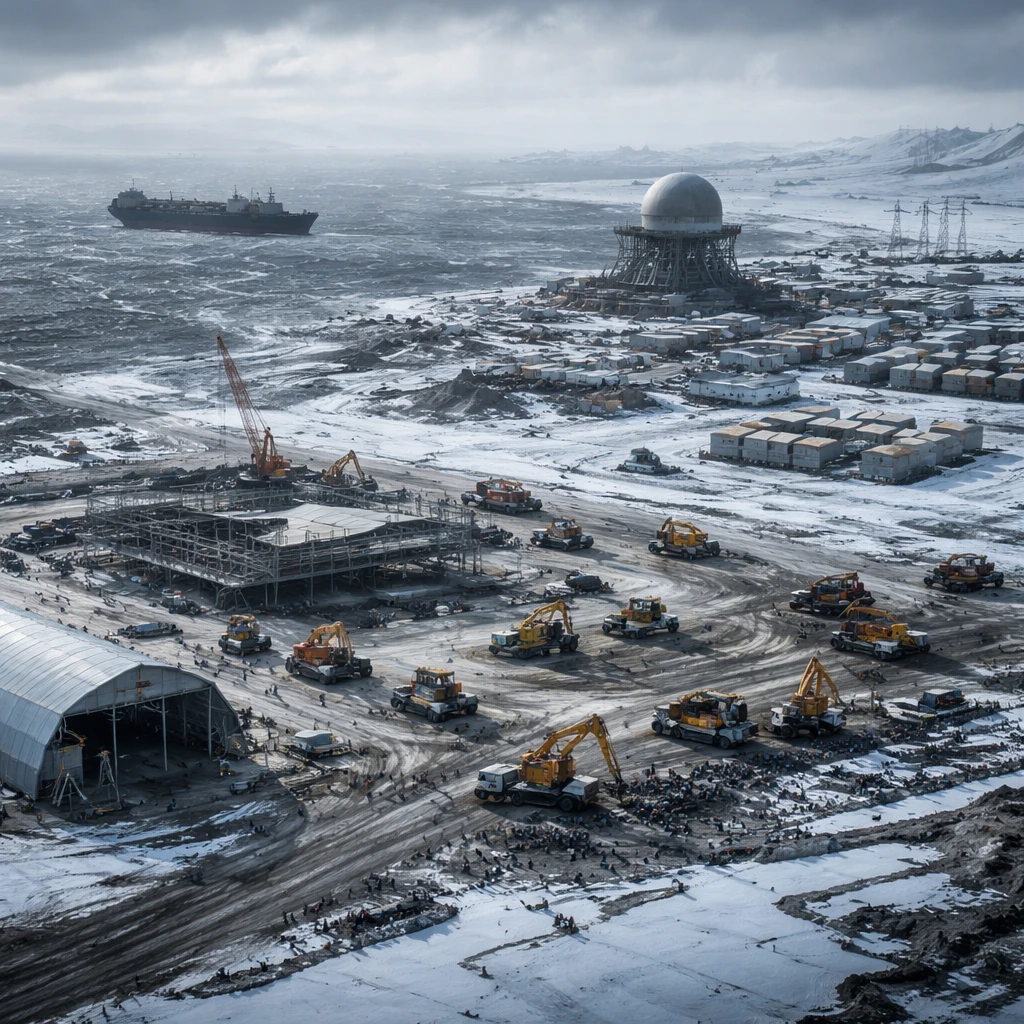
The firm noted an Aecon-led joint venture was awarded the Stage 1 contract for the Arctic Over-the-Horizon Radar Program earlier in March. That contract is part of a broader $35 billion initiative to upgrade military installations in the Arctic, with work planned on airfields, hangars, storage facilities and accommodations. Raymond James said the program's scale and complexity should support sustained demand for defence-qualified contractors, engineering firms and operators of remote camp facilities.
On another front, Raymond James identified intensified global shipping disruptions in March that followed a US and Israel attack on Iran. The firm said the turmoil affected shipments of oil and gas, fertilizers and containerized freight. Raymond James highlighted that reduced global container fluidity has the potential to impact port volumes around the world, including ports in North America.
The monitor also covered commitments by major technology firms, including Google, Microsoft, Amazon and Meta, to fund additional power generation and grid upgrades needed to support AI-driven data centers. Those pledges came after President Trump’s State of the Union address, in which he urged hyperscalers to "bring their own power." Raymond James described the tech-sector commitments as non-binding and suggested they reflect a growing policy and regulatory focus on cost causality.
According to the report, the emphasis on cost causality could have implications for how utilities and independent power producers approach rate design and interconnection frameworks. Raymond James did not elaborate on specific regulatory outcomes, but indicated that the evolving policy environment warrants attention from market participants tied to power delivery and grid interconnection.
Overall, the monitor linked the sector-level performance in March to a mix of defence program activity, international shipping disruptions and emerging utility-sector issues driven by large technology customers' power strategies.
Summary
Raymond James' report shows modest weakness in infrastructure stocks in March and points to several structural and near-term influences, including a major Arctic defence contract, global shipping interruptions, and non-binding tech commitments to fund power and grid upgrades for AI capacity.
- Key points
- The infrastructure and construction sector fell 2% in March 2026 while the TSX composite declined 4%.
- An Aecon-led joint venture won the Stage 1 Arctic Over-the-Horizon Radar Program contract, part of a $35 billion Arctic upgrade plan.
- Global shipping disruptions after a US and Israel attack on Iran affected oil and gas, fertilizers and container volumes; major tech firms pledged to fund power and grid upgrades for AI data centers.
- Risks and uncertainties
- Shipping disruptions tied to the US and Israel attack on Iran could reduce container and port volumes worldwide, including in North America, creating uncertainty for trade-dependent sectors.
- The tech-sector commitments to fund power and grid upgrades are non-binding, leaving uncertainty over the timing, scale and regulatory treatment of any resulting infrastructure investments.
- Sector performance may remain volatile in the near term, as reflected by the March declines in both the infrastructure sector and the TSX composite.