
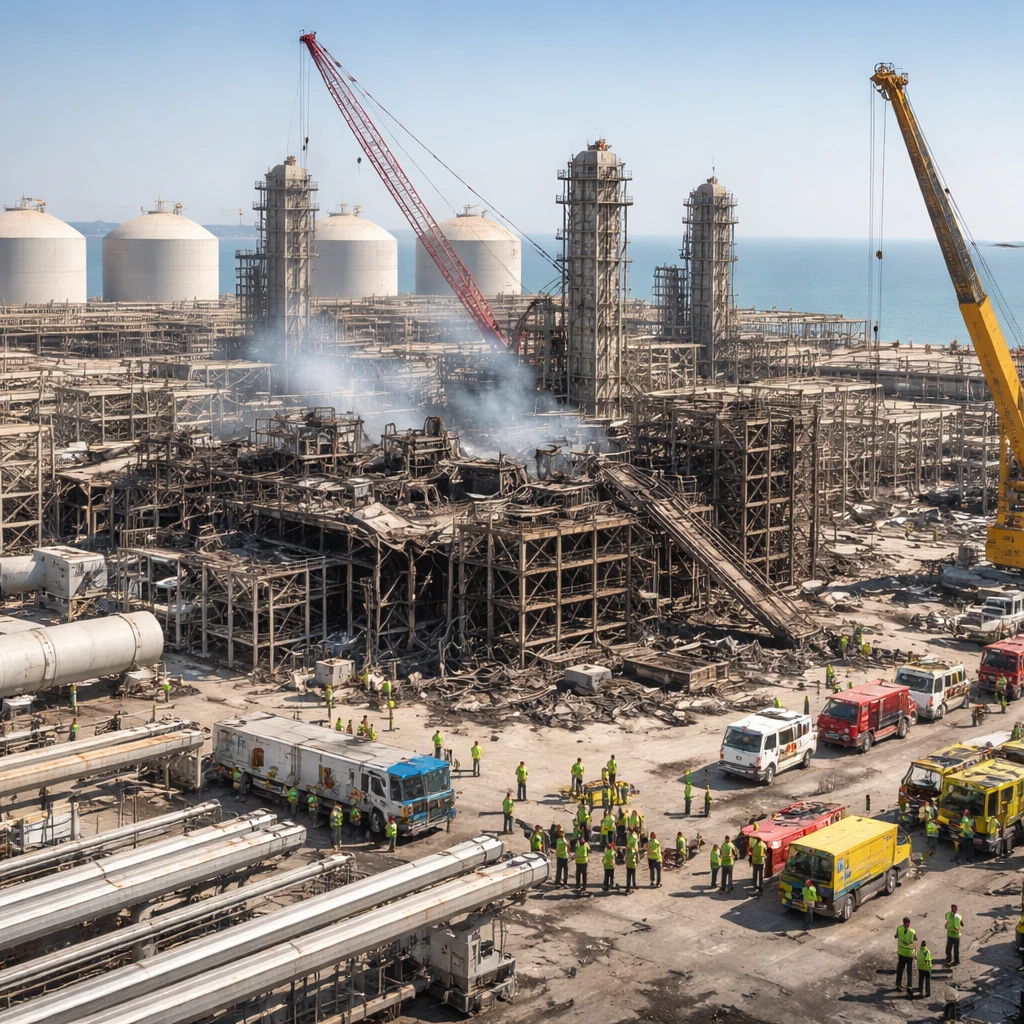
QatarEnergy has formally declared force majeure on a set of liquefied natural gas (LNG) supply contracts with Italy, Belgium, South Korea and China following missile attacks that struck its Ras Laffan production hub last week.
The company said the attacks, which took place on Wednesday and Thursday, inflicted substantial damage at the site. At Ras Laffan, two LNG trains and one gas-to-liquids train sustained damage in the incidents.
QatarEnergy is carrying out ongoing assessments to determine the full extent of the harm to its operations. As part of that process, the company is evaluating timelines for repairs to the affected facilities, but has not provided a detailed schedule.
By declaring force majeure, QatarEnergy is invoking contractual provisions that recognize circumstances beyond its control and permit a temporary suspension of its obligations to deliver LNG to the listed countries. The measure affects deliveries tied to contracts with Italy, Belgium, South Korea and China while the company finalizes its assessment and repair plans.
The situation remains fluid as QatarEnergy continues its evaluation of both damage and remediation needs. The company has indicated that it is in the process of determining how the incident will affect operational capacity and the schedule for restoring the damaged trains to service.
Summary
Following missile strikes at Ras Laffan last week, QatarEnergy declared force majeure on LNG supply contracts with Italy, Belgium, South Korea and China after two LNG trains and a gas-to-liquids train were damaged. The firm is assessing the full impact and determining repair timelines, and the force majeure allows temporary suspension of delivery obligations to the affected buyers.
Key points
- QatarEnergy has declared force majeure on LNG contracts with Italy, Belgium, South Korea and China after missile attacks damaged facilities at Ras Laffan.
- The attacks damaged two LNG trains and one gas-to-liquids train at the production hub.
- QatarEnergy is assessing the overall operational impact and evaluating repair timelines; force majeure permits temporary suspension of delivery obligations while circumstances are beyond the company’s control.
Risks and uncertainties
- The full operational impact of the damage is still under assessment, introducing uncertainty for production capacity and timing of resumed deliveries.
- Repair timelines for the damaged LNG and gas-to-liquids trains have not been finalized, leaving the duration of supply disruptions uncertain.
- Temporary suspension of contractual delivery obligations under force majeure creates immediate uncertainty for the buyers in Italy, Belgium, South Korea and China regarding when contracted volumes will be available.
Note: The article presents the facts released about the attacks, the damage reported to the Ras Laffan facilities, QatarEnergy’s force majeure declaration, and the company’s ongoing assessments. It does not include additional details beyond those provided by the company’s statements about the incidents and their immediate consequences.