
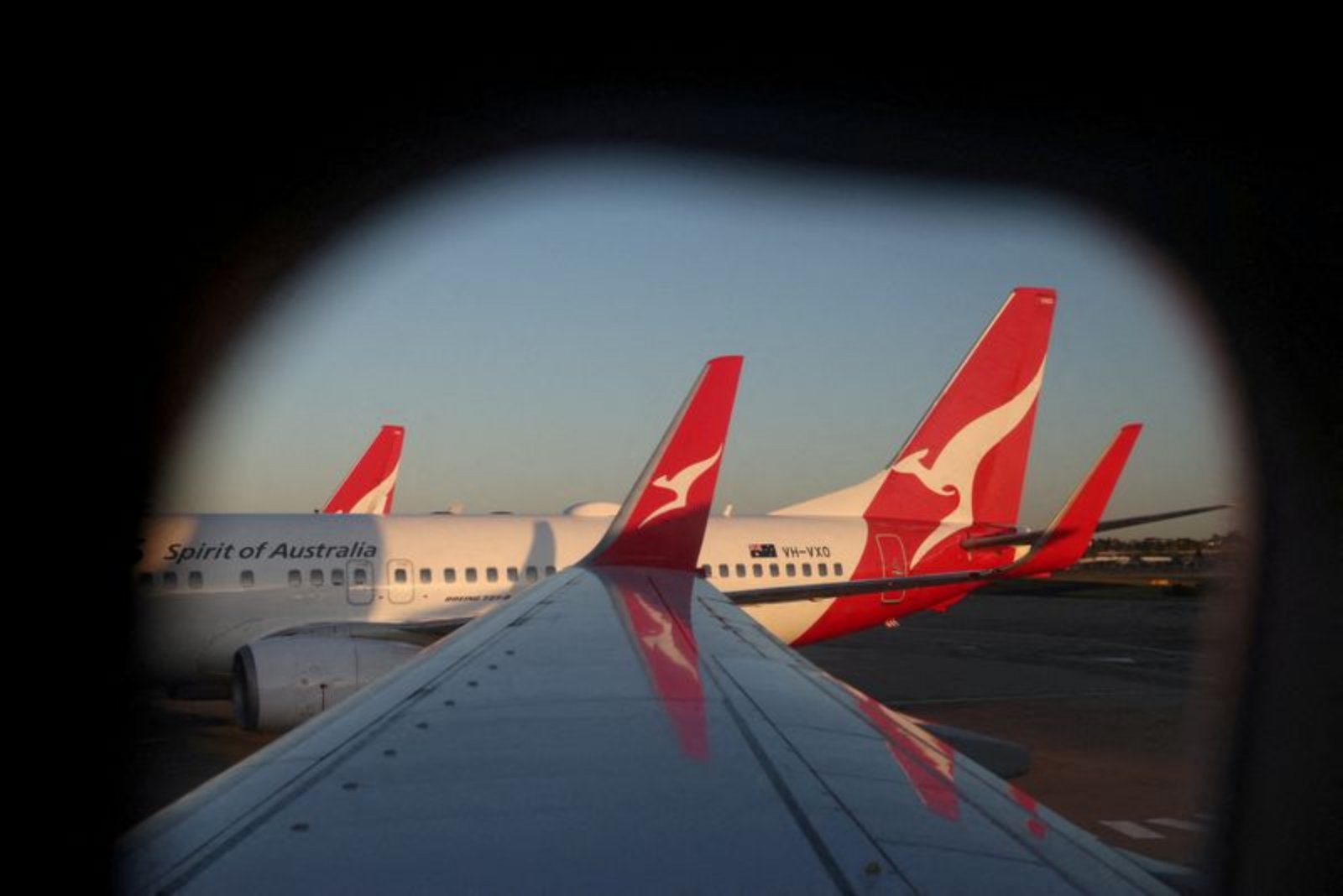
Qantas Airways is adjusting its fleet deployment to add seats on European routes as demand rises following disruptions in Middle Eastern airspace. The airline plans to repurpose some Boeing 787s previously assigned to U.S. routes and transfer A330 flying from domestic sectors onto international services to meet the uptick in bookings.
The carrier joins other airlines, including Hong Kong's Cathay Pacific, that have been increasing capacity to Europe amid a surge in travellers seeking to avoid Gulf airspace. Airlines have reacted to recent closures of key Gulf hubs by routing flights around the region, which pushed fares sharply higher earlier this month as passengers sought alternative paths between Asia and Europe.
Qantas outlined specific schedule upgrades that will take effect as part of the redeployment. The Perth-Rome connection will move from four return services per week to a daily frequency. Separately, the Paris service will be boosted from three return flights per week to five; that Paris service will start in Sydney and operate via Singapore rather than originating in Perth, enabling roughly 60 additional passengers per flight.
Regional connectivity between Perth and Singapore will also be increased. The carrier will raise the frequency on that sector from daily to 10 return flights per week.
Qantas said it will contact travellers whose itineraries are affected by the changes. Those customers will be offered either alternative flights within 24 hours of their original departure time or the option of a refund, the airline added.
Addressing ongoing uncertainty, Qantas said: "The group continues to monitor the situation in the Middle East and its impact on fuel security, the price of fuel, and demand for travel, and will make further adjustments as required." The airline indicated it will continue to track developments and adapt scheduling and capacity decisions as necessary.
Operational details at a glance
- Some Boeing 787 aircraft shifted from U.S. routes to European services.
- Selected A330 domestic flying reallocated to international routes to add capacity.
- Perth-Rome: four return flights per week increased to daily.
- Sydney-origin Paris service increased to five return flights per week and will operate via Singapore, adding about 60 seats per flight.
- Perth-Singapore: frequency raised from daily to 10 return flights per week.
The carrier’s moves reflect operational adjustments aimed at accommodating higher demand on Europe-bound routes while monitoring fuel and security dynamics tied to developments in the Middle East.