
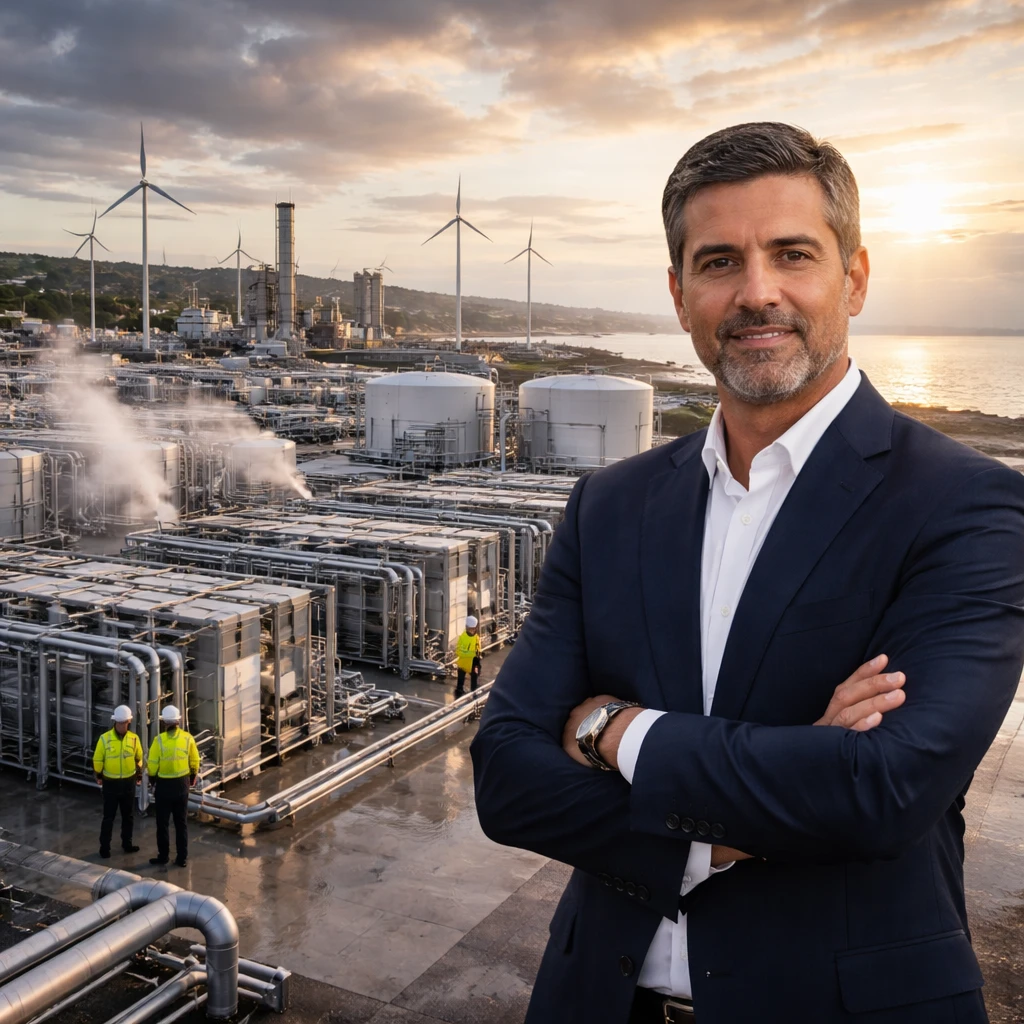
Earlier this month, Jose Luis Crespo assumed the role of chief executive officer at Plug Power Inc (NASDAQ:PLUG), stepping into leadership after a tenure as the company’s President and Chief Revenue Officer. In a wide-ranging discussion, Crespo outlined the operational and financial priorities he plans to pursue as Plug positions its hydrogen offerings for commercial scale and seeks to move the business onto a profitability path over the coming years.
Execution and three core markets
Crespo described execution as his immediate priority, translating Plug’s technology into sustainable, profitable growth. He identified three core market areas as the primary focus for that effort: electrolyzers, hydrogen production, and fuel cells for logistics. Crespo pointed to marquee customers already working with Plug, including Iberdrola/BP, Galp, Amazon, and BMW, as examples of the company converting technology into commercial workstreams.
He reiterated financial targets Plug has previously shared with the market. The company achieved positive margins in the fourth quarter of 2025 while delivering 13% revenue growth for the year, Crespo said. From that starting point, Plug is targeting positive EBITDA in the final quarter of 2026, followed by positive operating income in 2027 and full profitability in 2028. Crespo emphasized the intention to continue driving growth alongside margin improvement.
Large-scale electrolyzer deployments as proof points
Crespo highlighted Plug’s role in several industrial-scale electrolyzer projects in Europe as indicators of commercial readiness for green hydrogen. He described the 100-MW electrolyzer at Galp’s Sines refinery in Portugal as one of the largest renewable hydrogen deployments in Europe, and he framed that installation as an example of green hydrogen moving beyond pilot projects to industrial-scale operation.
Alongside that 100-MW system, Crespo noted a 25 MW electrolyzer project in Spain with Iberdrola and BP that is approaching commissioning. He said these systems are installed and progressing toward operation, and that they demonstrate Plug’s capability to deliver large-scale electrolysis systems in partnership with major energy companies.
From a geographic perspective, Crespo pointed to the Iberian Peninsula’s renewable resource base as a potential cost advantage, reinforcing his view that through these deployments Plug is demonstrating both technological leadership and a commercial role in electrolysis at industrial scale.
How scale feeds margins and predictability
For Crespo, projects such as Sines serve dual purposes: they generate near-term commercial revenue and they create the volume and operational data necessary to drive margin expansion over time. Delivering systems at scale alongside major energy partners builds a more predictable revenue base and produces engineering and operational insights that reduce cost and improve efficiency in subsequent deployments, he said.
This compounding effect of repeat deployments and the learning curve they produce is central to the company’s stated margin improvement trajectory. Crespo stressed that each completed deployment makes the next one more efficient and more profitable, and that the combination of scale and iterative learning is a core element of Plug’s path to sustainable profitability.
Europe’s commercial environment and Plug’s footprint
Plug has been active in Europe for 15 years, Crespo noted, and the company now employs more than 200 people across Spain, France, and the Netherlands. Plug manufactures systems in the region and is evaluating opportunities to expand further. Crespo characterized Europe’s structural advantages as including regulatory pressure for transport and industrial decarbonization, an established carbon price, and national hydrogen strategies that together create tangible near-term demand rather than only long-term targets.
While Crespo underlined Europe as a significant growth market and pointed to Plug’s 200-person team, engineering center, and manufacturing capability there, he was also clear that the company’s capital allocation approach is consistent globally: Plug will deploy capital where the underlying business case is strongest.
Key levers to bring green hydrogen costs down
Crespo identified three primary levers that determine competitive green hydrogen pricing. The first is the cost of electricity, which he described as the dominant variable in overall production economics. The second is electrolyzer efficiency, which directly affects how much hydrogen can be produced per megawatt-hour and thereby reduces unit cost. The third lever is capital costs, which encompasses not only the electrolyzer hardware itself but also the broader design and construction costs of hydrogen plants.
He emphasized that the way an electrolysis system is engineered and what elements are included within project scope can materially change the total cost of a plant. Plug said it is working concurrently on all three levers to drive down costs for customers.
Crespo also stressed a claimed operational advantage: Plug operates its own hydrogen production facilities using its technology in Georgia. He framed that as a unique feedback loop, where real operational learning from running hydrogen plants informs improvements in electrolyzer design and operation, and thereby reduces costs in future customer deployments.
Policy incentives, market timing and resilience
Government incentives have played a visible role in improving project economics, Crespo acknowledged. He cited the investment tax credit and production tax credit mechanisms as accelerators for customer adoption. In material handling, he pointed to the 30% investment tax credit as a factor that helps customers such as Walmart and Amazon scale deployments. On the electrolyzer side, Crespo referenced a production tax credit of up to $3 per kilo as improving returns and providing financing visibility for projects.
Nonetheless, Crespo said Plug’s strategy is not dependent on incentives. The company’s stated focus remains execution, reducing costs, and building a business that can stand on its own fundamentals. He pointed to 2025 as a year in which Plug demonstrated margin improvement and reduced cash usage while continuing to grow, and he said the company will build on that record. Crespo noted that policy incentives can accelerate the timing of adoption, but he insisted that the long-term market will be shaped by competitiveness, reliability, and scale.
Outlook and next steps
Crespo’s agenda for the near term centers on commercializing large-scale electrolysis and hydrogen production projects, improving operational efficiency through iterative learning, and meeting a sequence of financial milestones that culminate in profitability in 2028. His comments frame Plug’s European deployments as both validation of industrial-scale green hydrogen and as a critical mechanism to create predictable revenues and margin expansion.
For investors and industry observers, the coming quarters will provide additional data points on how effectively Plug can convert installed capacity and partner projects into the cash flow and operating leverage necessary to hit the timeline Crespo reiterated. The company’s strategy ties technical deployment and operational experience closely to its financial targets, placing execution, cost reduction, and market development at the center of the CEO’s early tenure.