
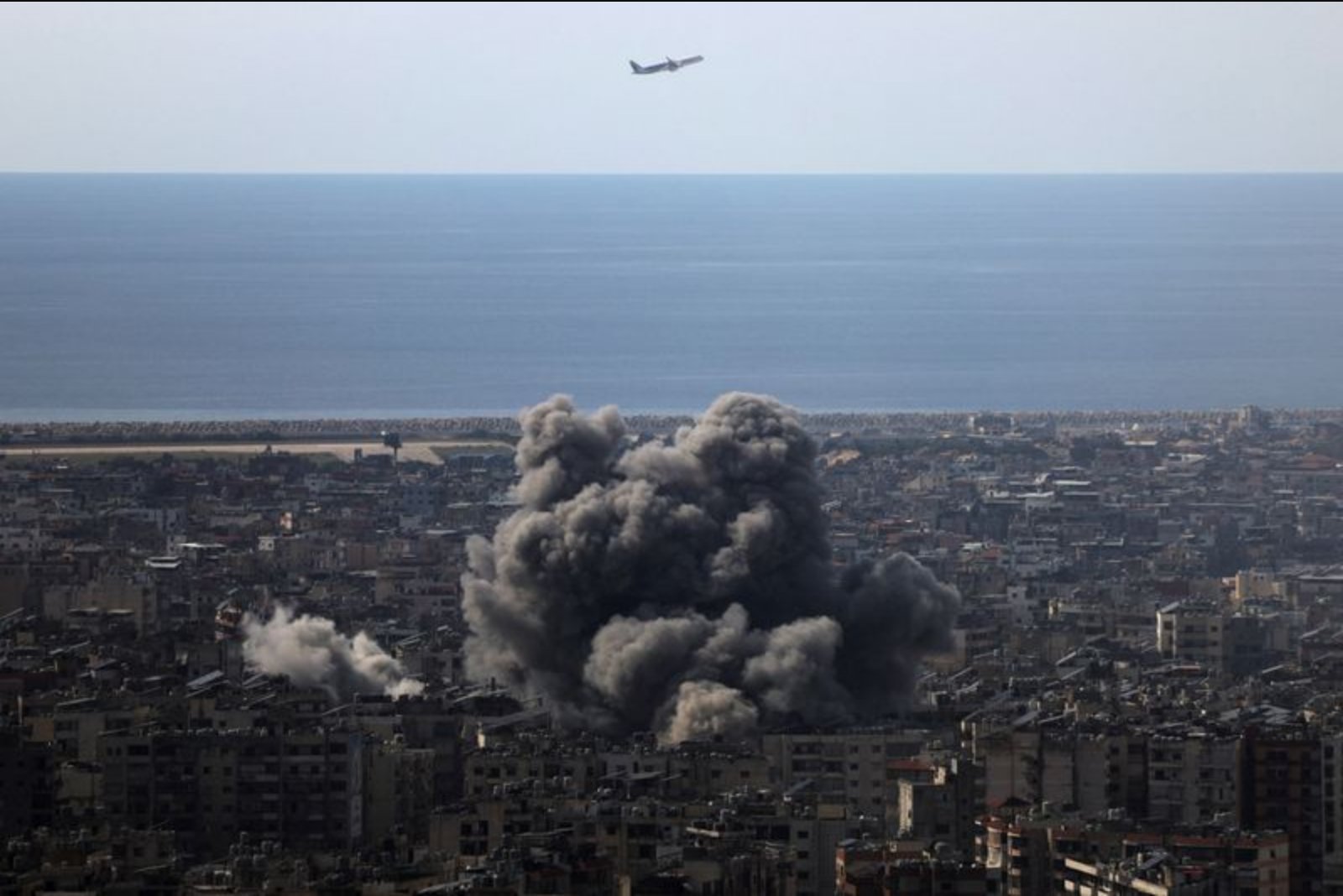
Airline crews are facing a mounting set of hazards above some of the world’s busiest hubs, as military activity and unmanned systems increasingly intersect with civil aviation. In the latest round of escalation tied to U.S.-Israeli operations against Iran and Tehran’s subsequent reprisals, hundreds of ballistic missiles and attack drones have been deployed in regions that overlap civil air routes, creating sharper operational challenges for pilots and air traffic managers.
Flights across the Gulf region were disrupted after retaliatory strikes targeted infrastructure, with airports struck and services suspended in several locations. The disruption led to the cancellation or grounding of numerous services from Dubai to Abu Dhabi, while a limited number of relief and repatriation flights managed to reach thousands of passengers left stranded by the initial wave of suspension.
Industry sources describe the current situation as the latest accumulation of pressures on airlines that have been building over recent years - a sequence that includes conflicts in Ukraine, Afghanistan and Israel. Those cumulative tensions have reduced available and safe airspace, increased the deployment of military drones well away from front lines and introduced electronic threats such as GPS spoofing that can mislead navigation systems.
Speaking from a pilot safety perspective, Tanja Harter, a pilot with Middle East flying experience and president of the European Cockpit Association, warned that commercial crews are ill-equipped for these military-style threats. She said: "We are not military pilots. We are not trained to deal with these kinds of threats in the air." Harter added that the ongoing crisis follows a run of sector-wide security challenges that can generate "fear and anxiety" among flight crews. She noted that many carriers have set up peer support programmes to help pilots cope, while also expressing a clear preference not to "share airspace with missiles."
Operationally, airspace safety has become more precarious in the last two-and-a-half years, according to aviation professionals. They point to a combination of tactics including GPS spoofing - where systems are deliberately fooled about their position - together with a larger presence of missiles and drones. These factors complicate routing and create new decision points for pilots and controllers who must balance safety against service continuity.
Recent incidents underline the practical effects of those threats. An Air France flight assigned to bring French nationals home from the United Arab Emirates was forced to turn back after missile fire in the region. Separately, a Lufthansa flight diverted from Riyadh to Cairo amid concerns about regional security. Such operational diversions and turnbacks have become part of the day-to-day contingency planning for carriers operating near conflict-affected zones.
Among crews with Middle East experience, adaptability to sudden emergencies has become an ingrained part of training and culture. Captain Mohammed Aziz, director general of Lebanon’s civil aviation authority, said Middle East pilots "have always faced crises," and thus receive training on contingencies and emergency procedures. Nonetheless, he cautioned there are no guarantees that airports will be spared attack, acknowledging the unpredictability of the present situation.
A pilot with Middle East Airlines who has been flying for a decade described how approach and departure routing to Beirut has grown more complicated. Historically, short-range, shoulder-fired anti-aircraft systems in Lebanon typically reached to around 15,000 feet, prompting crews to climb higher where possible to remain outside the engagement envelope. Pilots have also routinely factored additional fuel loads into flight plans to allow time and range to divert to alternate airports if required.
At the same time, crews say that most missile strikes occur at distances that do not pose an immediate threat to aircraft in normal cruise or approach profiles, and that the workload inside the cockpit often leaves little capacity for processing external events emotionally. "You’re actually busy enough on the plane trying to make sure you have clearance to land, that everything is in order, so you don’t have time to process your emotions over what’s happening outside the plane," the pilot said.
The problem is not limited to the Middle East. Since Russia’s 2022 invasion of Ukraine, drones have assumed a strategic role in combat operations on both sides, and the aviation sector in Europe has felt the effects. Airports from Stockholm to Munich have reported drone-related disruptions - incidents that authorities suspect may be connected to broader conflict dynamics, although definitive attribution is often difficult.
Christian von D’Ahe, a commercial pilot of 15 years and head of the Danish Air Line Pilots Association, highlighted the growing difficulty of detecting and responding to drone intrusions. "Drones are not easily detected," he said. "We can see them in the air, and they’re very small. So sooner or later, something will happen." He warned of the potential for catastrophic damage should a drone strike an aircraft engine or a critical aerodynamic surface.
One technological limitation in the threat environment is that most small unmanned aerial vehicles do not transmit transponder signals that identify aircraft to radar and air traffic systems. Conventional airport radar was designed to find larger, transponder-equipped aircraft and often struggles to spot small drones. Specialised counter-drone radar and sensors do exist, but those systems are commonly deployed by police or military units rather than integrated across civil airport networks.
Companies that provide counterdrone systems report rising incident metrics. A manufacturer of counterdrone technology stated that there were in excess of 1.2 million drone violations in the United States in 2025, and predicted further increases in coming years. The scale of such reported intrusions has pushed some airport operators to invest in enhanced foreign object and drone detection systems after large-scale shutdowns at several international hubs.
Air traffic professionals say there are few attractive operational responses when drones are detected near airports. Airports can use radar, radio-frequency sensors and jamming technology to try to counter drones, and some systems attempt to divert unmanned vehicles by deceiving or interfering with their guidance. But the legal and safety environment typically prevents the use of kinetic measures to destroy drones in civilian zones.
Tim Friebe, an air traffic controller in Germany and a vice president at the Air Traffic Controllers European Unions Coordination, described the situation bluntly: drones are a growing threat but options are limited. "For now we have reports, pilot reports, or sometimes controllers spot drones. The problem is there’s not much you can do except shutting down the airport," he said.
Last year, drone incidents forced temporary closures at major airports including Munich and London’s Gatwick, prompting those operators to increase investments in detection and mitigation technology. Some airlines and airports have adopted more conservative operating thresholds, and implemented procedures for rapid suspension of movements when threats are detected.
Moritz Burger, a German-based commercial pilot, recounted a near-miss as he prepared to land at a European airport. He described seeing an object resembling a balloon with a structural frame pass beneath his aircraft for only a second or two, leaving no time for evasive action. "When you encounter such a near-miss or some passing object, there is not enough time to react. So it is unrealistic to expect that pilots could fly around such an object. There’s pretty much nothing we can do," he said.
As the airspace environment grows more complex, pilots, controllers and airport operators are grappling with constrained tactical choices. The combination of kinetic threats, unmanned systems and electronic interference has increased the operational burdens on flight crews and added to psychological stress for personnel responsible for passenger safety. Airlines and regulators face pressure to bolster detection capabilities and to refine contingency procedures, while pilots continue to operate in environments where their traditional training and tools do not directly address the new mix of airborne hazards.