
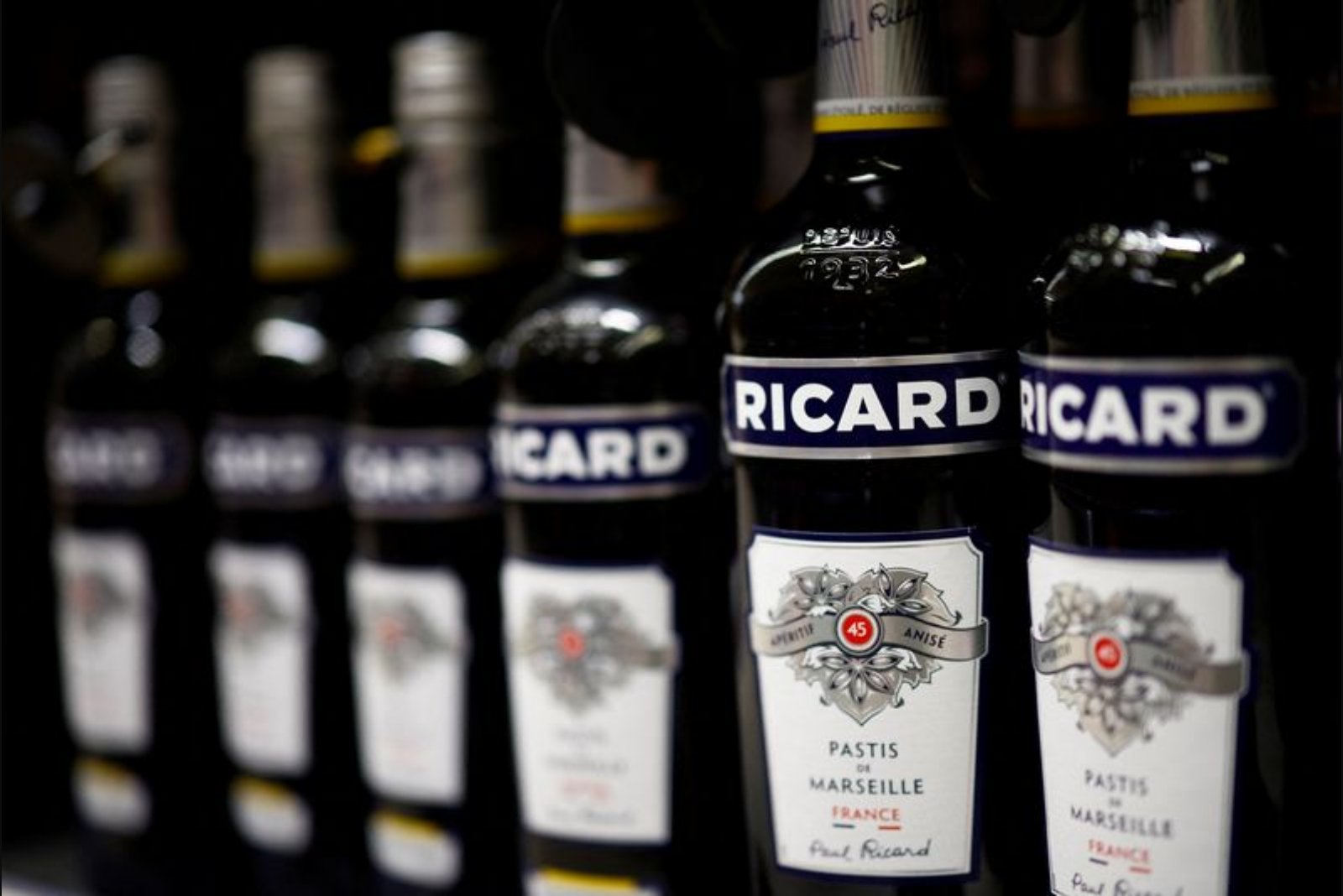
France’s Pernod Ricard and Brown-Forman, the owner of Jack Daniel’s, have held talks about a possible merger, a person familiar with the situation told Reuters. Such a step would pair the world’s second-largest spirits company with the top producer in American whiskey.
Market reaction was immediate: Brown-Forman, which has an approximate market capitalization of $11 billion, saw its shares climb as much as 21% in afternoon trading on Thursday. At the same time, shares tied to Absolut vodka and the maker of Chivas Regal whiskey fell nearly 6%.
Pernod Ricard has a market value near 16 billion euros ($18.45 billion) and manages a broad portfolio that includes Irish whiskey, Scotch and tequila, but it has comparatively limited exposure to American whiskey. Both Pernod Ricard and Brown-Forman have recently implemented job cuts or announced restructuring programs.
Industry context
Spirits producers are operating against a backdrop of multi-year sales weakness driven by slowing demand and the impact of higher import tariffs. Those pressures have contributed to falling valuations across the sector, departures among chief executives and the sale of assets as companies seek to reduce costs.
Consumer behavior has shifted in key markets, including the United States, where cash-constrained or more health-conscious drinkers were already moderating alcohol consumption prior to the hike in import duties introduced during the administration of President Donald Trump. At the same time, new product categories such as fast-growing cannabis beverages present an additional challenge to traditional spirits demand.
Tariffs have compounded these trends by forcing drinks makers either to absorb higher input costs or to pass price increases onto consumers, a dynamic that has further weighed on sales volumes.
Analyst views and governance considerations
Javier Gonzalez Lastra, an analyst at Berenberg, said a tie-up between the two groups would not, on its own, resolve their growth issues, while noting potential synergies. He highlighted "clear overlaps in the U.S." and some overlap in Europe, and said a deal could deliver "significant cost savings." He characterized such a move as essentially defensive in the current industry environment.
TD Cowen analysts observed that the Brown family holds substantial voting control over Brown-Forman and has historically resisted merger proposals, though the analysts suggested the family could be more open to options given the industry’s weak growth and an uncertain recovery timeline.
In October of the prior year, Brown-Forman adopted a policy providing for severance and benefits to executives whose employment ends as a result of a change in control, stating the change was effective immediately and formed part of a routine review of corporate governance and executive compensation.
Brown-Forman did not immediately respond to a request for comment. Separately, Bloomberg News reported that deliberations are ongoing and underlined there is no guarantee a deal will be concluded.
Currency note
The article uses an exchange rate of $1 = 0.8672 euros for the euro-dollar conversion cited.
Additional promotional content originally associated with market-advice services referenced the ticker PERP and an AI-driven evaluation; that material posed the question of whether investors should be buying PERP now and described an automated approach to stock selection. The promotional material did not provide definitive guidance on the potential transaction between Pernod Ricard and Brown-Forman.