
Overview
The sharp climb in oil prices since late February has so far not produced the customary rebound in drilling activity across the Middle East. Instead, oilfield services companies are contending with a falloff in work as security threats and damage to energy infrastructure disrupt operations and raise the cost and complexity of moving people and equipment in one of the world's most important hydrocarbon-producing regions.
Price surge fails to spur orders
Brent crude has jumped 53% since February 27 - the day before U.S. and Israeli strikes on Iran began - a move that under normal circumstances would make projects more profitable and prompt producers to bring rigs and crews back online. But in the current environment the price increase alone is not triggering a wave of new orders for rigs and services. "For oilfield services companies, the situation is quite ambiguous: if producers do not increase activity, the price jump alone will not lead to a rise in orders," said Igor Isaev, head of analytics at European broker Mind Money.
Immediate operational impacts
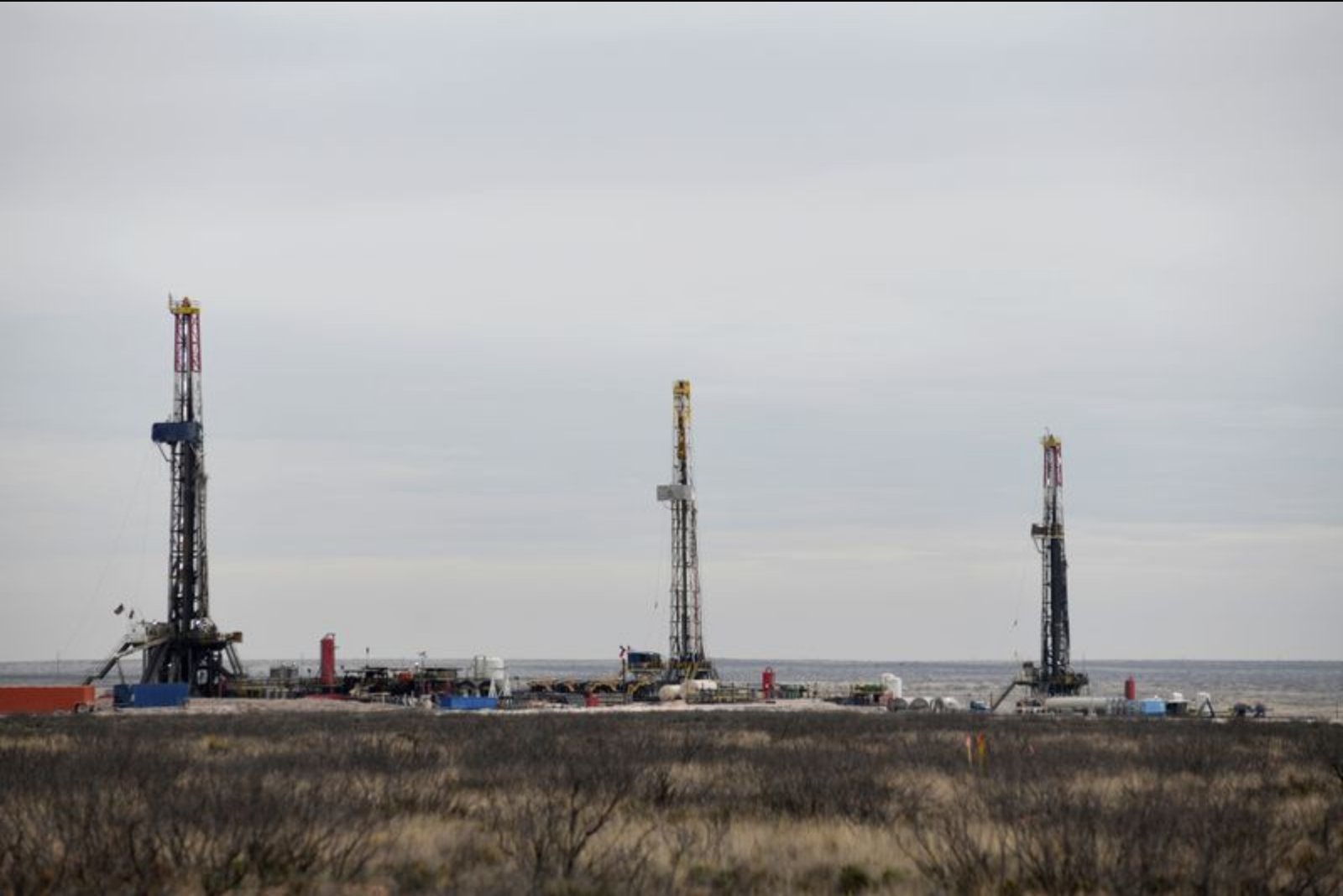
Operators and service providers are already seeing the effects reflected in lower utilisation and delayed projects. In the Gulf region the offshore rig count - a leading indicator of future output - has fallen by about 39% to 72 rigs as of March 27, according to estimates from Rystad Energy. Before the spike in regional tensions, there had been 118 offshore rigs active in the area.
Idled rigs, slowed crew mobilizations and an increase in logistics and insurance expenses are combining to hamper execution of existing programmes and push out timelines for new work. The Strait of Hormuz - a chokepoint that carries roughly a fifth of global oil and natural gas supply - has become more difficult to navigate amid heightened security risks, further complicating offshore operations and the movement of equipment.
"A persistent closure of the Strait of Hormuz would severely impact crew mobilizations in the region as well as create logistical challenges for movement of equipment and higher insurance costs," said Lauren Mayhew, head of MENA Research at Welligence Energy Analytics, warning that project delays would be expected across the region.
Profitability and earnings pressure for service firms
Those operational constraints are translating into an immediate earnings hit for some oilfield services companies. Industry bellwether SLB has warned that first-quarter revenue will come in below expectations and that the company faces a 6-9 cent-per-share earnings hit after suspending travel and demobilizing operations in the Middle East. Companies with substantial exposure to the region - including SLB, Halliburton and Baker Hughes - are among the most affected, but smaller rivals that expanded into the Gulf in recent years are also feeling the strain.
UK-headquartered Borr Drilling, for example, has placed four rigs on standby across Saudi Arabia, the United Arab Emirates and Qatar and evacuated staff from one site. Richard Spears, vice president of oilfield consultancy Spears & Associates, estimates that revenue sourced from oilfield services in the Middle East could decline by 10% to 20% in the first quarter. "If the war keeps going on, well, the second quarter is not good," he said.
Repair and maintenance demand may follow
While the conflict is suppressing activity today, it is also creating future work requirements tied to repairing damaged infrastructure. Rystad Energy estimates energy infrastructure repair costs in the Middle East have reached at least $25 billion. Karan Satwani, an analyst at Rystad Energy, said damage across Gulf energy infrastructure "will generate meaningful demand for oilfield services ... this would result in operators prioritizing repair and maintenance of existing fields over contract awards for new development."
QatarEnergy's chief executive has said Iranian attacks knocked out one-sixth of the country's liquefied natural gas export capacity, a loss valued at about $20 billion a year, and that repairs could take three to five years. Baker Hughes CEO Lorenzo Simonelli noted the company stands ready to support QatarEnergy as it assesses the damage.
Welligence Energy's Mayhew added a note of caution: "Additional repair and maintenance to damaged facilities in the region will to some extent result in additional demand for OFS companies, the extent to which this occurs however will be heavily dependent on broader market conditions and firm's capital allocations."
Broader market signals and producer caution
Outside the Middle East, producers are signalling restraint. U.S. operators at the recent CERAWeek conference in Houston indicated they would want to see prices persist at higher levels for several months before committing to add rigs. That collective caution is contributing to a slower-than-expected recovery in demand for oilfield services globally, even as elevated crude improves economics on paper for new projects.
Implications for logistics and supply chains
From a transportation and logistics perspective, the situation increases friction across multiple vectors: personnel movements are being restricted or rerouted; equipment transits face higher insurance premiums and potential delays; and regional closures or disruptions at sea lanes like the Strait of Hormuz complicate scheduling and fleet deployment. These dynamics are reducing effective capacity and raising operating ratios for service firms that rely on predictable mobilizations and tight equipment rotations.
Outlook
In the near term, oilfield services companies are likely to see revenue and utilization pressure tied to halted or deferred projects. Over a longer horizon, repair and restoration work could provide a meaningful source of demand, though the timing and scale of that work will depend on how long infrastructure remains impaired, how operators prioritise capital spending, and whether regional security stabilises.
Promotional note included in the original report
The original article's supplemental promotional text questioned whether investors should consider buying HAL now, referencing an AI-based stock evaluation product that compares HAL to other companies using multiple financial metrics and citing past AI-identified winners. That text also offered a link to see stocks and strategies. The promotional section was part of the republished content but is separate from the reporting above.