
Overview
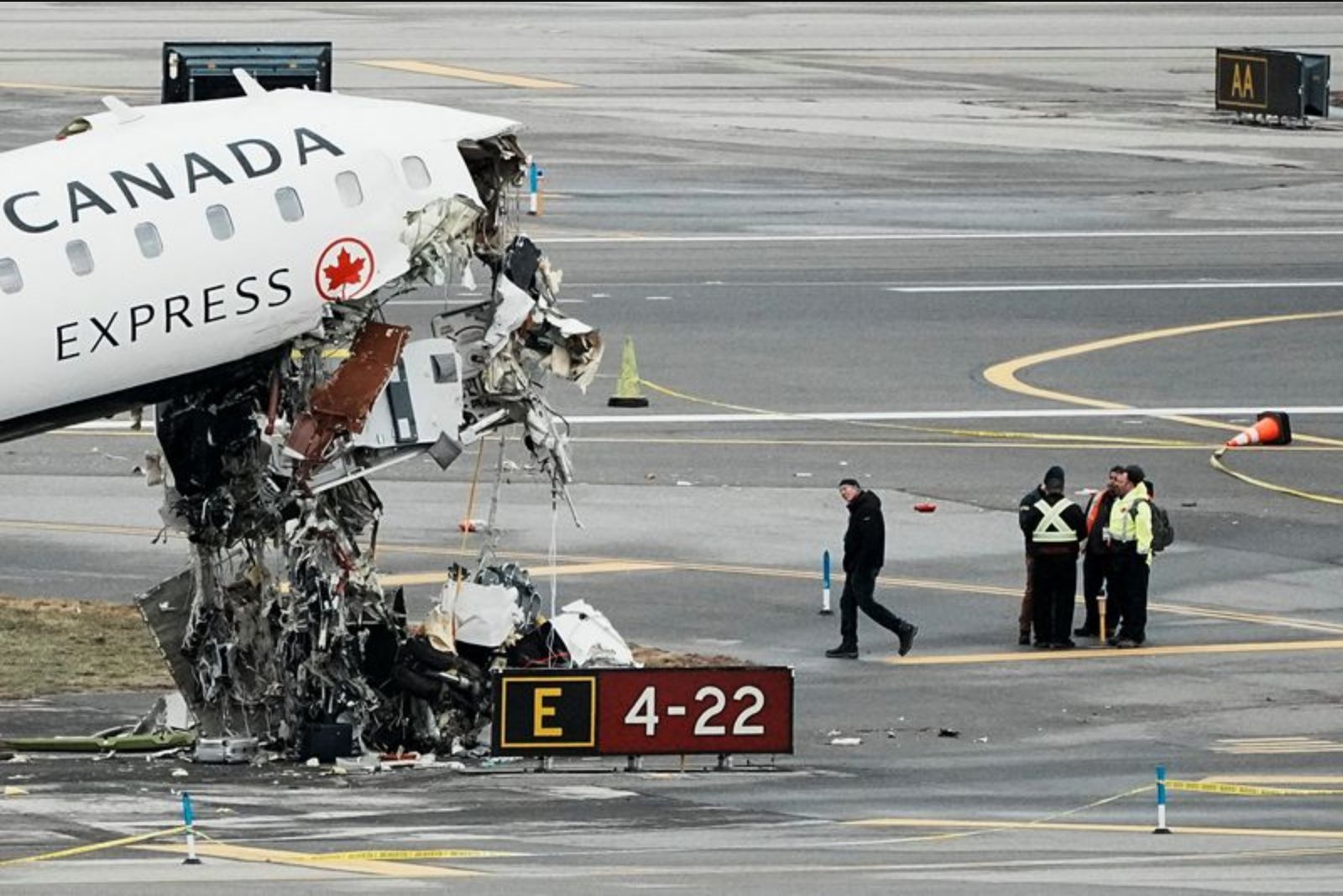
Federal investigators have widened their probe into the collision at LaGuardia Airport in which an Air Canada Express regional jet struck a fire truck while landing. The National Transportation Safety Board said investigators will seek to interview an air traffic controller who had been handling another urgent situation in the minutes before the accident. The agency emphasized that its inquiry will be comprehensive and that it will "rule nothing out."
The accident and immediate aftermath
The regional CRJ-900, operated by a partner carrier, was on final approach when it struck a fire truck on Runway 4. The jet was carrying 72 passengers and four crew members. Both pilots were killed in the impact and nine people were reported seriously injured. Investigators with the independent federal agency have recovered the cockpit voice recorder and flight data recorder and will analyze those devices as part of the examination.
National Transportation Safety Board Chair Jennifer Homendy, speaking at the airport, said the air traffic controller who was on duty during the overnight shift would be interviewed as part of the broader investigation. Homendy noted the emotional toll such an event takes and said the controller would typically be taken off duty following an accident. "It’s pretty traumatic for that air traffic controller as well," she said, adding investigators would also interview other personnel in the tower.
Sequence of events reported in recordings
Audio made available through an air traffic livestream indicates the controller on duty had been attempting to find a gate for a United Airlines aircraft that reported a bad odor and declared an emergency. That United flight's crew reported that flight attendants had been made ill by the odor, and the pilots ultimately decided not to continue the flight.
According to the recordings, fire trucks were cleared by the same controller to cross Runway 4 to respond to the United flight when, moments later, the arriving Air Canada Express jet struck one of the vehicles. The controller is heard saying, "Stop, truck one, stop," shortly after authorizing the vehicle's crossing. In separate audio posted online, an unidentified controller who appears to be the one connected to the incident is heard saying, "I messed up," in a shaken voice after the collision. Another pilot who witnessed the crash responded, "Nah man, you did the best you could," and described the earlier emergency as "wasn’t good to watch."
Areas of investigation
U.S. air safety experts and the NTSB identified communications among the arriving aircraft, the tower controller and ground vehicles as central to the probe. Investigators will examine recorded communications alongside the recovered flight recorders. The NTSB stressed that crashes normally result from multiple contributing factors, and its analysis will consider a range of operational issues.
Federal Aviation Administration data cited by officials shows a rise in runway incursions involving vehicles or pedestrians - 80 incidents in the quarter ended December 31, up from 54 in the same quarter a year earlier. That statistic forms part of the context in which investigators are situating the LaGuardia accident.
Staffing and workload questions
Air traffic controllers are responsible both for sequencing aircraft for takeoff and landing and for authorizing ground vehicle movements on runways. Recordings and pilot accounts indicate the controller in this case had been juggling multiple tasks, including addressing the United Airlines emergency while managing other runway and ground operations.
Four commercial pilots who spoke with reporters said it is not uncommon at LaGuardia and other major metropolitan airports for a single controller to carry both ground and tower responsibilities at the same time. U.S. aviation safety expert and pilot John Cox said a key question for investigators will be, "What was the work schedule and sleep schedule of that controller and is fatigue an issue?"
Chair Homendy cautioned it was too early for definitive conclusions on staffing. U.S. Transportation Secretary Sean Duffy, speaking at LaGuardia, rejected suggestions that understaffing was to blame. Duffy said the facility has 33 air traffic controllers on staff against a target of 37 and said reports that a controller had been working alone were inaccurate.
Flight tracking records referenced by officials show that in the hour before the Air Canada Express struck the fire truck there were 51 arrivals or departures at LaGuardia - more than twice the 23 flights that had been scheduled for that hour. Officials said the cause of the higher-than-scheduled traffic during that hour was not clear.
Next steps
The NTSB will continue its interviews with the controller and other tower personnel, analyze the cockpit voice and flight data recorders, and review communications and operational procedures relevant to the runway crossing and landing. The agency reiterated that it will keep an open scope in its examination and consider all potential contributing factors.
Summary
Investigators are probing the collision between an Air Canada Express regional jet and a fire truck at LaGuardia Airport. The NTSB will interview the controller who was handling a separate in-flight emergency at the time. Both pilots in the regional jet were killed, nine people were seriously injured, and the agency recovered both flight recorders for analysis. Communications, staffing, and the rise in runway incursions are central elements of the inquiry.