
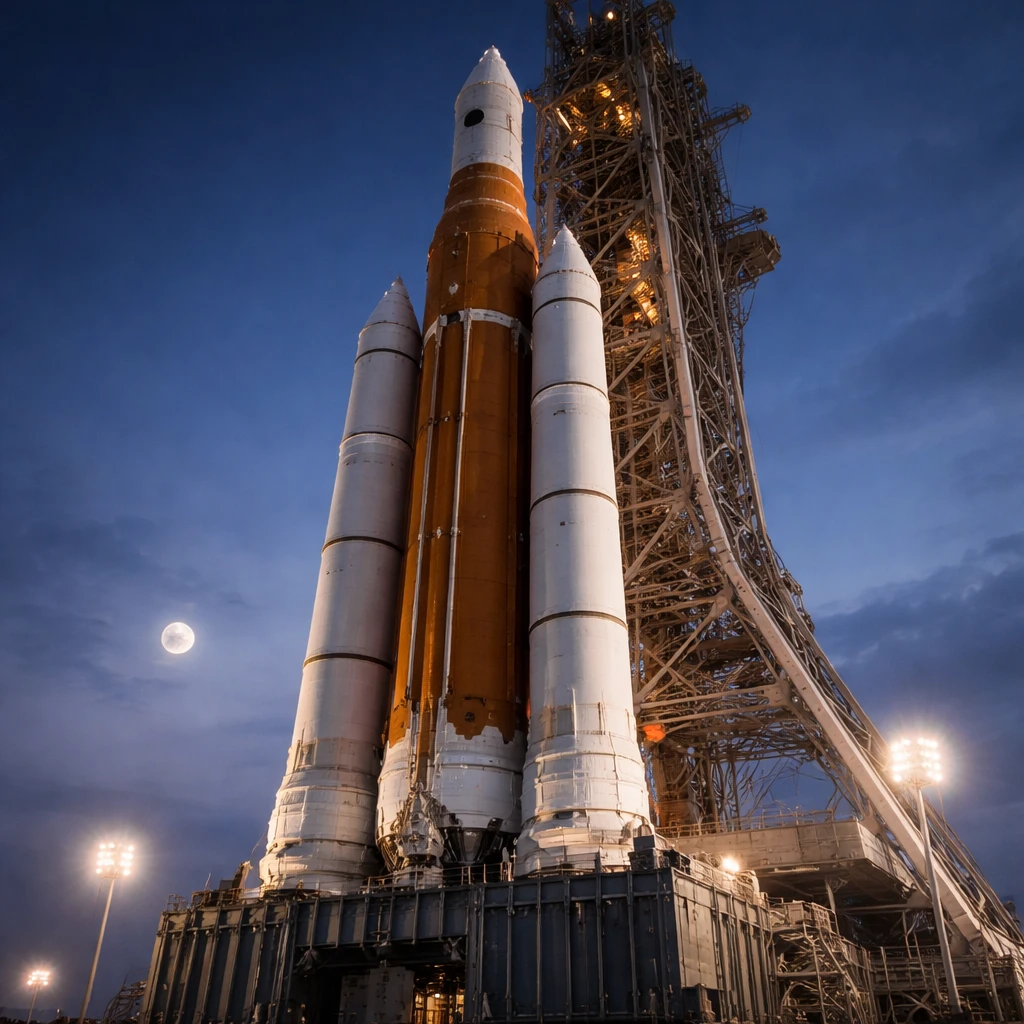
Northrop Grumman (NYSE:NOC) is set to supply the twin five-segment solid rocket boosters that will propel NASA’s Space Launch System (SLS) on the Artemis II mission, the agency’s first crewed voyage beyond the Moon since the Apollo era. The launch is scheduled to occur as early as February 6, 2026, from Pad 39B at Kennedy Space Center.
Each of the two boosters stands 177 feet tall and produces 3.6 million pounds of thrust. Combined, the pair will generate 7.2 million pounds of thrust at liftoff, accounting for more than 75 percent of the SLS rocket’s total launch thrust of 8.8 million pounds.
"We’ve leveraged our unparalleled manufacturing and solid rocket motor expertise to supply the SLS rocket with 7.2 million pounds of its 8.8 million pounds of total thrust at launch," said Jim Kalberer, vice president of propulsion systems at Northrop Grumman.
The five-segment configuration used for Artemis II is an evolution of the four-segment boosters that were flown on the Space Shuttle. That earlier architecture was also the basis for the hardware that performed on the Artemis I uncrewed test flight, providing a development lineage for the current motors.
In addition to the main boosters, Northrop Grumman is producing key safety propulsion elements for the mission's Launch Abort System (LAS). Those components include the attitude control motor and the abort motor, both designed to move the Orion spacecraft away from the rocket in the event of an emergency during ascent.
Artemis II will carry a four-person crew on an approximately 10-day mission that will travel around the Moon. The flight is intended to validate systems and hardware in a crewed deep-space environment as part of preparations for subsequent lunar operations and eventual missions to Mars.
Beyond supplying the boosters and LAS motors for Artemis II, Northrop Grumman remains engaged with the broader Artemis program. The company is working on the Habitat and Logistics Outpost module for the lunar Gateway station and continuing development of next-generation solid rocket boosters intended for future deep-space exploration.
Context and technical highlights
- The twin boosters are the largest solid rocket motors ever used for human spaceflight by size and thrust.
- They represent an upgrade from the four-segment Shuttle-era design and drew on validation from the Artemis I mission.
- Northrop Grumman’s scope for Artemis includes both primary propulsion and crew safety motors, plus ongoing contributions to Gateway hardware and future booster development.