
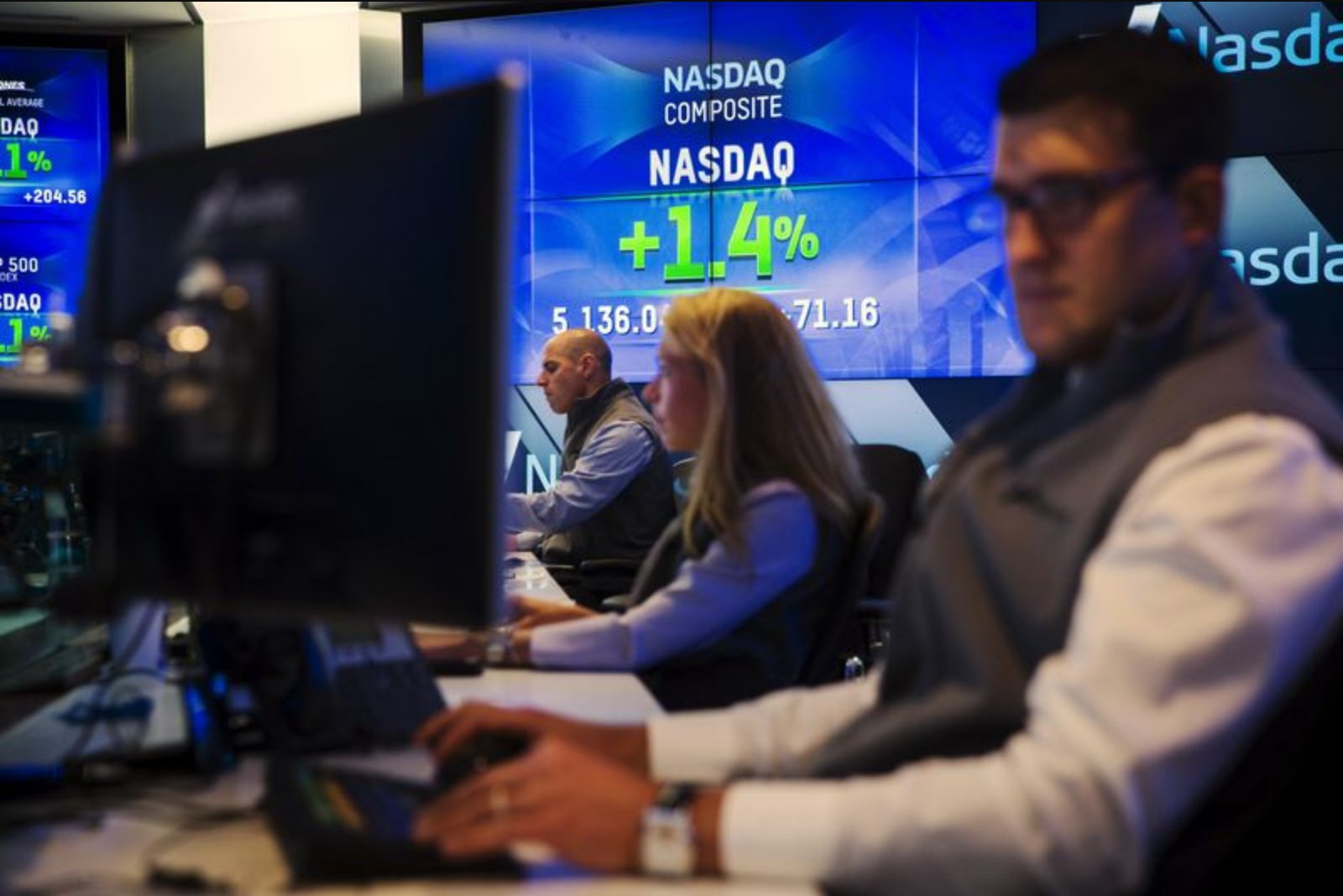
The Nasdaq Composite officially entered a correction on Thursday, marking a decline of at least 10% from its October 29 record high, as U.S. equity markets extended losses amid heightened geopolitical and legal uncertainty.
On the day, major U.S. stock benchmarks each fell by at least 1%, with the Nasdaq retreating 2.4%. The S&P 500 registered a move that leaves it positioned for a fifth consecutive weekly decline. Momentum in stocks was further dented by a pronounced 7.9% drop in Meta Platforms, following court rulings earlier this week that found the company had not sufficiently warned or shielded young users. The rulings have raised investor concern about the potential for large fines from current and subsequent litigation.
Energy markets also reacted to developments in the Middle East. U.S. crude futures climbed 4% as hopes for a quick resolution to the conflict faded, adding to the market's cautious tone.
Market commentary from advisers reflected a mix of interpretation and caution. Jim Carroll, senior wealth advisor and portfolio manager at Ballast Rock Private Wealth in Charleston, South Carolina, noted that recent trading has not been a straight slide. He observed: "This has not been a straight line downwards: this week alone, in four trading days, we saw up days on Monday and Wednesday and retreats today and Tuesday. It’s reminiscent of 2022, when we had a pretty orderly retreat amid acceptable volatility."
Carroll added that the back-and-forth nature of the market can unsettle investors and traders, saying: "You think you know what is going to happen, make a change in your trading or portfolio, and you get punched in the face the next day when the market moves in the opposite direction. And I think we’re only one headline from the market ripping 10% higher."
Art Hogan, chief market strategist at B. Riley Wealth Management in Boston, pointed to pre-existing softness in technology stocks as a factor that amplified declines. "We entered this with softness in technology writ large, which makes up most of the Nasdaq to begin with," he said, adding that concerns such as software spending and AI capital expenditure had already pressured big names in the index before recent events intensified selling.
Ryan Detrick, chief market strategist at Carson Group in Omaha, Nebraska, described the broad weakness as a continuation of recent trends. "This is further confirmation that the weakness we’ve been seeing across the board continues. You know the large cap tech which did so well over the last two years has obviously peaked and weakened on a relative basis since late October and the Mag 7 is no longer the leaders they once were. You know, some call them now the 'Lag 7' as again the selling is indiscriminate really."
Peter Tuz, president of Chase Investment Counsel in Charlottesville, Virginia, framed the pullback as within the bounds of historical market behavior after an extended period of gains. "After three good years for markets, a sell-off of 10%-20% should not surprise anyone. We had one last year during the tariff proposals. Bad technical indicators might, however, encourage selling and discourage buying until the situation clears up a bit," Tuz said.
Promotional performance claims included in earlier reporting noted recent results from an AI-driven stock selection service. The claims stated that year to date two out of three global portfolios were outperforming their benchmark indexes, with 88% of portfolios in positive territory. The flagship "Tech Titans" strategy was reported to have outperformed the S&P 500 by a factor of two within 18 months and highlighted winners such as Super Micro Computer and AppLovin with gains cited at 185% and 157%, respectively. The original copy presented this as part of an investment product description and asked rhetorically which stock might be the next to rise.
For now, markets are navigating a combination of legal developments affecting major technology firms and renewed geopolitical risk that has lifted energy prices. Investors and advisors appear to be balancing the potential for abrupt reversals with the reality of heightened headline sensitivity.