
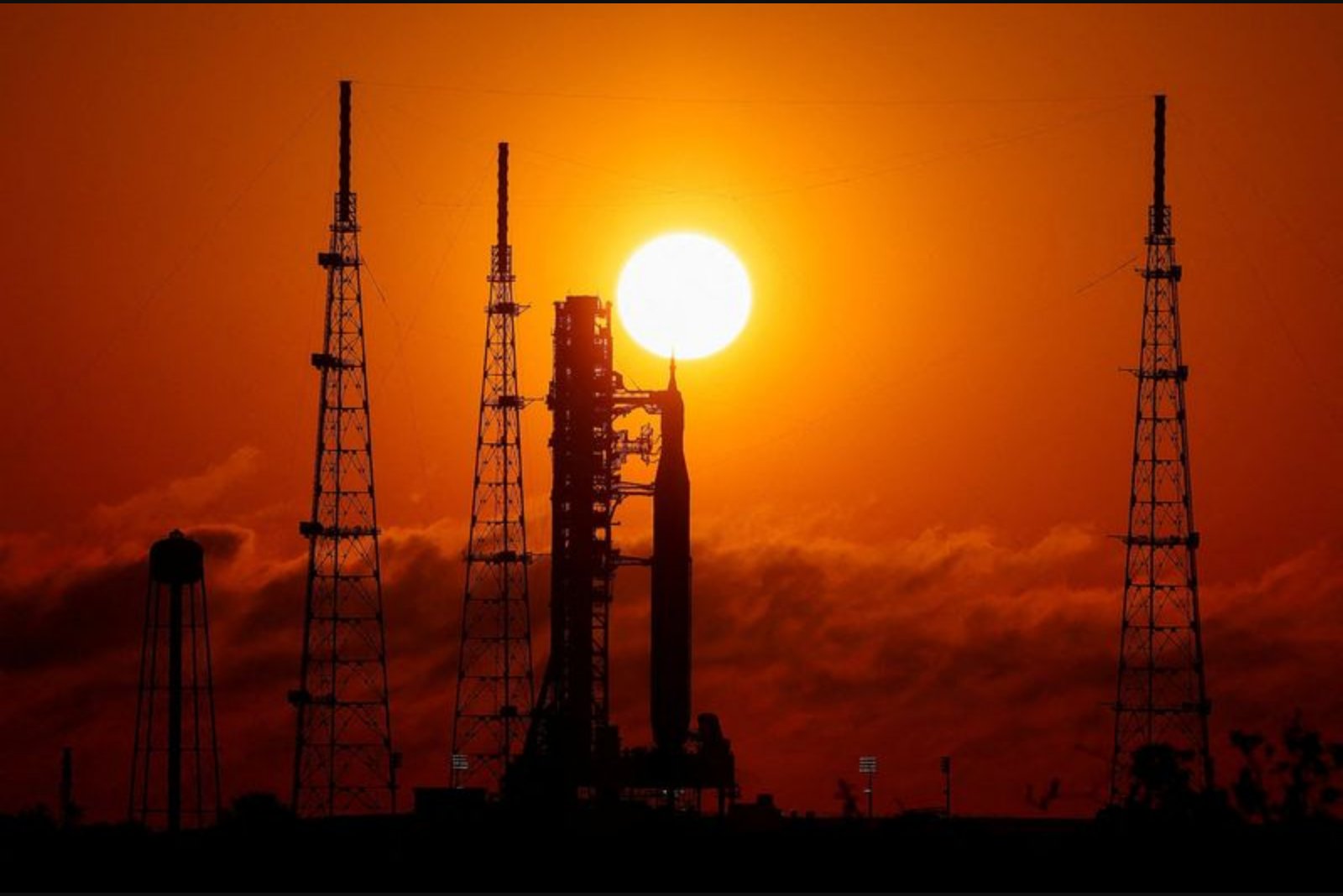
NASA announced on Tuesday that it has suspended plans for an orbital lunar station and will instead convert elements from that project into a $20 billion surface base on the moon. The agency also outlined ambitions to dispatch a nuclear-powered spacecraft to Mars as part of a push to move nuclear power and propulsion technologies from laboratories into deep space operations.
The decision, disclosed by NASA chief Jared Isaacman - an appointee of President Donald Trump who took charge of the agency in December - marks a significant reorientation of the Artemis program. Isaacman said the agency will increase robotic lander activity at the moon and prepare for the use of nuclear power on the lunar surface.
At a day-long event at NASA headquarters in Washington attended by foreign delegates, private companies and journalists, Isaacman made clear the Gateway project will be paused in its current form in favor of infrastructure supporting sustained surface operations. He said repurposing the materials and commitments associated with the orbital station can better serve surface objectives.
Included in the announcements was a plan to launch a spacecraft called Space Reactor 1 Freedom to Mars before the end of 2028. NASA described that mission as a demonstration of advanced nuclear electric propulsion in deep space, and a key step in transitioning nuclear technologies from controlled laboratory environments into operational spacecraft. The agency stated that once the spacecraft reaches Mars, it will deploy helicopters intended for planetary exploration.
The Lunar Gateway had been planned as a station in lunar orbit and was already materially under way with contractors such as Northrop Grumman and Lanteris Space Systems, an Intuitive Machines subsidiary, working on key hardware. Gateway was conceived as a dual-purpose facility: a research outpost and a transfer hub where astronauts would board landers prior to descending to the lunar surface.
Isaacman acknowledged that repurposing Gateway hardware to create a surface base will be a difficult undertaking and will present hardware and schedule challenges. The shift also introduces uncertainty about the roles that international partners - notably Japan, Canada and the European Space Agency - will play going forward, since those partners had agreed to supply components for the orbital station.
Josef Aschbacher, director general of the European Space Agency, attended the NASA event and told Reuters he will examine the new plans and continue discussions with NASA. Beyond the ESA, Isaacman said partner commitments and equipment could be redirected to other program objectives, including surface systems.
NASA currently maintains a timetable that includes landing astronauts on the moon in 2028. The agency said the recent decisions will reshape billions of dollars in contracts under the Artemis umbrella and are already sending companies into a period of adjustment as they attempt to meet the new U.S. urgency. NASA framed the shift as timely amid advancing lunar efforts elsewhere; the agency highlighted China’s progress toward a planned 2030 moon landing in the context of accelerating U.S. activity.
At the center of Artemis is the astronaut lunar lander competition. Elon Musk’s SpaceX and Jeff Bezos’ Blue Origin are both developing vehicles intended to ferry astronauts to the moon, with each company targeting an initial crewed landing in 2028. NASA said both firms have fallen behind schedule, underscoring the challenge of aligning industrial progress with the agency’s accelerated surface focus.
The Artemis initiative traces to 2017 and was launched during the first term of President Trump. It aims to restore routine human missions to the moon as a successor to the Apollo-era missions that ended in 1972. The recent program adjustments reflect a shift from constructing an orbital waypoint to concentrating on long-term operations directly on the lunar surface, supported by new propulsion demonstrations and an expanded role for robotic missions.
Summary
NASA is pausing the Lunar Gateway program in its current configuration and will redirect much of its hardware toward building a $20 billion lunar surface base. The agency also revealed plans to launch Space Reactor 1 Freedom, a nuclear-electric propulsion demonstrator, to Mars by the end of 2028. The move raises questions about partner contributions and alters billions of dollars in Artemis contracts.
Key points
- NASA will repurpose components from the Lunar Gateway to construct a $20 billion base on the moon’s surface - impact on aerospace and defense contractors, launch service providers, and space systems suppliers.
- The agency plans to send Space Reactor 1 Freedom to Mars before the end of 2028 to demonstrate nuclear electric propulsion and to deploy exploration helicopters - impact on advanced propulsion contractors and deep space robotics suppliers.
- Changes to Artemis contracts and schedules are prompting industry to adapt quickly as international competition and partner commitments are reassessed - impact on international collaboration and contract valuations across the aerospace sector.
Risks and uncertainties
- Repurposing orbital hardware for a lunar surface base presents hardware and schedule challenges that could delay construction and increase program costs - affecting contractors responsible for Gateway components.
- The pivot creates uncertainty about the roles of Japan, Canada and the European Space Agency, which had committed components for the orbital station; their future participation in Artemis surface activities is not yet defined - affecting international cooperation and program scope.
- Commercial lander providers such as SpaceX and Blue Origin have fallen behind schedule, which may complicate NASA’s target of landing astronauts on the moon by 2028 and could force further changes in procurement and timelines.