
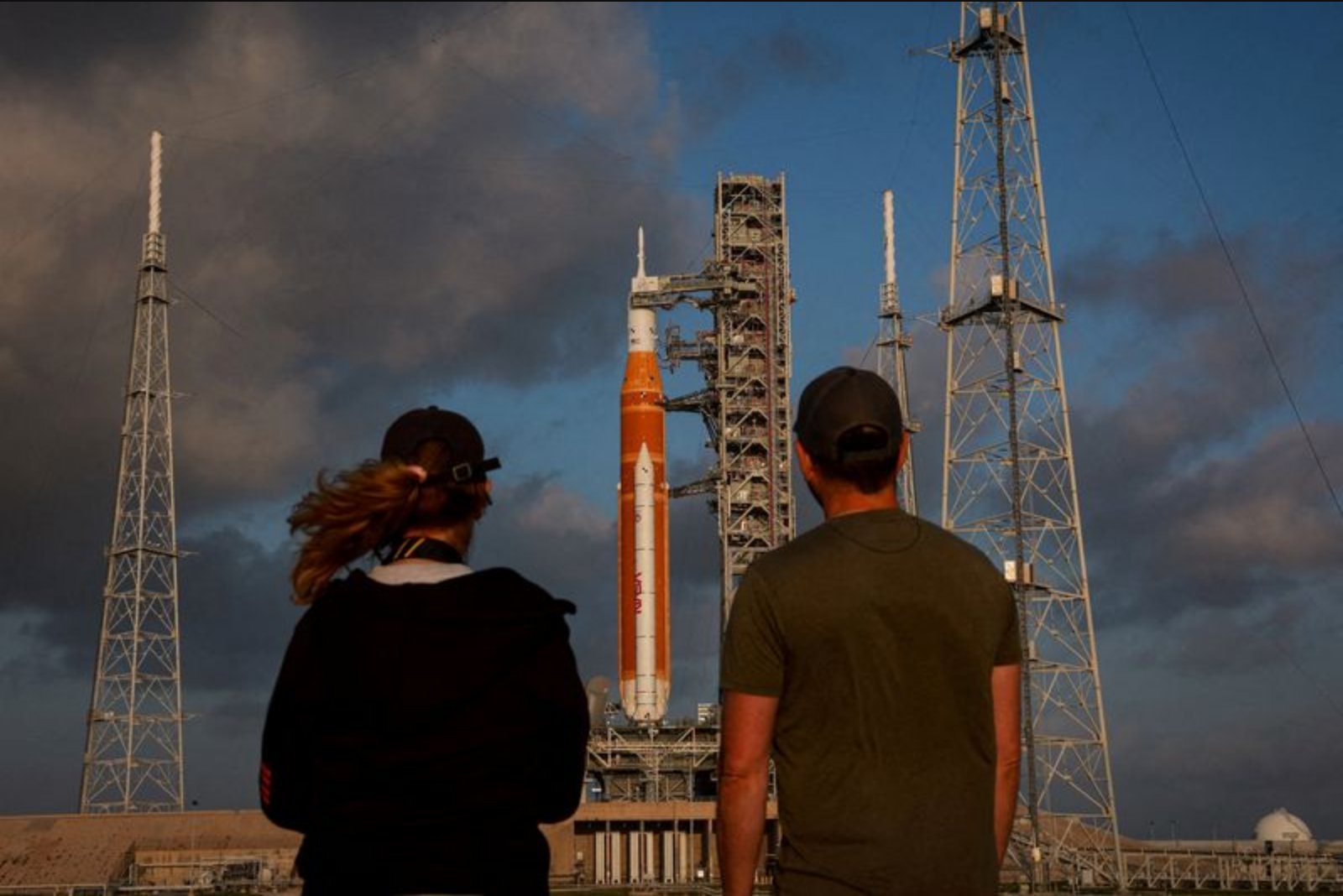
NASA is preparing to send astronauts back toward the moon for the first time in more than half a century with Artemis II, a crewed test flight designed to validate the hardware and systems that will support future lunar operations. The flight, scheduled to launch on April 1 with contingency through April 6 depending on weather and technical readiness, will place three U.S. crew members and one Canadian astronaut aboard the Orion spacecraft atop the Space Launch System (SLS) rocket for a 10-day mission that will take them around the moon and back.
The agency describes the mission as a critical step in a broader effort to establish sustained human activity on and around the lunar surface. Artemis II is the first time astronauts will fly on Orion since the uncrewed demonstration of the same architecture in 2022, and the crew will exercise key life-support systems, crew interfaces, navigation and communications before NASA moves to more complex operations.
Since 2012, NASA’s Artemis program has been estimated to cost at least $93 billion, reflecting the scale and ambition of a program intended to restore regular crewed access to the moon. It is the first crewed lunar flight since Apollo 17 in 1972, the last time humans set foot on the lunar surface. The agency has signaled an objective to return humans to the lunar surface by 2028, targeting the challenging terrain of the moon’s south pole.
U.S. policymakers and NASA officials have framed the program in strategic terms as well as scientific. In the context of rapid progress by other space programs, notably China’s sequence of robotic landings and announced ambitions to send its own crew by 2030, U.S. leaders see Artemis as a way to reassert a leadership role in crewed space exploration. The Artemis architecture intentionally differs from Apollo - it is more complex and built through partnerships with multiple private contractors - a model that NASA hopes will foster competitive commercial activity on and around the moon in the coming decades.
NASA astronaut Christina Koch, serving as an Artemis II mission specialist, framed the moon as both a scientific archive and a stepping stone to further exploration. Koch told reporters that the moon serves as a "witness plate" to the solar system’s formation and as a launch point for missions to Mars, where humanity may have its best chance of finding evidence of past life. She added that many countries recognize the value of extended exploration and posed the question not as whether humanity should go, but whether it should lead or follow.
Beyond national prestige and science, NASA and its partners are positioning the Artemis program as a catalyst for an eventual commercial lunar market. Analysts caution that the near-term economic prospects depend heavily on government funding, but companies are being engaged now with the expectation that market activity could grow over the coming decades. A PricewaterhouseCoopers estimate cited by program participants projects $127 billion in revenues by 2050 from lunar surface activities, with potential investments in the sector of $72 billion to $88 billion over the same period.
Still, some economists and former NASA staff note that a genuinely independent commercial lunar economy is a long-term prospect. Akhil Rao, an economist at Rational Futures and a former NASA research economist, said NASA did not expect short-run economic returns sufficient for the agency to step back from direct involvement. Rao, who was among staff laid off last year amid broader federal workforce reductions, emphasized that governments will drive lunar strategies and revenues for the foreseeable future.
Operationally, Artemis II will probe Orion and SLS performance under crewed conditions. Launch dates are constrained by both terrestrial weather windows and celestial mechanics - an additional launch opportunity opens on April 30, determined largely by the orbital alignment between Earth and the moon. The mission will test systems essential to crew safety and mission success and inform planning for subsequent flights.
Looking ahead in the Artemis sequence, NASA has slated Artemis III for 2027. That mission calls for the Orion capsule to rendezvous in Earth orbit with two lunar landers - the Blue Moon system being developed by Blue Origin and the Starship system from SpaceX - demonstrating how landers will pick up astronauts for descent to the lunar surface. In a program change announced in February, NASA’s administrator, Jared Isaacman, added an additional mission to the sequence and shifted the schedule so that the program’s first crewed lunar landing will occur on Artemis IV rather than Artemis III. Isaacman, described in agency statements as a billionaire private astronaut, has introduced new objectives that altered the order of planned missions.
NASA’s approach includes a distributed industrial base: Boeing and Northrop Grumman lead work on the SLS, Lockheed Martin is the prime contractor for Orion, and separate NASA-funded efforts have produced competing lander designs that the companies may offer to other customers under different contractual arrangements. The intent is to test an architecture that supports government-directed exploration while enabling companies to develop products and services that could be marketed more broadly.
The immediate task for Artemis II is pragmatic and narrowly focused: demonstrate that crew systems perform as required before committing astronauts to more complex rendezvous, docking and landing operations. Success on this mission will not settle longer-term questions about the pace or economic trajectory of lunar activity, but it will provide the technical validation NASA says is necessary to proceed.
Embedded in public materials and outreach is also an investor-facing narrative. Promotional content associated with aerospace coverage highlights evaluation tools that assess companies involved in the sector, including Boeing (ticker BA). Such materials present algorithmic analysis of fundamentals, momentum and valuation, and reference past performance of selected strategies. The article notes these evaluations without making investment recommendations.
Artemis II thus stands at the intersection of engineering validation, geopolitical signaling and nascent commercial strategy. Over the coming weeks, the test flight will either clear the way for more ambitious missions or underscore the technical and programmatic challenges that remain in returning humans to the moon.