
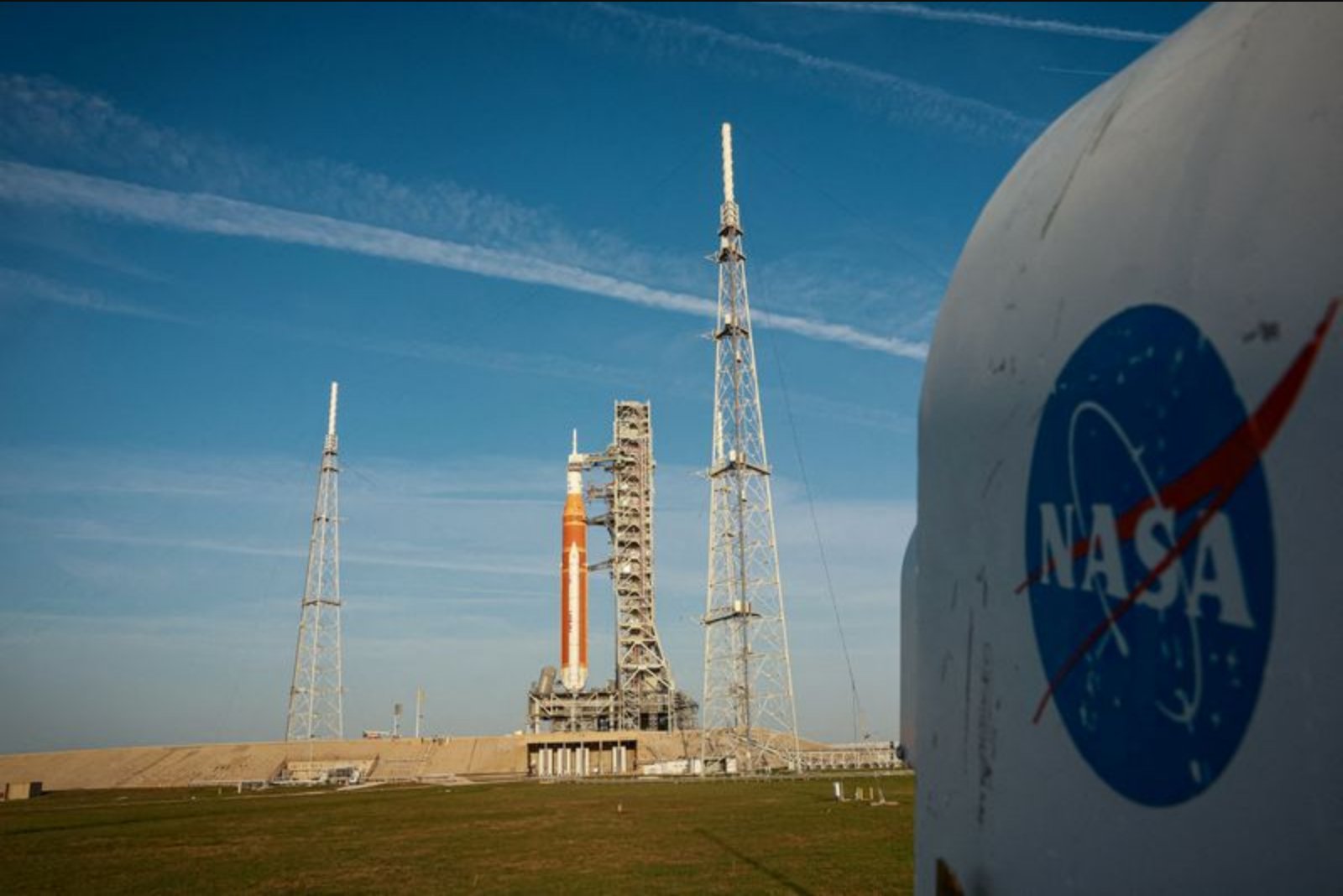
NASA is preparing to send four astronauts on a crewed journey around the moon, with mission officials clearing the way for a possible Wednesday evening liftoff. The Artemis II mission will use the agency's Space Launch System (SLS) rocket topped by the Orion crew capsule for an approximately 10-day flight that will take the team to the farthest distance from Earth ever reached by humans.
Mission managers on Monday declared the countdown "go" for the 322-foot (98-meter) SLS rocket and its Orion spacecraft to lift off as early as 6:24 p.m. EDT (2224 GMT) on Wednesday from NASA's Kennedy Space Center in Florida. The vehicle is set to depart from a launch pad located just one pad away from where Apollo-era moon missions departed more than fifty years ago.
The four-person Artemis II crew consists of NASA astronauts Christina Koch, Victor Glover and Reid Wiseman, along with Canadian astronaut Jeremy Hansen. The crew members arrived in Florida from Houston on Friday and had completed a two-week quarantine before the planned launch. Over the weekend they spent time with family at the Kennedy Space Center's beach house, a resting location used by astronauts in the period before launch.
"Certainly all indications are right now, we are in excellent, excellent shape as we get into count," launch director Charlie Blackwell-Thompson told reporters on Monday.
Weather forecasts appear to favor the scheduled window, with forecasters assigning only a 20% probability that conditions will degrade enough to prevent an on-time liftoff during the two-hour launch window on Wednesday. Should weather or other factors force a scrub, NASA officials said they could attempt additional daily launch opportunities through April 6, after which the agency would shift the next available window to April 30.
The mission's launch date has slipped from earlier plans. Artemis II had been targeted for as early as February 6 and then March 6, but a hydrogen leak discovered during pre-launch processing prompted engineers to roll the vehicle back to the vehicle assembly building for additional inspections and work.
The crewed flight will undertake a sweeping, nearly 10-day trajectory around the moon and back, extending the human presence in space to about 252,000 miles (406,000 kilometers) from Earth. That distance would establish a new record for the farthest humans have traveled, exceeding the roughly 248,000-mile trip logged by the three-man Apollo 13 crew in 1970. Human missions have not carried astronauts beyond Earth orbit since the final Apollo mission in 1972.
NASA first flew the uncrewed Artemis I mission in 2022, sending an Orion spacecraft on a similar circumlunar path. Artemis II will place human operators on board to exercise life-support systems, crew interfaces and communications under real mission conditions. A key objective is to take manual control of Orion roughly three hours after launch to validate its steering and maneuvering capabilities in the event of an automated system failure.
Lockheed Martin is the prime contractor responsible for constructing the Orion spacecraft. The SLS rocket has been developed since 2010 with Boeing and Northrop Grumman as primary industrial partners, and the program has been associated with substantial per-launch costs estimated in the range of $2 billion to $4 billion.
Beyond the flight test objectives, Artemis II is an early but important phase of NASA's broader Artemis program, which envisions establishing a sustained presence at the lunar south pole. The agency has set an internal goal to land its first crew on the lunar surface as part of Artemis IV by 2028 and has framed that timeline in the context of international activity, noting potential Chinese plans for a crewed landing around 2030.
Plans for Artemis III had previously designated that mission as NASA's first crewed lunar landing. However, in February the agency's new administrator, Jared Isaacman, added an additional crewed test flight before proceeding to the landing attempt, effectively inserting Artemis II as a required precursor.
Private aerospace companies are working in parallel to provide lunar landers. Elon Musk's SpaceX and Jeff Bezos' Blue Origin are both developing lander technologies that NASA anticipates using to place astronauts on the lunar surface in future Artemis missions.
The Artemis II mission will test multiple systems and operational procedures that are critical to the agency's timeline for returning humans to the moon. How those tests perform will influence subsequent mission scheduling and technical decisions as NASA moves toward crewed lunar landings later in this decade.