
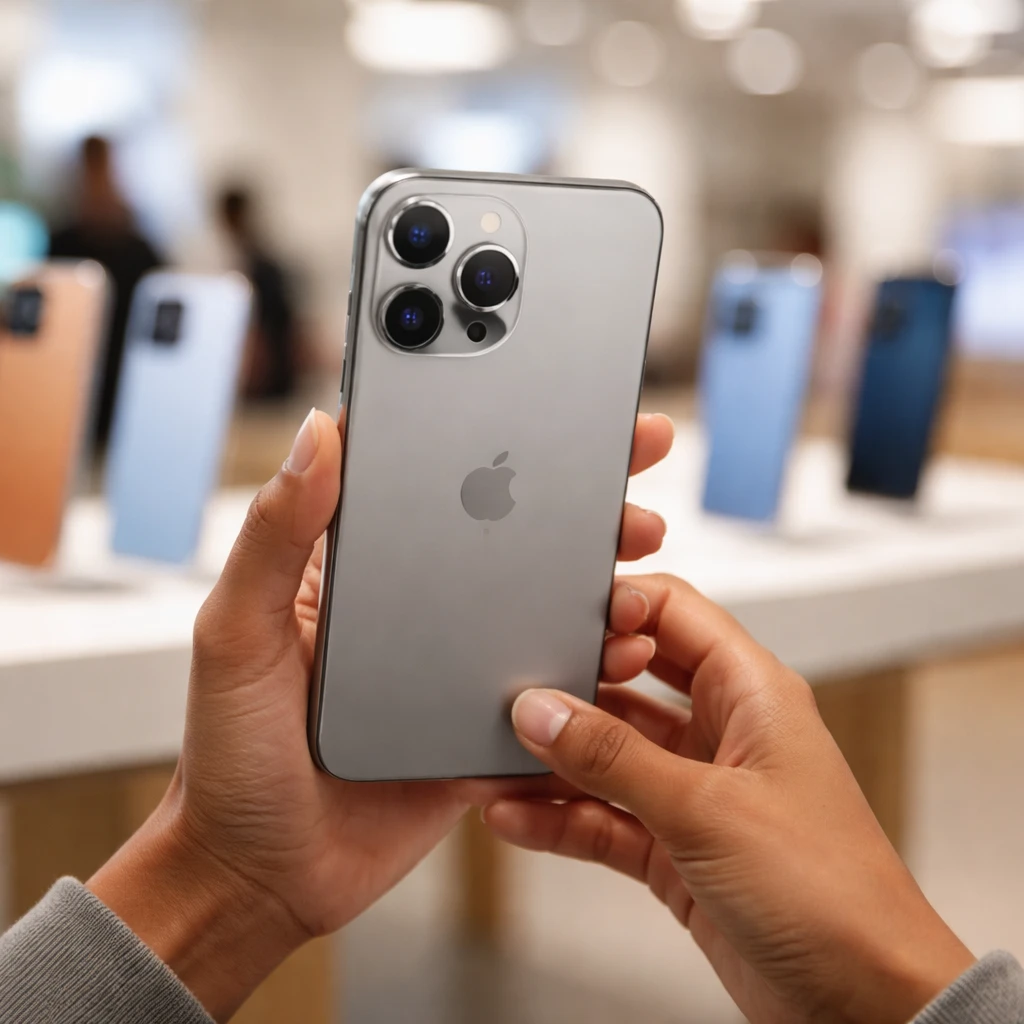
Morgan Stanley's latest AlphaWise smartphone survey points to unusually strong upgrade intent for Apple's iPhone heading into 2026, with next-12-month upgrade rates in the U.S. and China reaching "all-time highs." The bank's analyst Erik Woodring cautioned in a note Monday that while the initial read appears favorable, it masks a more challenging year for the broader smartphone market.
According to the survey, the elevated upgrade interest implies replacement cycles will "accelerate to a 10-year low." That dynamic, Morgan Stanley says, is concentrated around Apple, which the bank expects to be "the only major global smartphone vendor expected to gain share in 2026." The firm attributes Apple's relative advantage to a combination of "new and advanced features," stronger device quality and broad upgrade eligibility among current users.
Woodring also highlights that iPhone switching rates are set to reach a 5-year high, reinforcing the view of Apple showing relative strength against competitors. By contrast, the bank points to mounting headwinds for Android suppliers, saying they face "unprecedented memory cost inflation" that is likely to push device prices higher and "significantly dampen smartphone market demand." Morgan Stanley adds that lower brand loyalty and greater price sensitivity leave Android vendors "more vulnerable vs Apple."
Reflecting these survey findings and cost pressures, Morgan Stanley reduced its 2026 global smartphone shipment forecast to 1.1 billion units, down from a prior projection of 1.3 billion units, representing a -13% year-on-year decline. The bank now expects Android shipments to fall 15% year over year, compared with a much smaller 2% decline for Apple.
The survey results present a mixed picture: strong upgrade intent concentrated in markets critical to Apple, alongside industry-wide headwinds tied to component inflation that could reshape pricing and demand dynamics for other vendors. Morgan Stanley's revised shipment estimates underscore the contrast between Apple's prospects and the broader smartphone industry outlook.
Key takeaways
- AlphaWise survey finds next-12-month upgrade rates in the U.S. and China at "all-time highs," implying replacement cycles accelerate to a 10-year low.
- Morgan Stanley expects Apple to be the only major global vendor gaining share in 2026, supported by new features, device quality and broad upgrade eligibility.
- The bank cut its 2026 global smartphone shipment forecast to 1.1 billion units from 1.3 billion, and now projects Android shipments to fall 15% year over year versus a 2% decline for Apple.
Sectors impacted: Smartphones and consumer electronics, memory and semiconductor components, and retail demand for mobile devices.
Risks and uncertainties
- Memory cost inflation is cited as "unprecedented" and could drive higher device prices, which may "significantly dampen smartphone market demand" - affecting consumer electronics and component suppliers.
- Lower brand loyalty and rising price sensitivity among consumers could make Android vendors "more vulnerable vs Apple," introducing share volatility within the smartphone market.
- The strong upgrade intent concentrated in select markets does not eliminate the broader market risk Woodring warns of, meaning overall shipment declines remain a central uncertainty for manufacturers and distributors.