
Shares of Mobileye (NASDAQ:MBLY) rose 5% on Tuesday after the autonomous-driving technology firm announced an expansion of its business model to include a vertically integrated robotaxi operation.
The company said it will move beyond its current role as a supplier of self-driving systems and will own and operate an autonomous ride-hailing service. The rollout is targeted to begin in a U.S. city in 2027.
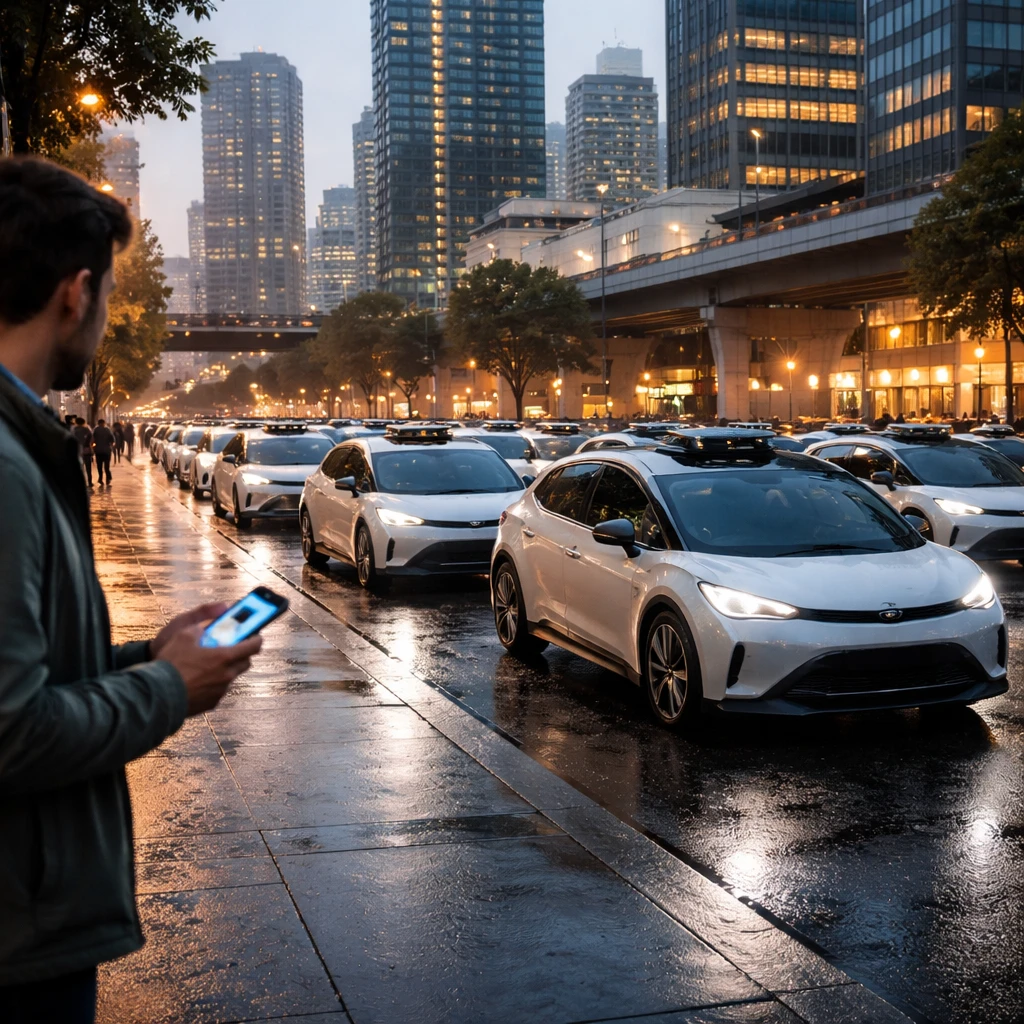
Mobileye outlined plans for an initial fleet of about 100 vehicles that would be deployed in a major U.S. metropolitan market starting in 2027. That deployment is intended to be phased across the year and to operate under fully driverless conditions.
After the initial operations, Mobileye expects to scale the robotaxi business substantially - with a stated plan to expand to approximately 17,000 vehicles over the following five years.
The company described the robotaxi effort as complementary to its existing supplier role. Mobileye emphasized that it remains committed to providing its Mobileye Drive technology to automakers and mobility operators even as it launches and grows the owned-and-operated ride-hailing service.
To build the end-to-end service, Mobileye plans to integrate Mobileye Drive with technologies and assets from its Moovit subsidiary, including Moovit’s Mobility Platform and consumer-facing applications. The company said the combined stack will incorporate multi-modal trip planning, AV mission control, and fleet-management tools.
Mobileye indicated it will assemble an ecosystem of partners to deliver the complete autonomous-vehicle platform. That collaboration would involve AV-ready vehicle platform manufacturers, fleet operators, vehicle integration partners, and other technology suppliers to complete the necessary integration and operations.
The company noted its existing reach in automotive and mobility markets. According to Mobileye, more than 230 million vehicles worldwide have been produced using Mobileye technology. Separately, Moovit’s mobility platform is said to serve over 1.7 billion users across more than 3,500 cities in 112 countries.
Clear summary
Mobileye plans to operate a robotaxi service beginning in 2027 with an initial fleet of roughly 100 fully driverless vehicles in a U.S. metro area, and to scale to about 17,000 vehicles within five years, while continuing to supply Mobileye Drive to other automakers and mobility providers. The company will combine Mobileye Drive with Moovit’s Mobility Platform and work with vehicle and integration partners to deliver the platform end-to-end.
Key points
- Mobileye stock rose 5% on Tuesday following the robotaxi announcement.
- Initial deployment: about 100 fully driverless vehicles in a U.S. city starting in 2027; target scale to roughly 17,000 vehicles over five years.
- The initiative leverages Mobileye Drive plus Moovit’s Mobility Platform and will rely on partnerships with manufacturers, fleet operators, integration partners, and technology suppliers - impacting the automotive, transportation, and mobility service sectors.
Risks and uncertainties
- Timing and execution risk for the 2027 launch and the phased, fully driverless deployment in a major U.S. market - operational and regulatory requirements could affect the schedule and rollout.
- Reliance on external partners - Mobileye will need to coordinate with AV-ready vehicle platform manufacturers, fleet operators, vehicle integration partners, and technology suppliers to complete the end-to-end platform.
- Scaling uncertainty - the plan to grow from an initial fleet of about 100 vehicles to roughly 17,000 across five years represents a substantial operational expansion that will require successful fleet management and mission control integration.
Mobileye’s announcement lays out a multi-year plan that retains its supplier commitments while establishing an owned robotaxi arm supported by Moovit’s platforms and a network of partners. The company’s stated production and user reach figures - more than 230 million vehicles with Mobileye technology and Moovit’s platform serving more than 1.7 billion users across over 3,500 cities in 112 countries - underline the scale of the underlying technology and user footprint the company describes as the foundation for the new service.