
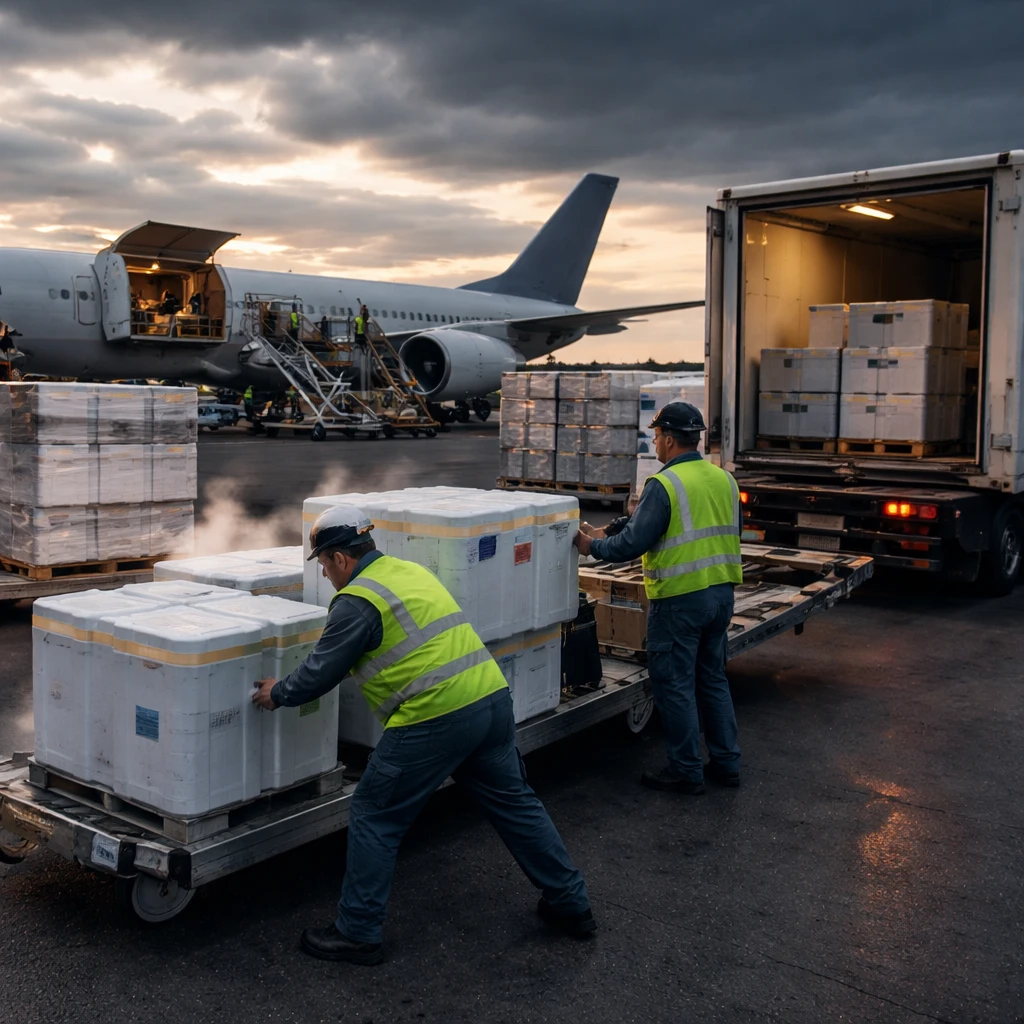
The intensifying conflict in the Middle East has interrupted established transit networks for critical medicines bound for the Gulf, industry executives said, with implications for the flow of cancer drugs and other treatments that require strict cold-chain storage. The hostilities - sparked by U.S. and Israeli attacks on Iran two weeks ago and widened by subsequent Iranian strikes around the region - have knocked out several major air transit hubs and closed key shipping routes, complicating logistics for temperature-sensitive pharmaceuticals.
While executives reported there were not yet widespread shortages, they cautioned that prolonged disruption could change that picture. The Gulf states rely heavily on imports for medicines, and some products have short shelf lives and must be kept within narrow temperature ranges, making long overland journeys less feasible for certain treatments.
Western drugmakers and logistics providers said they were exploring alternative freight paths into the Gulf. In practice this has meant trucking medicines overland from airports such as Jeddah and Riyadh in Saudi Arabia, and considering routes through Istanbul and Oman. Some Europe-Asia cargoes that typically transit Dubai or Doha are being diverted via China or Singapore, executives said.
Major regional airports including Dubai, Abu Dhabi and Doha have been closed after strikes by Iran in response to U.S. and Israeli attacks, removing important nodes in the global cargo network. Dubai and Doha serve as major cargo hubs linking Europe, Asia and Africa; carriers such as Emirates and Etihad and logistics companies such as DHL traditionally move temperature-sensitive pharmaceuticals through these airports. With those hubs offline, companies said they are forced to reroute flights and expand overland transfers to reach final destinations.
Wouter Dewulf, a professor at the Antwerp Management School, cited industry data indicating that more than one fifth of global air cargo - the principal channel for critical or life-saving medicines and vaccines - is exposed to disruption originating in the Middle East. Executives warned that building alternative cold-chain corridors - temperature-controlled routes that preserve drug integrity - cannot be accomplished overnight and are not always available on short notice.
One pharmaceutical company executive described how internal teams have been mobilised to prioritise patient-critical shipments, naming oncology medicines among the top priorities, and said some temperature-controlled consignments may miss connections unless appropriate storage and handling are secured at transit points. A medical device company executive outlined a methodical response: first map shipments already in transit or ready to depart, then decide which pallets require diversion and whether new shipments must be scheduled.
Sea transport has been largely impractical for time-sensitive medicines because of much longer transit durations and the reported closure of the Strait of Hormuz by Iran, industry executives said. That bottleneck increases dependence on air freight and overland links for urgent medical supplies. As one executive noted, for patients awaiting urgent surgery or treatment the fastest mode of transport is essential.
Concerns over oncology medicines are acute because delays can have serious clinical consequences. Prashant Yadav, a senior fellow for global health at the Council on Foreign Relations, said stocks of short shelf-life and temperature-sensitive therapies are typically maintained at roughly three months. He highlighted monoclonal antibodies and other cancer drugs as particularly vulnerable. Yadav said some customers had already warned they could face shortages in four to six weeks if the disruptions do not ease.
Last week more than 100 participants from the pharmaceutical and logistics sectors attended a webinar hosted by Pharma.Aero, a life sciences logistics group, to assess the implications of the Gulf crisis for supply chains and transport operations.
Logistics providers said they were managing the situation for now but acknowledged the effort required. Dorothee Becher, head of air logistics for healthcare at freight firm Kuehne+Nagel, said carriers were operating into Jeddah, Riyadh and Oman and relying on land routes to reach final markets. She said healthcare cargo was being prioritised and that she did not yet see inventory levels falling dramatically.
Still, freight operators described a constant scramble to keep shipments moving. Doaa Fathallah, chief operating officer at biopharma logistics company Marken, said cold-chain cargoes were being delivered but only thanks to round-the-clock re-routing as airspace restrictions shifted rapidly. The detours add transit time and increase fuel consumption, pushing up transport fees and requiring greater use of dry ice and other cooling measures to maintain product integrity.
Executives emphasised that the risks to drug availability rise if the disruptions continue, as stocks in the Gulf and in parts of Asia begin to fall. They also warned that shortages may not be limited to finished medicines. Supply chain snags can affect packaging and ancillary components that are essential to drug administration, such as vial stoppers, IV bag plastics and other items used in packaging.
It is not always the active pharmaceutical ingredient that becomes scarce, but sometimes a small component such as the stopper on a vial, where the dosage is extracted, that can halt distribution, said David Weeks, who follows the supply chain industry for data and analytics company Moody's.
The current situation has forced pharmaceutical and logistics companies to make difficult operational choices: prioritise the most critical shipments, reroute via longer overland corridors, and absorb higher transport costs to maintain the cold chain. These measures have so far limited immediate shortages, but executives warned that the window for avoiding more serious supply interruptions narrows with each week the conflict persists.
Summary
Hostilities in the Middle East have disrupted major air and sea transit points used to move temperature-sensitive medicines into the Gulf. Companies are rerouting flights, using overland transfers from alternative airports and prioritising patient-critical shipments. While logistics firms report coping for now, longer transit times, higher costs and shortages of ancillary components could lead to supply shortfalls for cancer and other treatments if the situation endures.
Key points
- Major Gulf cargo hubs - including Dubai, Abu Dhabi and Doha - have been closed following regional strikes, forcing rerouting of temperature-sensitive pharmaceutical shipments.
- Pharma and logistics firms are using alternative airports such as Jeddah and Riyadh and considering routes through Istanbul, Oman, China and Singapore, with increased reliance on land transport where feasible.
- Longer transit times and higher fuel and handling costs, plus requirements for extra cooling materials like dry ice, are driving up logistics expenses and complicating delivery of short shelf-life therapies, notably certain oncology medicines.
Risks and uncertainties
- Continued disruption could deplete regional stocks of short shelf-life and temperature-sensitive medicines within weeks, affecting hospitals and patients - risk to healthcare sector and pharmaceutical supply chains.
- Closure of key sea lanes and airspace adds pressure to land and alternative air corridors, which may lack established cold-chain capacity and could lead to missed connections or compromised storage - risk to logistics and medical device sectors.
- Shortages may arise not only from finished drug supply but also from packaging and ancillary components such as vial stoppers and IV bag materials, creating broader production and distribution bottlenecks - risk to manufacturing and distribution sectors.