
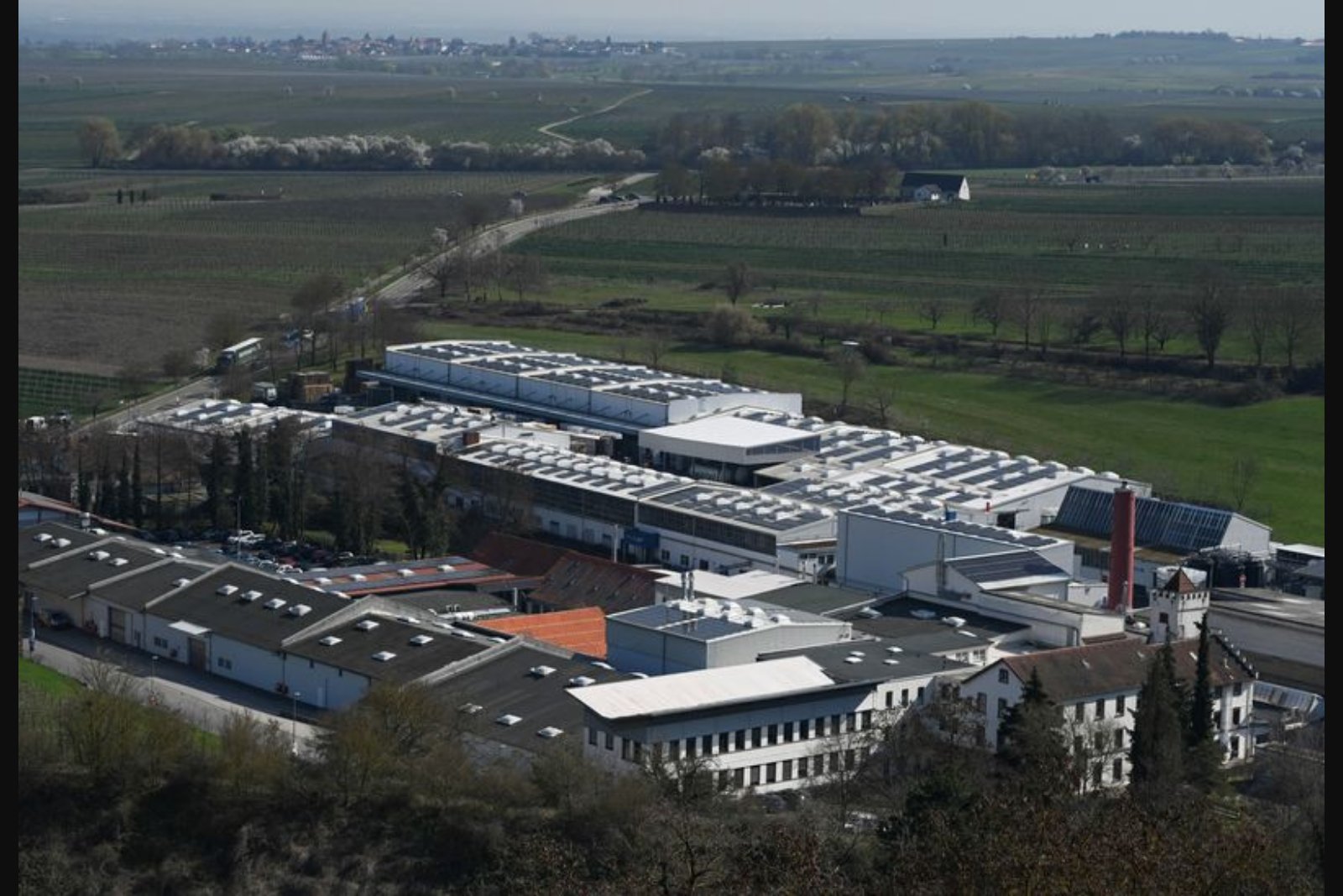
Across a modest office at Gechem’s plant in Kleinkarlbach, Germany, owner Martina Nighswonger described a business squeezed from every angle. The firm, which blends chemicals for household cleaners and bottles brake fluid for the auto industry, has faced a sequence of shocks since the pandemic. Now, the war in the Middle East has driven up the cost of crucial inputs once again, leaving the company to run daily crisis meetings and consider options it had not contemplated in years.
"There’s just no letup. Every year profits get a little smaller, and eventually they’re gone," Nighswonger said, describing an environment that has forced the company to freeze hiring and reassess capital projects. She cited a sharp jump in the price of sulfamic acid - an input used in toilet and dishwasher tablets - which she sources from Asian suppliers. The chemical has risen by a fifth, she said, adding between 300,000 and 400,000 euros to Gechem’s costs this year.
Gechem, a small company emblematic of Germany’s Mittelstand, now faces the prospect of deeper cuts after years of coping with the pandemic, an earlier energy shock from Russia’s invasion of Ukraine, and punitive U.S. tariffs. Founded in 1861, the firm reported sales of 46 million euros last year and employs 165 people. For the first time in two decades, management has said it is no longer ruling out job losses; planned investments such as a new bottling line and expansion of an on-site solar array - projects worth millions - are on hold.
The immediate trigger for the latest price surge is Iran’s blockade of the Strait of Hormuz following a cycle of attacks, which disrupted oil shipments and, after recent tit-for-tat strikes on large gas facilities in Iran and Qatar, sent crude to almost $120 a barrel - roughly double the price observed at the start of 2026. Analysts at the IW German Economic Institute estimate that if oil remains around $100 a barrel, Germany’s economy could face a 40 billion euro hit over two years, highlighting the sensitivity of the industrial base to sustained energy price increases.
Those higher oil and gas prices have amplified pre-existing vulnerabilities. Wholesale power prices in Germany are among the highest in the world, at about $132 per megawatt hour (MWh), compared with $48 per MWh in the United States and an EU average near $120 per MWh, according to International Energy Agency data cited by executives. Such a spread leaves European producers with little margin to absorb additional cost shocks.
"Europe is on the chopping block for this and clearly does not have the margin to take a second energy hit in such a short period of time," said Ipek Ozkardeskaya, senior analyst at Swiss bank Swissquote. She singled out Germany and the U.K. as particularly vulnerable to the renewed energy shock.
The impact is spreading across sectors and up supply chains. European chemicals, plastics, metals, textiles and toy makers are reporting disrupted supplies and higher procurement prices. Suppliers of fertilisers, sulphur, helium, aluminium and polyethylene have been affected by the standoff over the Strait of Hormuz, while freight costs have also risen in response to pricier fuel.
Wolfgang Grosse Entrup, managing director at the German chemicals association VCI, warned that smaller firms will struggle most because they cannot easily switch raw material sources at short notice. Gechem’s experience reflects that constraint; the company sources sulfamic acid from Asian producers and cannot quickly pivot to alternative suppliers without incurring further cost and logistical burdens.
These pressures are already visible in insolvency statistics. Germany’s statistics office recorded 24,064 mostly small and medium-sized firms filing for insolvency in 2025, the highest tally since 2014, evidence that the string of recent shocks has materially weakened parts of the corporate landscape.
Big chemical groups are responding with a mix of cost control, job cuts, and price increases. Lanxess, which had revenue of 5.7 billion euros last year, announced plans to cut 550 jobs and said it would raise prices as its costs rise. The company said it now monitors developments in the Middle East daily. Evonik’s chief executive, Christian Kullmann, said some additional costs might be passed on to customers, though not all would be transferable.
Henkel reported indirect upward pressure on raw material prices, while BASF - Europe’s largest chemical maker - has already implemented price increases in excess of 30% for some products. The VCI’s Grosse Entrup described corporate operations as effectively in full crisis mode.
The strain is not confined to chemicals. Peter Voser, chairman of Swiss engineering group ABB, warned that a prolonged Gulf war would amplify energy shortages and push prices higher, potentially forcing companies that rely on gas as their primary energy source to halt assembly lines temporarily. He suggested the initial effect would be on supply and production, with broader demand-side cuts likely to follow if the conflict persists.
In France, Marc-Antoine Blin, president of Elydan, which produces plastic pipes for residential and infrastructure use, said Asian suppliers declaring force majeure have halted shipments, raising polymer prices. Elydan consumes 40,000 to 50,000 tonnes of polymers annually across its European facilities. Blin said the company would likely be forced to pass on higher costs if the disruption continues, arguing that the firm cannot absorb such a shock by trimming margins alone.
Even companies with plans to reduce dependence on fossil-based feedstocks say the current volatility remains a concern. LEGO, for example, is shifting to recycled and bio-based plastics derived from renewables such as sugarcane to cut fossil fuel use, but CEO Niels Christiansen noted that the succession of disruptive events - from COVID to inflation to the Ukraine war and tariff changes - has created persistent volatility that is damaging to planning and operations.
The Gulf disruption has also affected corporate deals and payouts. Lanxess called off a planned sale of a joint-venture stake, with sources indicating that deteriorating market conditions after the Iran war played a role. Swedish outdoor- and leisure-gear firm Dometic has suspended its dividend, while Thyssenkrupp Steel Europe cautioned that sustained gas price rises would drive up production costs.
Germany’s steel industry lobby WV Stahl has urged additional political support to stabilise gas and power prices for energy-intensive production, warning that the Iran war has exposed Europe’s "enormous vulnerability". French plastics and composites trade group Polyvia said it is raising the issue with government authorities, reporting that some suppliers are using higher gas costs to renegotiate contracts and press for higher prices, with an emerging risk of reduced allocated volumes.
Policy flexibility that governments applied in earlier crises is now more constrained. Fiscal room to offer broad industry subsidies is smaller than in 2022, limiting options for large-scale relief to firms facing sharply higher energy bills. Rating agencies warn the financial strain could intensify: Karl Pettersen, co-head of corporate ratings at Scope Ratings, said that if oil rises toward $130 a barrel there would be a materially greater risk of defaults in sectors such as metals and chemicals.
For companies like Gechem, the immediate consequences are concrete and operational: frozen hiring, delayed capital expenditures, and heightened attention to daily cash flows and supplier arrangements. Gechem’s owner described the emotional toll and operational fatigue of repeatedly coping with crises, and the hard arithmetic of shrinking profits as input costs climb.
Executives and industry groups across Germany, France, Denmark and Switzerland say Europe is bearing the brunt of the latest shock because its energy and power costs are already high relative to other regions. The convergence of high wholesale electricity prices, elevated oil and gas prices, constrained supplier availability, and rising freight costs has created a fresh test for manufacturers and their financiers.
With no immediate end to geopolitical tensions visible in the latest reporting, companies and trade bodies are signalling growing urgency for policy measures that can stabilise energy costs and secure supply. For now, many firms - from family-run Mittelstand businesses to large listed chemical producers - are bracing for continued margin pressure, constrained investment, and an increasingly difficult operating environment.
(Currency note: $1 = 0.8687 euros)