
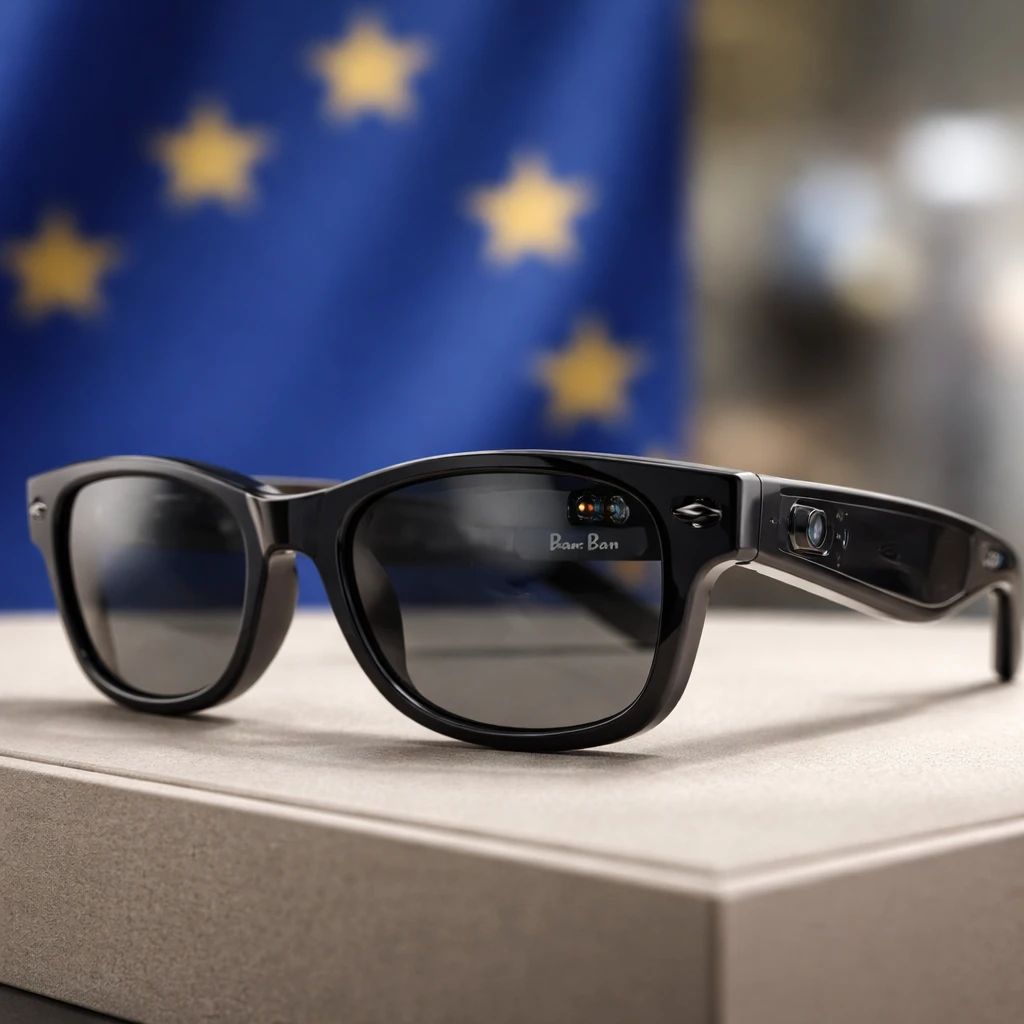
Meta Platforms has again pushed back plans to introduce its Ray-Ban Display glasses to European consumers, citing regulatory hurdles in the European Union and persistent supply limitations.
The product's EU debut was initially put on hold in January during CES after Meta said demand in the United States had outstripped supply. The most recent reports indicate that regulatory developments in Europe are now a further impediment to the company’s rollout timetable.
A central regulatory issue involves emerging EU battery rules that would require devices sold by 2027 to incorporate removable batteries. Meta says this requirement would consume additional space within the glasses' frame design. The company noted that the specifics of the rule remain under discussion and that any final regulation would apply across the entire product category.
Separately, Meta is contending with regulatory considerations related to AI in the region as it works to make the display-capable eyewear available to European customers. The company has identified these legal and technical compliance requirements as factors complicating the product introduction.
Analysts at Barclays have highlighted product design constraints as a limiting factor for consumer uptake. In conversations with Meta Chief Scientific Officer Norbert Gorny in early March, Barclays said that restricted design ranges represent a key barrier to broader adoption of the Ray-Ban Display glasses.
Barclays analysts expect Meta to adapt its products to comply with future battery regulation changes over time. In the near term, the analysts forecast that the United States will remain the principal growth market for the Display glasses as supply and regulatory issues are resolved.
Barclays' forecasts indicate that the Display product represented 2% of Meta's sales in 2025. That figure underlines the product's current contribution to the company's revenue mix while the firm addresses the constraints delaying wider international availability.
Summary
Meta’s European launch of Ray-Ban Display glasses is delayed by a combination of EU battery rules that could mandate removable batteries by 2027, ongoing supply shortages following a pause at CES in January, and AI-related regulatory considerations. Barclays analysts point to limited design options as a factor restraining adoption and expect the US to drive short-term growth.
Key points
- Regulatory - Emerging EU battery rules requiring removable batteries by 2027 would affect device design and the entire product category.
- Supply and demand - The product was paused in January during CES after US demand exceeded available supply; supply constraints continue to limit the EU rollout.
- Market focus - Barclays sees the United States as the primary near-term growth market for the Ray-Ban Display glasses; Barclays forecasts the Display product accounted for 2% of Meta’s sales in 2025.
Risks and uncertainties
- Regulatory uncertainty - The final scope and technical details of the EU battery rules remain under discussion, creating uncertainty for product design and timing.
- AI regulation - Ongoing regulatory work around AI in the EU presents additional compliance risks that could delay market entry.
- Adoption constraints - Limited design ranges, as noted by Barclays after talks with Meta's CSO, may restrict consumer adoption until broader design options are available.