
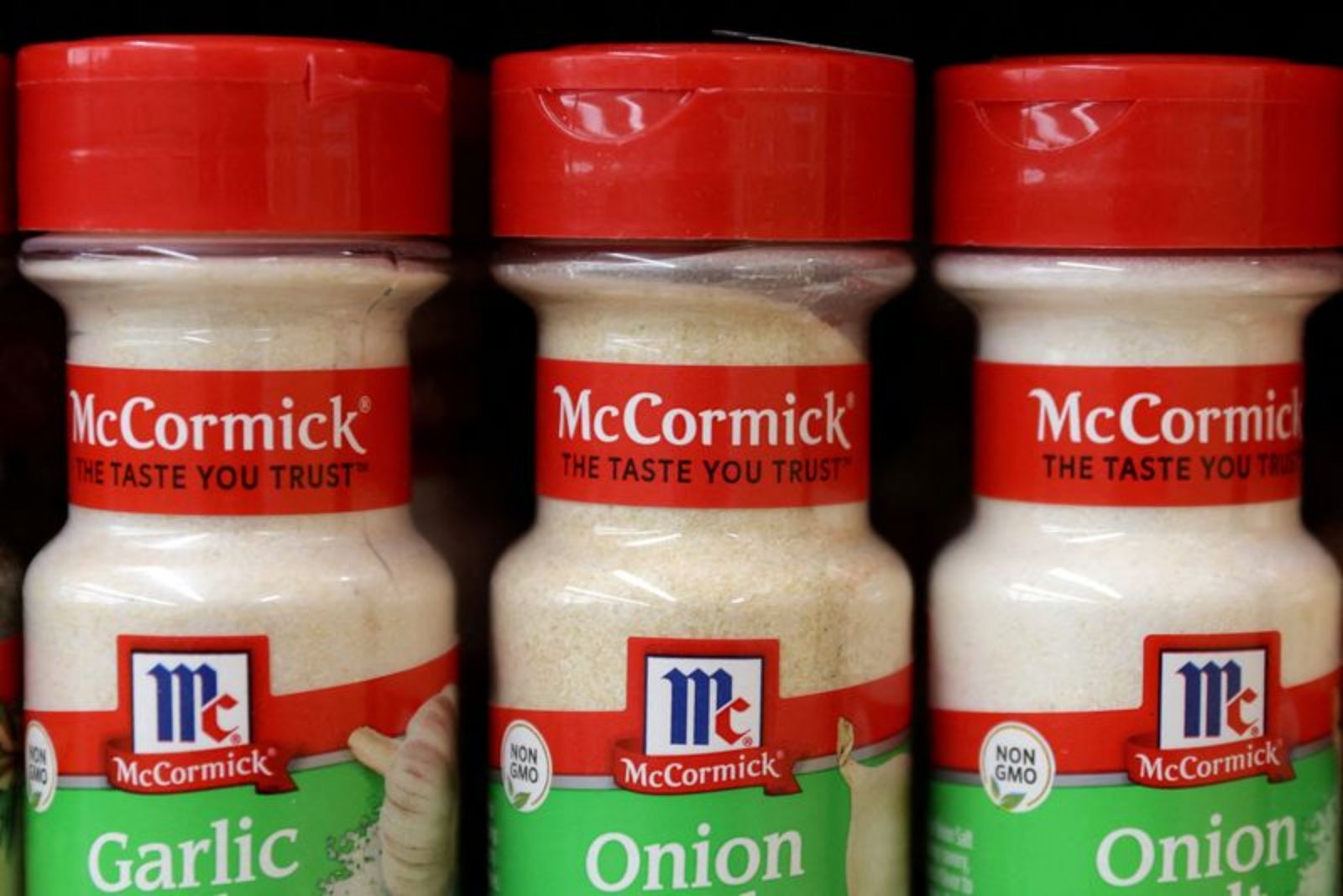
McCormick on Tuesday reported quarterly results that exceeded market projections, citing continued consumer interest in its spices and condiments as home-cooked meals remain a preferred option for value-conscious shoppers. The company said resilient demand for its core seasonings helped lift sales in the three months ended Feb. 28.
Shares of the Hunt Valley, Maryland-based company rose about 4% in premarket trading after the results were released. In separate strategic news, McCormick confirmed it is in advanced talks with Unilever about a potential acquisition of the British company's food business - discussions that, if completed, could combine the firms into an enterprise of roughly $60 billion.
McCormick attributed part of its performance to investments in brand marketing as well as technology and innovation. Those investments, the company said, have supported demand and helped the business navigate cost pressures.
For the first quarter, McCormick posted revenue of $1.87 billion, topping LSEG-compiled estimates of $1.79 billion. Total volumes slipped 0.7% year over year, while selling prices rose 1.9% for the quarter ended Feb. 28. On the profitability front, adjusted quarterly earnings came in at $0.66 per share, compared with analyst expectations of $0.59.
The company has implemented price increases to protect margins in the face of higher-than-expected tariff costs. McCormick said that roughly half of the incremental tariffs on its products remain in effect from prior periods. The spice maker also noted that its most significant raw materials - including pepper plus various spices and herbs - are sourced from countries outside the United States.
McCormick reaffirmed its annual targets, joining peers such as General Mills in maintaining guidance for the broader year.
Key points
- Q1 revenue of $1.87 billion versus $1.79 billion estimated by LSEG.
- Adjusted EPS of $0.66 beat estimates of $0.59; volumes down 0.7% while prices were up 1.9%.
- Company is in advanced talks to buy Unilever's food business, which could create a $60 billion combined company; shares rose about 4% premarket on results.
Risks and uncertainties
- Persisting incremental tariffs - about half remain in place - continue to pressure costs and could affect margins if not offset by pricing. This impacts packaged food companies and consumer staples margins.
- Exposure to international raw-material supply - key inputs like pepper and spices are sourced outside the U.S., exposing McCormick to commodity and supply-chain risks that affect input cost volatility for the food sector.
- Deal risk - talks to acquire Unilever's food unit are advanced but not finalized; outcome and regulatory or integration hurdles could affect strategic and financial plans for the company and the broader food industry.
McCormick’s latest quarter reflects a mix of modest volume pressure and modest price recovery, supported by targeted investments in brand and product innovation. The company’s comments on tariffs and sourcing underscore ongoing cost considerations for the packaged foods sector, while the potential Unilever transaction, still under discussion, would be a material strategic development if completed.