
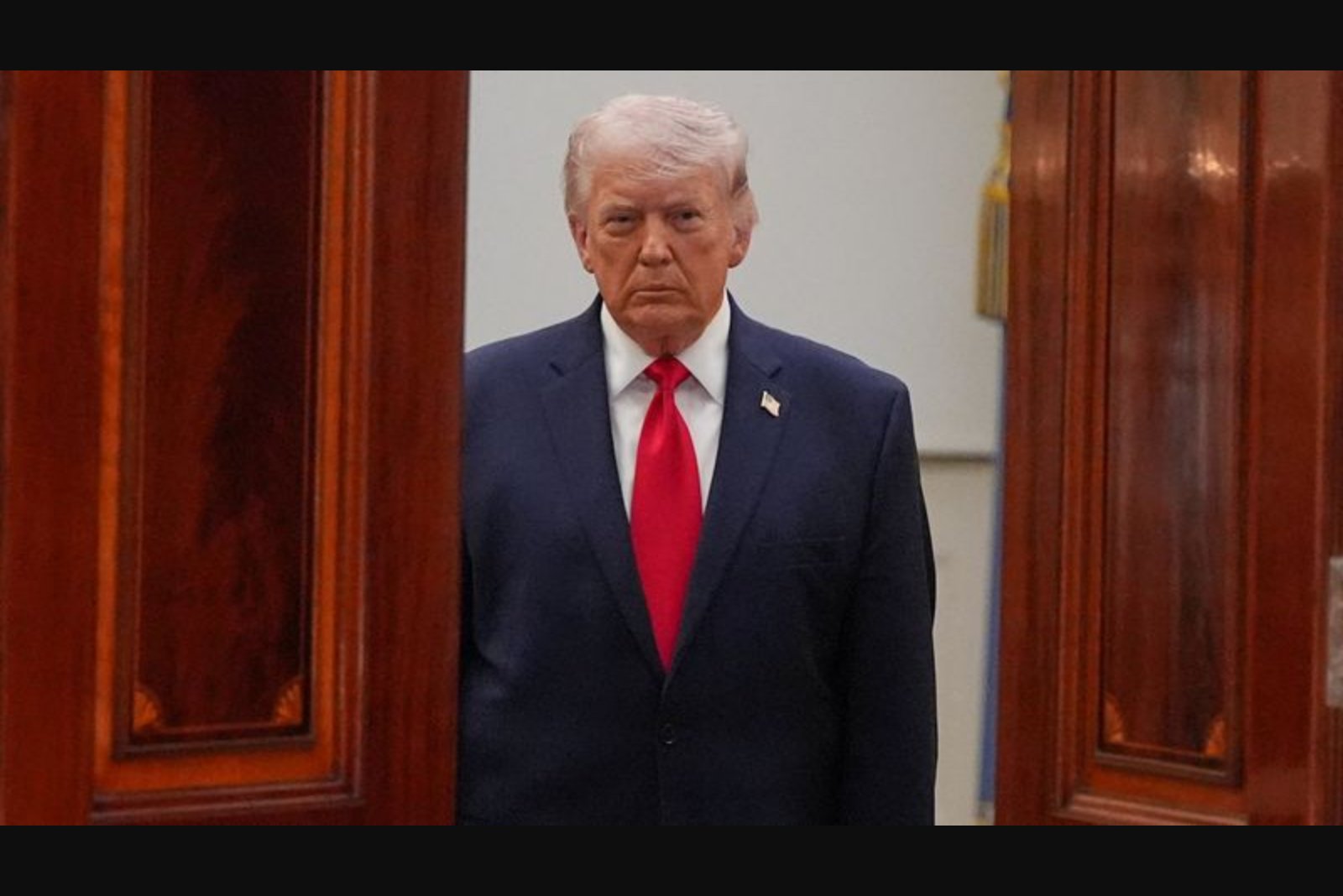
U.S. President Donald Trump told the nation in a televised speech on Wednesday night that the U.S. military had nearly completed the goals it had set out to accomplish in its war with Iran and that the conflict would soon be ending. He added that the U.S. would continue to hit targets in the Islamic Republic over the next two to three weeks.
Markets reacted immediately to the address. Stocks fell, the dollar firmed and oil prices rose as investors processed the prospect of a sustained, if time-limited, period of military activity.
Several portfolio managers and market strategists offered assessments of the speech and its implications for asset prices and risk sentiment.
"We have no additional certainty or clarity around timeline from this address and this is what the market was looking for. The fact that we can expect 2-3 more weeks of action, boots on the ground were not ruled out and that threats to hit infrastructure were reiterated will put the market back on the defensive, particularly as we come into the long weekend." - JON WITHAAR, SENIOR PORTFOLIO MANAGER, PICTET ASSET MANAGEMENT, SINGAPORE
Withaar highlighted the market's desire for a firmer timeline and noted that the speech offered none, instead extending an interval of operational risk that could weigh on risk assets, especially with holiday liquidity lower.
"There was a base case here that you were going to see continued de-escalation, which we had seen over the past couple of days. By and large, we did see that, but I think the market wanted a little bit more."There wasn’t a lot new for me. "(The Strait of Hormuz) remains the variable in everybody’s playbook. "When you look at the stock markets we’re seeing a bit of a buy-the-rumour, sell-the-fact type reaction, and for crude oil the opposite.""But now there’s another two to three weeks of uncertainty hanging overhead for markets." - TONY SYCAMORE, MARKET ANALYST, IG, SYDNEY
Sycamore described the recent price moves as reflecting a buy-the-rumour, sell-the-fact dynamic in equities and a converse reaction in oil, while flagging the strategic importance of the Strait of Hormuz as a continuing source of risk for global energy flows.
"There was no mention in Trump’s speech about the details on when the war ends or when the passage of the Strait of Hormuz will become possible. There are still uncertainties. So the domestic equities are not going to head for a further rise. We need another step forward, like the possibility for the opening of the strait. The positive side is that the war is not going to escalate." - KAZUNORI TATEBE, CHIEF STRATEGIST AT DAIWA ASSET MANAGEMENT, TOKYO
Tatebe emphasised that the speech did not clarify a timetable for resolution or the reopening of key shipping lanes, leaving scope for continued market caution. He noted, however, that the remarks contained elements that could be read as limiting a broader escalation.
In sum, while the president framed the conflict as nearing its objectives, the message that further military action could continue for two to three weeks extended an interval of uncertainty. That uncertainty translated into immediate market moves across equities, currencies and commodities, and prompted traders and strategists to warn of ongoing volatility into the near term.