
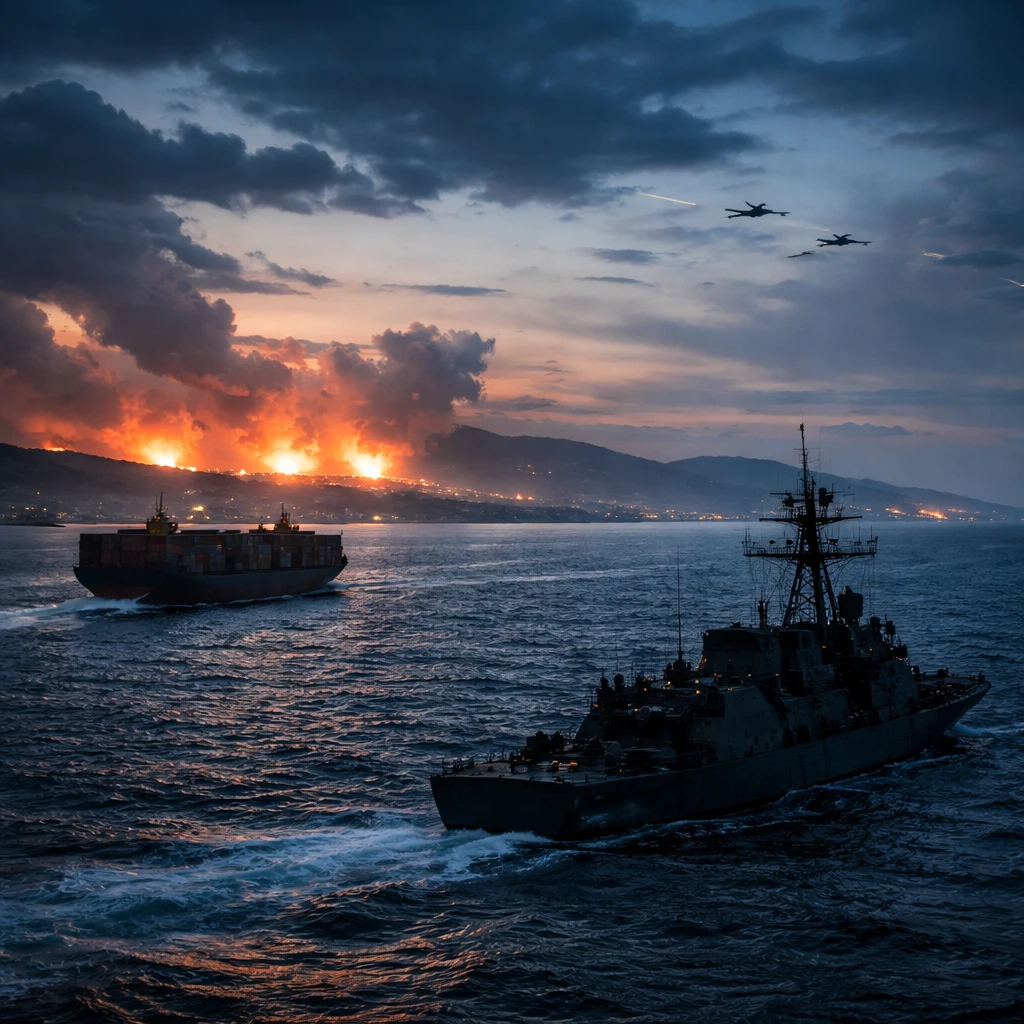
The conflict in the Middle East intensified on Wednesday as U.S. forces maintained sustained strikes against Iran and Israel targeted sites linked to Tehran's missile and air-defense capabilities. Despite the escalation, U.S. stock futures moved higher after media accounts reported a possible secret outreach by Iranian operatives to explore terms for a ceasefire.
Iran responded to the campaign by striking locations inside Israel and targeting U.S. bases and diplomatic posts across the region. In the aftermath of a weekend air barrage that killed Ayatollah Ali Khamenei, Tehran said it would choose a successor as supreme leader.
Concerns have grown that the confrontation could last beyond President Donald Trump's earlier estimate of roughly four to five weeks. A senior U.S. military commander described American forces as conducting "24/7 strikes into Iran from seabed to space and cyberspace," and indicated additional assets would be used.
Admiral Brad Cooper, who is overseeing the U.S. campaign, said the sustained operations have weakened Iran's air defenses and noted that Iran no longer has operational vessels in strategic waterways, according to a video briefing cited by Reuters.
Israeli Defense Minister Israel Katz warned that any newly appointed Iranian leader could become "an unequivocal target for elimination."
Energy markets and the economic implications
The prospect of a protracted conflict has raised the risk of disruptions to a significant share of global oil and gas shipments, particularly those transiting the Strait of Hormuz. Worries that a longer crisis could choke off energy flows pushed prices higher and rekindled inflationary pressures.
Brent crude, which had been trading near $73 a barrel before the onset of the assault on Iran, climbed and was last trading at $83.48 a barrel, up about 1.6%. U.S. West Texas Intermediate futures rose 0.9% to $75.26 a barrel.
Earlier in the week oil surged by as much as 8% before retreating after President Trump indicated the possibility of U.S. escorts for ships passing through the Strait of Hormuz.
Natural gas prices have also jumped across Europe and Asia. Iranian strikes on a Qatari natural gas facility have halted exports from a major producer, tightening supply to countries that rely on those shipments and amplifying pressure on energy markets.
Market reaction and regional economic pain
The market reaction has been uneven. Equity markets experienced a volatile session as investors weighed the potential for higher energy costs and the prospect that elevated inflation could delay planned Federal Reserve rate cuts. On Tuesday U.S. equities saw sharp swings driven by those concerns.
Asian markets were hit particularly hard by the spike in energy costs. East Asian economies such as South Korea and Japan, which import large volumes of oil and gas that transit the Strait of Hormuz, are especially exposed to any reductions in tanker traffic. South Korea's Kospi index tumbled so sharply on Wednesday that trading was temporarily halted.
Despite local losses, futures on Wall Street turned positive on Wednesday as oil price gains moderated following a report that Iranian operatives had offered to discuss terms for ending the fighting. The New York Times, citing officials briefed on the outreach, reported that U.S. officials remain skeptical that either Washington or Tehran are ready to take that route.
According to the same reporting, Israeli officials eager to inflict heavy damage on Iran's military and potentially topple Tehran's government have urged the U.S. to reject the approach. In public, Iran's leadership has not signaled any moves toward direct negotiations with Washington.
Outlook
The immediate outlook remains uncertain. Energy prices and market volatility will likely hinge on whether the reported outreach leads to substantive talks or is dismissed by the principal parties. For now, military operations continue and policymakers and investors are monitoring potential disruptions to energy flows and the implications for inflation and central bank policy.