
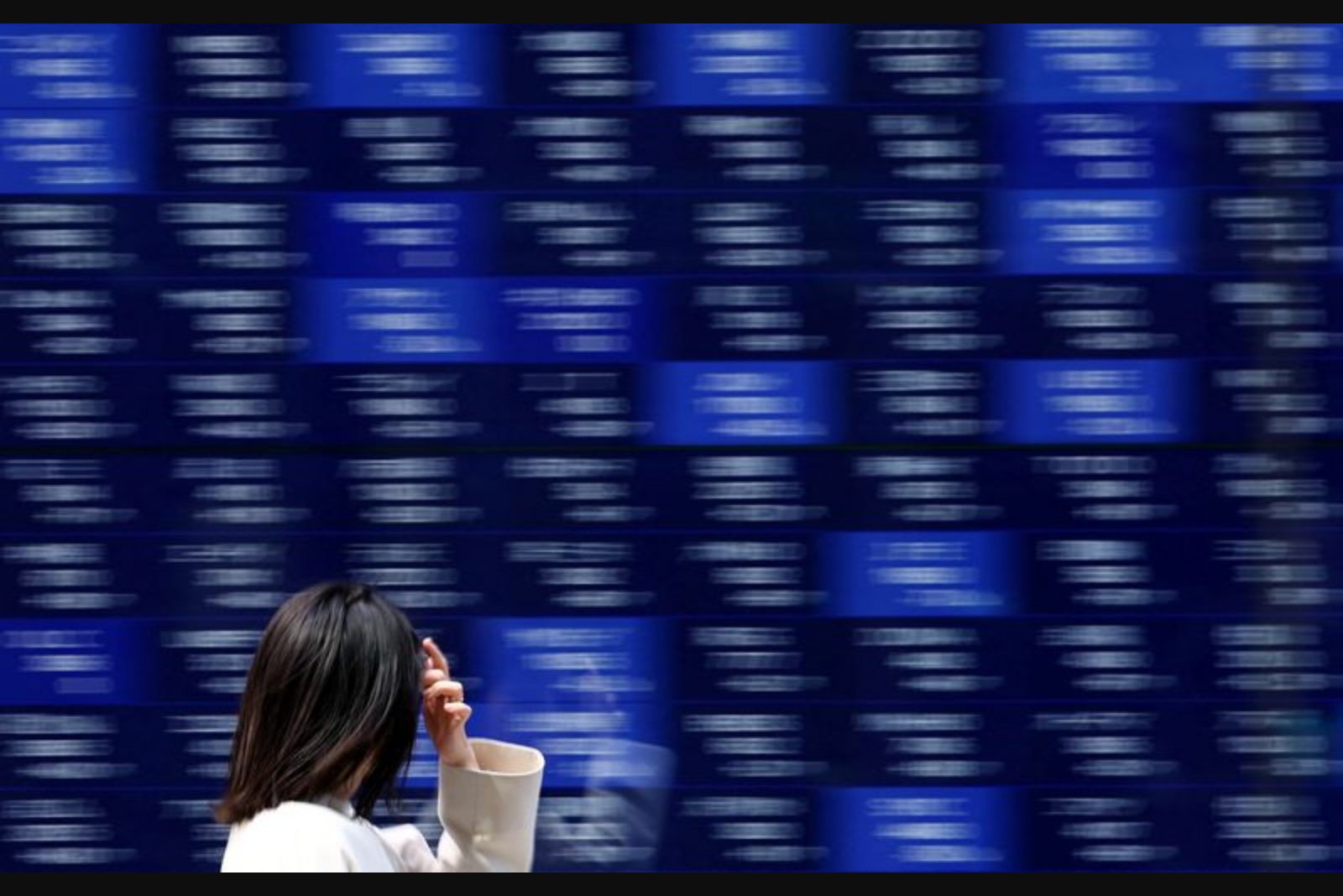
Global markets showed tentative gains on Thursday, with stocks climbing slightly, the U.S. dollar pulling back from recent strength and crude oil prices declining as traders positioned ahead of a presidential address that could outline a winding down of U.S. operations related to the Middle East conflict.
Investor expectations that the month-long U.S.-Israel conflict with Iran may be coming to an end have helped lift risk assets and pressured the dollar over the past two sessions, following a difficult March when a spike in oil pushed many risk markets into a tailspin.
Asia-Pacific equity benchmarks were subduedly positive in early trade. MSCI’s broadest index of Asia-Pacific shares outside Japan was a tad higher after registering its largest one-day rise on Wednesday since November 2022. Japan’s Nikkei was set for a robust open.
President Trump told Reuters on Wednesday that the United States would be "out of Iran pretty quickly" and could return for "spot hits" if required. The remarks came ahead of his planned primetime address to the nation at 0100 GMT on Thursday.
Officials in the U.S. administration have offered differing timelines for the conclusion of military operations. On Tuesday, Trump said the U.S. could end its campaign against Iran within two to three weeks.
Market participants and analysts will be parsing the speech for signals on the timing and mechanism for reopening the Strait of Hormuz, a crucial artery for global fuel shipments. A reopening could relieve the supply choke that has particularly affected Asian economies.
"A U.S. exit within the next few weeks would certainly remove one massive layer of tension," said Tony Sycamore, market analyst at IG. "However, it doesn’t automatically guarantee smooth sailing and energy flow through the Strait of Hormuz."
Sycamore added that Tehran’s reaction would be decisive, noting the possibility that Iran might continue to exert influence by "imposing tolls or selective inspections on passing tankers and strikes on its neighbouring countries’ energy infrastructure."
The Iranian military escalation has included repeated attacks on Gulf countries, some of which host U.S. bases, and Tehran has leveraged the Strait of Hormuz - which handles about a fifth of global oil and liquefied natural gas shipments - as a strategic tool.
Rising energy costs in March had reignited concerns about global inflation, and those price pressures, alongside slowing growth worries, dented market sentiment.
The dollar, which had been the preferred safe-haven during recent turbulence, weakened as hopes for a ceasefire increased this week.
In currency markets, the euro bought $1.1591 in early trade, holding onto gains made recently. The Japanese yen traded at 158.68 per U.S. dollar, moving away from the psychologically sensitive 160 level that some traders fear could prompt intervention from Tokyo.
In energy markets, the front-month Brent contract for June fell 2.7% to settle at $101.16 per barrel, after bouncing off an intraday low of $98.35.
What investors will watch next
- The content and tone of the U.S. presidential address for indications of U.S. military withdrawal timing and any mention of continued contingency operations.
- Signals from Iran on whether it will maintain pressure on maritime traffic through the Strait of Hormuz, including inspections or other measures that could affect energy flows.
- Movements in oil prices and currency pairs that reflect changing risk perceptions and potential shifts in global inflation expectations.