
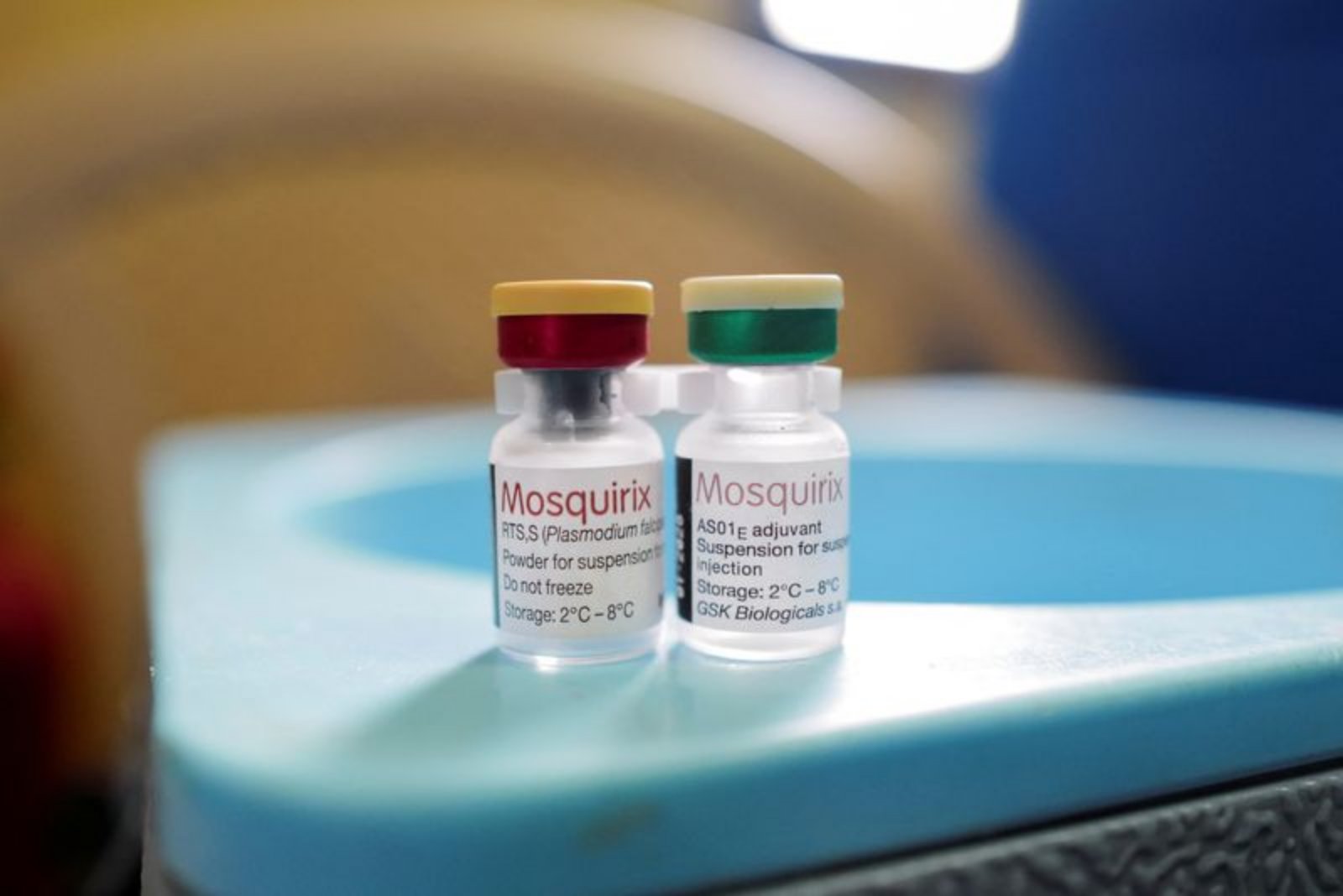
Ghana’s recent decline in childhood deaths from malaria highlights the practical impact of two newly introduced malaria vaccines, offering a glimpse of how immunisation can complement longstanding prevention measures. Government health figures and Gavi, the global vaccine financing alliance, attribute the country’s progress to a combination of insecticide-treated bed nets, better access to preventive drugs and timely treatment, and the rollout of two vaccines developed by pharmaceutical and research partners.
Officials in Ghana say the vaccines have narrowed a remaining gap in the country’s response to a disease that still kills nearly half a million young children across Africa each year. Dr Selorm Kutsoati, who leads Ghana’s immunisation programme, described the malaria vaccine as a "gamechanger" in remarks to health officials and partners.
Measured impact in Ghana
Ghana’s official statistics show confirmed deaths among children under 5 fell from 245 in 2018, the year before one of the vaccines developed by GSK was introduced in selected districts, to 35 in 2024. That represents a decline of nearly 86 percent in confirmed under-5 fatalities over that period, according to government figures. A decade earlier, Ghana recorded nearly 1,000 child deaths from malaria each year, health officials said.
Malaria infections in Ghana also dropped, from an estimated 6.7 million cases in 2018 to 5.3 million in 2024, with about one fifth of infections occurring in children under 5, government data show. Health officials caution that both infections and deaths are likely undercounted because many cases go undiagnosed and deaths occurring at home are frequently not reported. The World Health Organization's team lead for malaria in Africa, Dorothy Achu, noted reporting can be inconsistent across health facilities but agreed that Ghana’s mix of strategies has produced significant reductions in mortality.
Anecdotal experience from caregivers aligns with the official statistics. Esther Kolan, a 31-year-old trader in Kasoa, said she made sure her one-year-old son, Phenehas Gyngyi Jr., received three doses of the vaccine last summer after family experiences with severe malaria, including the death of a brother and repeated hospitalisations of a daughter. Kolan said Phenehas has never been hospitalised with malaria following the vaccinations and that the vaccine, alongside sleeping under bed nets, has reassured her.
How the vaccines fit into broader control efforts
Ghana’s progress did not start with vaccines. The country had already reduced malaria mortality substantially through established interventions - distributing insecticide-treated bed nets, increasing access to preventive drugs and making prompt treatment more widely available. Health managers say the vaccines have provided an additional layer of protection that helped close the remaining gap.
Stanley Yaidoo, director of municipal health services in the district where Kasoa is located, said the vaccine rollout in 2023 provided the "master stroke" needed to support existing measures. He described how reduced severe malaria cases ease pressure on hospitals by lowering admissions that tie up beds and staff needed to treat other conditions.
The first countries to use the vaccines at scale - Kenya, Malawi and Ghana - participated in a World Health Organization-led pilot programme that began in 2019 with the GSK-developed shot. Following the pilot, the WHO approved that vaccine for wider use in 2021. Access to an additional vaccine developed by Oxford University and manufactured by the Serum Institute of India improved availability when WHO recommended the Oxford shot in 2023.
Vaccine performance and real-world results
Based on clinical trials, the World Health Organization estimates the two vaccines reduce malaria cases by over 50 percent during the first year after three shots are administered. That efficacy is lower than many routine childhood vaccines in use for other diseases. A fourth dose is required before a child turns two to maintain protective benefit.
Health authorities and Gavi point to the Ghana data as evidence that even a partially effective vaccine can translate into substantial public health gains in real-world settings. Gavi’s head of malaria programming, Scott Gordon, said the alliance is seeing significant impact on the ground. A study published in The Lancet in January, analysing countries that participated in the WHO pilot, found cases of severe malaria among vaccinated children were 58 percent lower than among unvaccinated children in the year following the third dose.
Coverage and implementation challenges
The introduction of a multi-dose vaccine presents operational hurdles. The Gavi documents and interviews with health officials show uptake across countries has varied. In the first six months of 2025, coverage rates for three doses across 11 countries ranged from over 70 percent in Ghana and Burkina Faso to 45 percent in Liberia and 35 percent in South Sudan, where conflict has hampered delivery.
Logistical problems are particularly acute in rural areas, where transportation and storage capabilities are limited. In Ghana, some traditional and religious leaders and a number of politicians expressed skepticism about the vaccines, according to local health officials. Yaidoo said that as community members saw the protection afforded by immunised children, they became advocates for the programme.
Funding shortfalls at Gavi and potential human cost
Gavi currently serves as the sole purchaser of malaria vaccines for many African nations, financing access and helping to coordinate rollouts. But the alliance faces significant funding challenges. Internal estimates prepared for Gavi’s board in December and seen by Gavi personnel indicate the organisation expects to be able to spend just over $800 million on malaria vaccines over the next five years - a level that is 28 percent less than the estimated need.
The shortfall follows a broader fundraising gap of $2.9 billion against Gavi’s overall funding target for the same period. The internal documents modelled by researchers at Imperial College London and the Swiss Tropical and Public Health Institute estimate an additional 19,000 lives could be lost as a result of lower vaccination rates tied to this funding gap. Gavi’s Gordon described the shortfall as the difference between the promise of the vaccines and the resources available to provide them.
Donor retrenchment and conditions
Several major donors have reduced commitments to Gavi. The United States, previously one of Gavi’s largest contributors, provided about $1.3 billion between 2020 and 2024. In June, U.S. Health Secretary Robert F. Kennedy announced Washington would no longer support Gavi as part of a broader set of foreign aid cuts framed by the administration as aligning with an "America First" agenda. A Department of Health and Human Services official told Gavi it will not receive U.S. disbursements unless it begins phasing out vaccines that contain the mercury-based preservative thimerosal from its portfolio. Gavi confirmed it had received the request and said any portfolio changes would be guided by scientific consensus.
Anti-vaccine groups have linked thimerosal to autism and other neurodevelopmental disorders, despite multiple studies finding no related safety issues. Gavi said it continued to hold discussions with the U.S. government on the subject.
Britain, Gavi’s largest donor, has pledged 1.25 billion pounds over the next five years. While Britain reiterated its commitment to supporting work that saves lives, this pledge is more than 20 percent lower than the country’s contribution for 2020-25.
Affordability and manufacturer actions
To help bridge financing gaps, manufacturers and procurement partners have agreed price reductions. GSK and its partner Bharat Biotech announced in June plans to lower the price of their vaccine to under $5 a dose by 2028, roughly half of current cost levels. In November, Gavi and the U.N. children’s agency announced a deal to pay 25 percent less for the Oxford/Serum Institute vaccine, which is currently priced at around $4 per dose, within roughly a year.
GSK described real-world data as encouraging and said it was working with Gavi on how to optimise rollouts. The company did not elaborate on its plans in detail when contacted.
Country-level adjustments and delays
Some countries have taken steps to self-finance parts of their vaccine needs. At least three - Burkina Faso, Ivory Coast and Togo - have committed to covering some vaccine requirements themselves, according to Gavi. Other countries face tougher choices. Tanzania, for example, is struggling to fill funding gaps and has had to delay the start of its vaccination campaign. Dr Samwel Lazaro, acting head of Tanzania’s malaria programme, said the government is prioritising the implementation of the most essential life-saving services, such as distribution of medicated bed nets.
Gavi has also changed its subsidy rules. Until this year, it could subsidise up to 85 percent of the assessed need for vaccines in areas of medium and high malaria transmission, with governments contributing as little as $0.20 per dose. The alliance has cut that cap to 70 percent for areas ordering shots for the first time. It will also ask all but the poorest governments to increase their co-financing levels, with contributions scaled to economic strength. Gavi said it is working through the details of how these changes will affect individual countries.
Outlook and remaining uncertainties
At least four more countries plan to introduce malaria vaccines before 2028, Gavi reported. Yet, the extent to which funding constraints will limit the pace and scale of rollout across Africa remains uncertain. The alliance’s internal modelling suggests a clear human cost if financing does not meet projected needs.
Health officials note that in many countries it is still early to fully measure the vaccines’ impact. The Gavi documents and interviews with officials in several countries contain anecdotal reports of reductions in cases, hospitalisations and deaths among young children, but wider and longer-term monitoring will be needed to quantify sustained outcomes across diverse health systems and transmission settings.
For frontline health workers and caregivers in Ghana, the reduction in severe disease and hospitalisations has already made a tangible difference in daily practice and family life. Whether that progress can be extended across the continent in the face of donor retrenchment and operational barriers will depend on funding, supply affordability and local delivery capacity.
Currency note
All pound-to-dollar conversions in this report use the rate $1 = 0.7255 pounds.
(Reporting from London and Accra; additional reporting from Dar Es Salaam and Lome; editing by internal editorial staff.)