
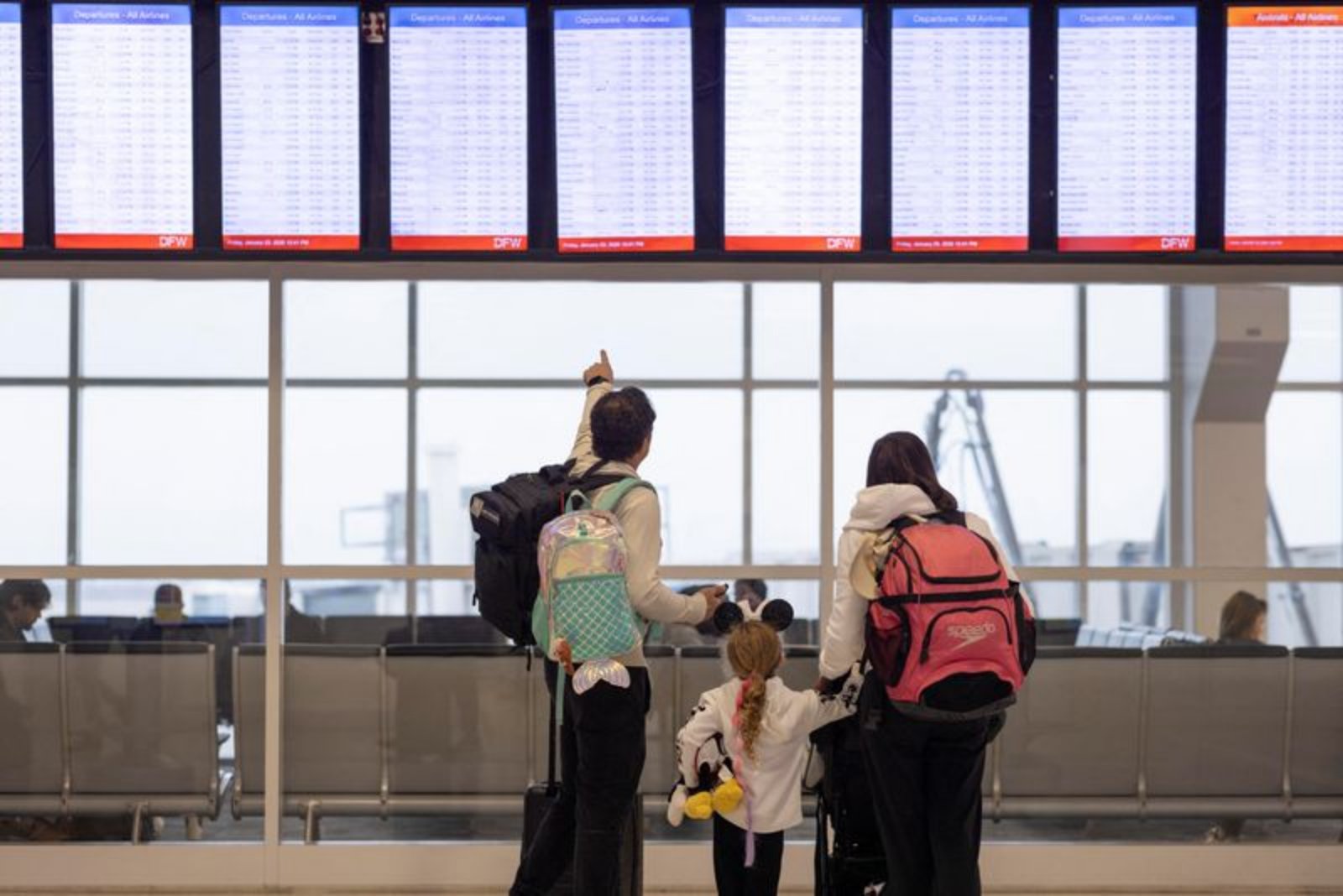
A strong winter storm moving through large swaths of the United States forced airlines to cancel and delay flights on Monday as hazardous wintry precipitation and high winds disrupted travel and transportation networks.
Flight-tracking data showed that over 3,600 flights had been canceled and 714 were delayed as of early Monday, following more than 11,000 cancellations reported on Sunday. Numbers were expected to climb as the day continued.
The U.S. National Weather Service said low pressure located south of New England was forecast to shift eastward over the Atlantic on Monday. That system was expected to deliver heavy snow to portions of the Northeast and freezing rain across parts of the Mid-Atlantic. Snow was also forecast along the Appalachian region, while rain was expected to spread along the Southeast coast as a cold front pushed offshore.
On the carrier side, American Airlines experienced the largest share of operational disruption on Monday, with nearly 570 flights canceled and about 57 delayed. Republic Airways, JetBlue Airways and Delta Air Lines were also cited among carriers facing significant outages.
Major airports hit hard by the storm included Boston’s Logan International Airport, Dallas Fort Worth International Airport and New York’s John F. Kennedy International Airport. In response to the interruptions, major U.S. carriers issued broad travel waivers and flexible rebooking policies to assist affected passengers.
Airline operations are highly interconnected - cancellations can leave aircraft and crews out of position, complicating efforts to restore normal flight schedules. That interdependence means disturbances can ripple through networks, increasing the challenge airlines face when attempting to recover service.
The storm affected surface travel as well. The Federal Emergency Management Agency warned driving conditions could deteriorate to dangerous levels as blizzard-like conditions, strong winds and ice spread further across the impacted regions.
Power systems were also affected. Hundreds of thousands of customers across several states from Tennessee to the Carolinas reported outages, with Tennessee posting the highest number of cases. Data compiled by PowerOutage.us showed that more than 820,000 customers were without electricity as of the early hours of Monday.
Officials and carriers indicated that the scale of weather-related disruptions was likely to evolve through the day, with flight and ground transportation statuses subject to change as the storm progresses.