
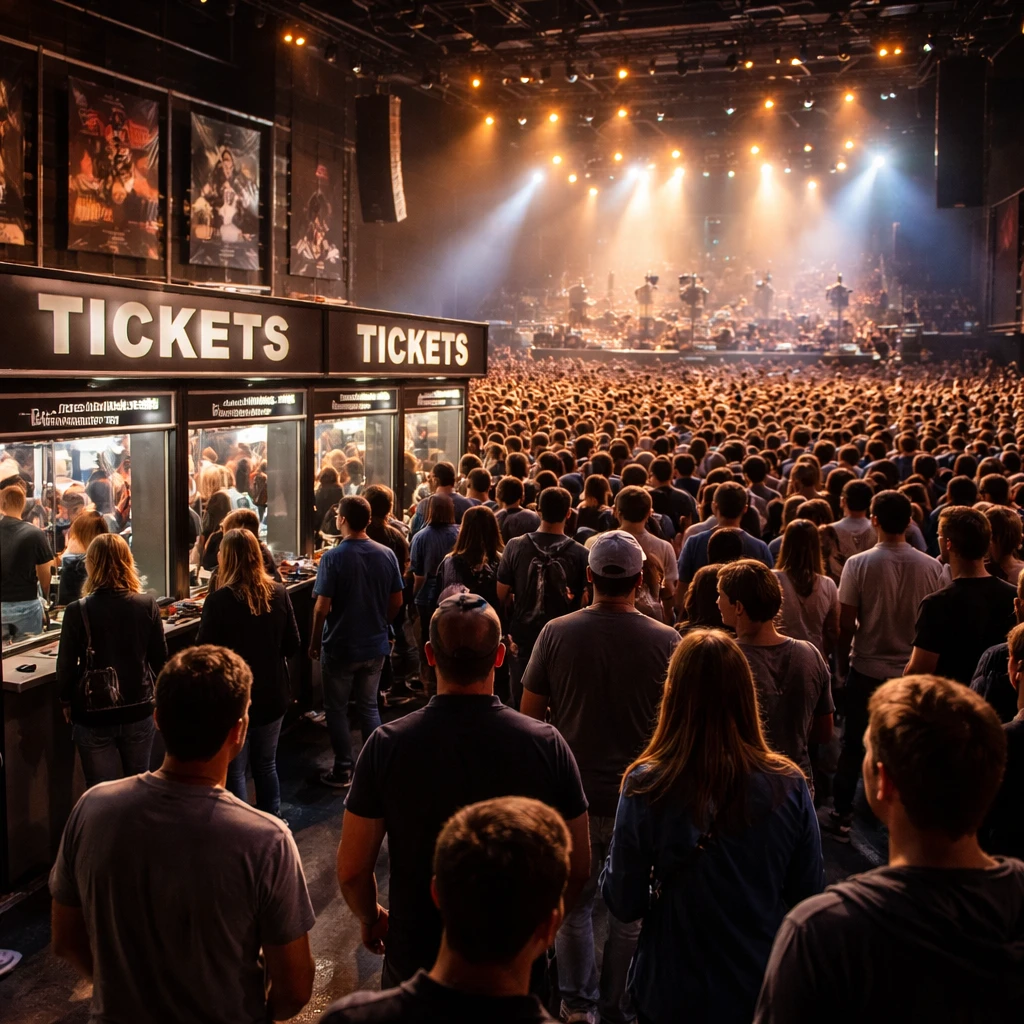
On Friday, Live Nation Entertainment (NYSE:LYV) experienced a notable 6.5% increase in its stock price following arguments presented by the U.S. Department of Justice (DOJ) advocating for the company's breakup. The DOJ contended in federal court that Live Nation has established a monopolistic grip on the live events sector, using its subsidiary Ticketmaster to pressure venues into exclusivity agreements.
The Department of Justice lawyers detailed that venues choosing to part ways with Ticketmaster for alternative ticketing platforms suffered consequences including the loss of roughly five Live Nation-promoted concerts annually. These cancellations reportedly translate to a combined revenue decline close to $1.5 million, averaging over $300,000 per event.
Among examples cited, DOJ attorney Bonny Sweeney highlighted the Barclays Center in New York, which allegedly forfeited concerts after switching ticket service providers away from Ticketmaster. She also noted complaints from multiple venues regarding the perceived inferior quality of Ticketmaster's services compared to competitors.
Live Nation, which merged with Ticketmaster in 2010, has consistently refuted allegations of maintaining an unlawful monopoly. The company has petitioned U.S. District Judge Arun Subramanian to dismiss the DOJ’s lawsuit or to grant judgment without proceeding to trial. The trial date has been set for March 2 in the U.S. District Court for the Southern District of New York.
Operating over 265 concert venues throughout North America and managing upwards of 400 artists, Live Nation’s influence is extensive. The DOJ asserts that through Ticketmaster, the firm commands about 87% of the concert ticketing market, in addition to more than 65% market share in concert promotion.
Representing Live Nation, attorney Andrew Gass disputed the government's claims by emphasizing that after a prolonged investigation spanning fifteen years, only eight incidents were identified where Live Nation purportedly threatened to withhold concerts from venues switching ticket platforms. This point highlights the company’s stance that allegations are overstated.