
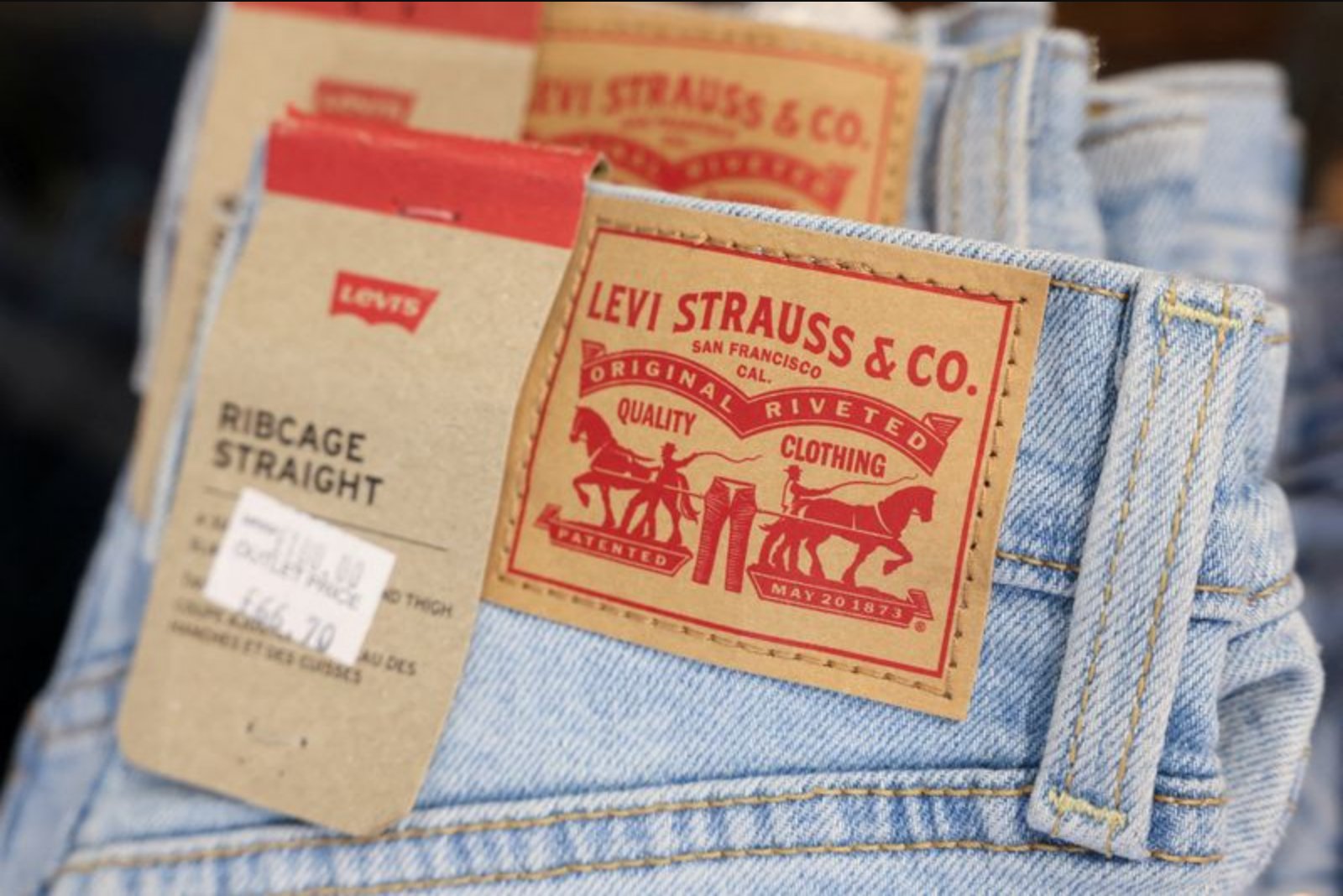
Levi Strauss shares climbed roughly 12% on Wednesday as investors reacted to the company's most robust quarterly revenue growth in almost four years and signs that it can limit the impact of new import duties by selling more product at full price.
The denim maker said rising demand for its baggy jeans assortment, together with stronger sales to younger consumers through digital channels, has allowed it to make modest price increases and scale back promotional activity. Those moves come in the context of an approximately 10% tariff the company is paying under duties put in place on imports into the U.S. in 2025.
Analysts highlighted that higher pricing has not yet dented demand. "Demand hasn’t been affected (by) higher pricing, and we see benefits becoming more fully realized starting in F2Q," Rick Patel of Raymond James wrote in a client note.
The company also disclosed a forthcoming change in its senior management team. Levi said it has begun searching for a successor to finance chief Harmit Singh, who will retire after about 13 years in the role. The company added that Singh will remain in place through the search and transition period.
Market watchers responded to the leadership development with cautious reassurance. "While the announcement of the retirement of long-time CFO Harmit Singh was somewhat unexpected, we believe investors will be pleased that he will remain in his role through the search and transition period to ensure continuity," Dana Telsey of Telsey Advisory Group said.
Levi’s multiple has expanded as the shares have risen over the past three years. The company’s forward price-to-earnings ratio for the next 12 months stands at 12.91, compared with 19.23 for Ralph Lauren and 9.68 for American Eagle, according to the figures reported alongside the results.
Despite the upbeat revenue print and investor enthusiasm, some analysts described the company’s guidance raise as conservative, especially around its expectations for growth in the U.S. That approach implies the potential for weaker demand in the region even though recent geopolitical tensions in the Middle East and associated higher fuel prices have not yet appeared to impair Levi’s sales.
Consumer spending patterns over the past year have shown divergence across income cohorts, a dynamic the company and analysts noted. Wealthier Gen Z and Millennial shoppers in the U.S. have continued to buy discretionary items such as apparel, accessories, skincare and fragrances, while lower-income households have tightened spending amid rising living costs - a development sometimes characterized as a K-shaped or barbell economy.
Analysts applauded several of Levi’s strategic attributes. "We like Levi’s premium denim share leadership, focus on working capital discipline and unified product lines, and continued product and lifestyle innovation," said Oliver Chen of TD Cowen.
Separately, automated investment research tools referenced by the company’s coverage evaluate Levi Strauss under the ticker LEVI alongside many other firms each month using a broad set of financial metrics. Those tools aim to identify stocks with attractive risk-reward profiles based on current data and have highlighted past winners in their track records.
Summary: Levi Strauss reported its best revenue performance in nearly four years, lifted by full-price sales and digital traction with younger customers, helping to offset an approximately 10% import tariff. The company is conducting a search for a new CFO as Harmit Singh prepares to retire after about 13 years.