
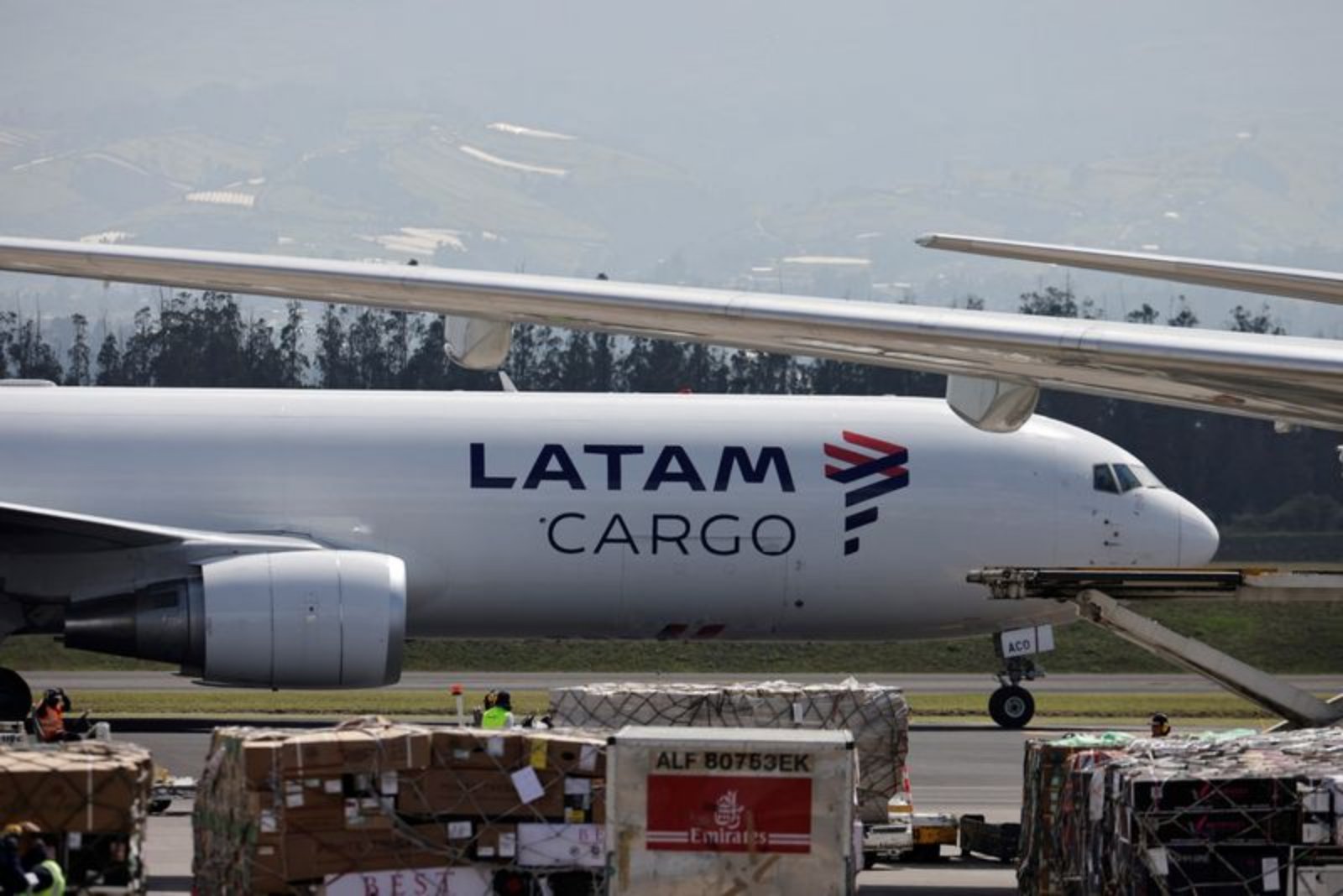
LATAM Airlines said on Tuesday it has cut its 2026 core earnings projection after a sharp rise in jet fuel costs, driven by the conflict in the Middle East, meaningfully increased operating expenses even after mitigation steps. The Santiago-based carrier lowered its full-year adjusted earnings before interest, taxes, depreciation and amortization (EBITDA) range to $3.8 billion to $4.2 billion, down from a prior forecast of $4.2 billion to $4.6 billion.
Global carriers have faced a surge in fuel prices since the U.S.-Israeli strikes on Iran disrupted traffic through the Strait of Hormuz, a development the air travel industry has described as its most severe crisis since the COVID-19 pandemic. LATAM quantified a $40 million negative impact to first-quarter results, noting the hit was softened by hedging and timing differences in ticket pricing. Still, the airline cautioned that second-quarter jet fuel costs could climb by more than $700 million if jet fuel averages $170 per barrel during the period.
Under its revised assumptions, LATAM is modeling jet fuel at $170 per barrel for the second and third quarters and $150 per barrel in the fourth quarter, compared with a previous full-year assumption of $90 per barrel. The carrier also raised its expected cost per available seat kilometer (CASK) for the year to a range of 4.50 to 4.70 cents, up from an earlier projection of 4.30 to 4.50 cents.
Despite the increased fuel burden, LATAM said it still expects to deliver a mid-to-low single-digit adjusted operating margin in the second quarter. The company pointed to revenue measures, targeted capacity adjustments and additional cost controls as tools it will use to offset the pressure from higher fuel prices.
"LATAM’s strong balance sheet and liquidity position provide the flexibility to absorb fuel price volatility, continue investing in the business, and manage uncertainty while maintaining operational and financial discipline," the carrier said.
On a quarterly basis, Latin America's largest carrier reported net income of $576 million for the first quarter, a 62.1% increase year-on-year. Revenue for the quarter rose 21.7% to $4.15 billion.
Analysis - From a unit-economics perspective, the revision highlights how sensitive airline profitability and cost metrics are to fuel assumptions. The company has adjusted both its headline EBITDA guidance and its per-seat cost expectations to reflect sizable upward pressure on fuel, with the drawdown to the EBITDA midpoint representing a material change in full-year earnings expectations. Management is relying on pricing, capacity discipline and cost programs to defend margins as the pricing of jet fuel plays out.
Key points
- LATAM cut its 2026 adjusted EBITDA outlook to $3.8 billion-$4.2 billion from $4.2 billion-$4.6 billion.
- Jet fuel assumptions were revised to $170 per barrel for Q2 and Q3 and $150 for Q4, versus a prior full-year assumption of $90 per barrel.
- Q1 net income was $576 million, up 62.1%, with revenue rising 21.7% to $4.15 billion; CASK guidance was raised to 4.50-4.70 cents.
Risks and uncertainties
- Fuel price volatility - further increases in jet fuel beyond the assumed levels would add to operating costs and could pressure margins and guidance; this affects the airlines and broader travel sector.
- Timing and effectiveness of mitigation - the company is relying on hedging, pricing lags, capacity adjustments and cost controls; if these measures fall short, profit metrics could deteriorate.
The carrier's updated outlook and cost assumptions make clear that fuel price trajectories will be a central variable for the remainder of the year. Management's emphasis on liquidity and operational discipline indicates a focus on preserving flexibility as it navigates the elevated fuel environment and seeks to protect profitability through targeted revenue and capacity actions.