
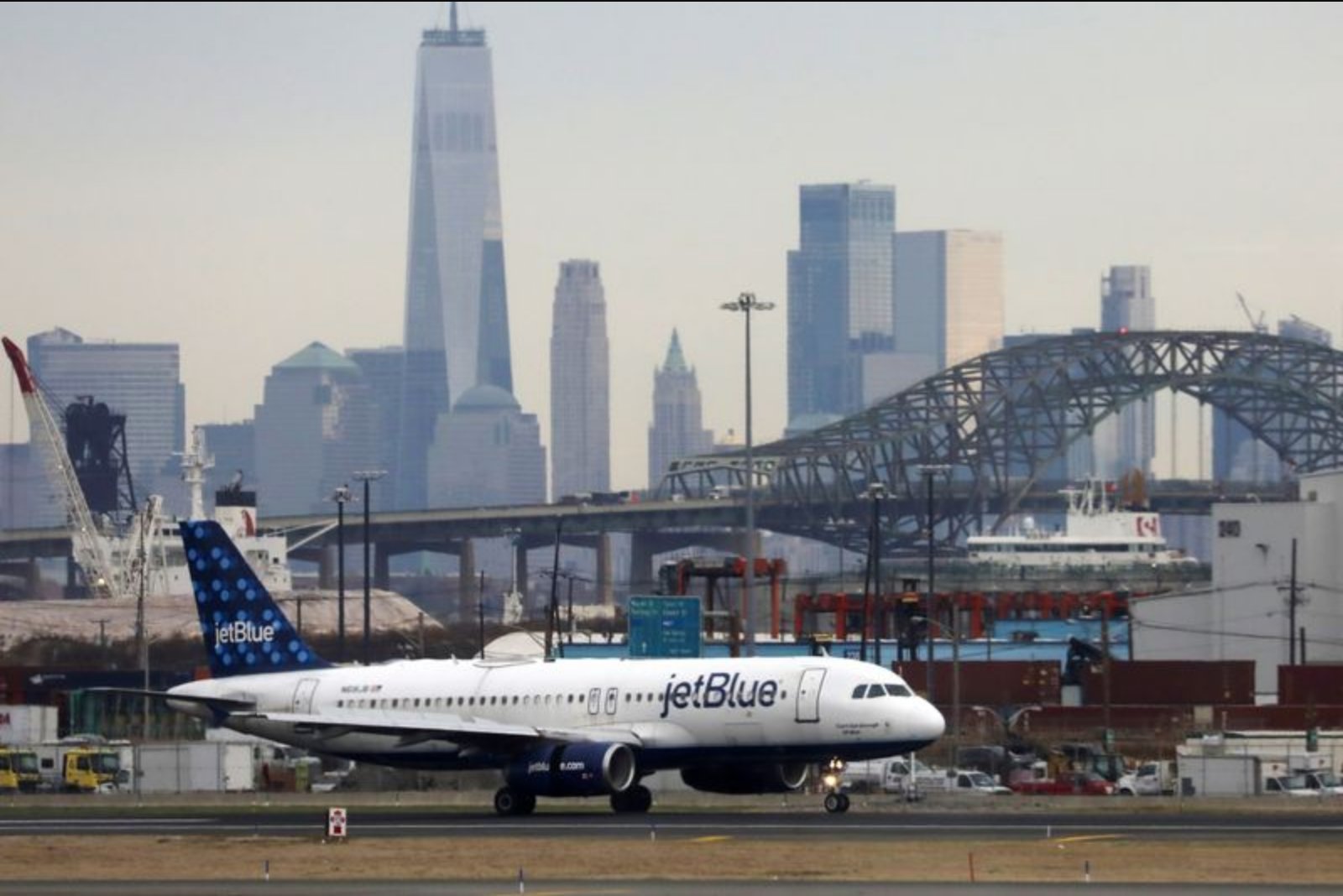
JetBlue Airways delivered a wider-than-anticipated adjusted loss for the fourth quarter, the carrier said on Tuesday, with weakness in demand for economy seats contributing to the shortfall and prompting a drop in the stock in premarket trading.
For the three months ended December 31, JetBlue reported an adjusted loss of $0.49 per share, compared with a loss of $0.21 per share in the same quarter a year earlier. Analysts polled by LSEG had been expecting a loss of $0.45 per share.
Operating revenues for the October-to-December period came in at $2.24 billion, narrowly above analysts' estimates of $2.23 billion.
Chief Executive Joanna Geraghty attributed part of the missed return to profitability to broader economic uncertainty. She said that macroeconomic uncertainty had impeded the airline's path back to profitability in 2025.
The company highlighted softer demand in the main cabin, noting that U.S. carriers broadly are leaning on premium seating and loyalty program revenue to counteract subdued economy demand and the downward pressure that has placed on economy fares.
Looking ahead, JetBlue issued a first-quarter forecast for revenue per available seat mile - commonly referred to in the industry as RASM and used as a proxy for unit revenue and pricing power - in a range of 0.0% to 4.0%. The carrier said that forecast excludes the effects of a recent winter storm that disrupted travel across much of the country over a weekend; JetBlue canceled nearly 600 flights on Sunday, the airline's worst day of the disruption.
JetBlue also warned of fleet operational impacts beyond the current quarter. The New-York based carrier expects mid-single digit average aircraft to be grounded in 2026 as a result of issues with Pratt & Whitney Geared Turbofan engines, manufactured by RTX.
In related industry news, peer Alaska Airlines last week forecast full-year profit below analysts' expectations, citing seasonality, fuel-price volatility and economic uncertainty as factors weighing on its outlook.
This quarter's results underscore persistent challenges in the airline unit-economics equation - particularly how muted main cabin demand can compress fares and force carriers to rely more on premium product and loyalty revenue to support margins. The combination of near-term weather disruption and longer-term engine-related groundings adds further uncertainty to capacity and cost planning for JetBlue.