
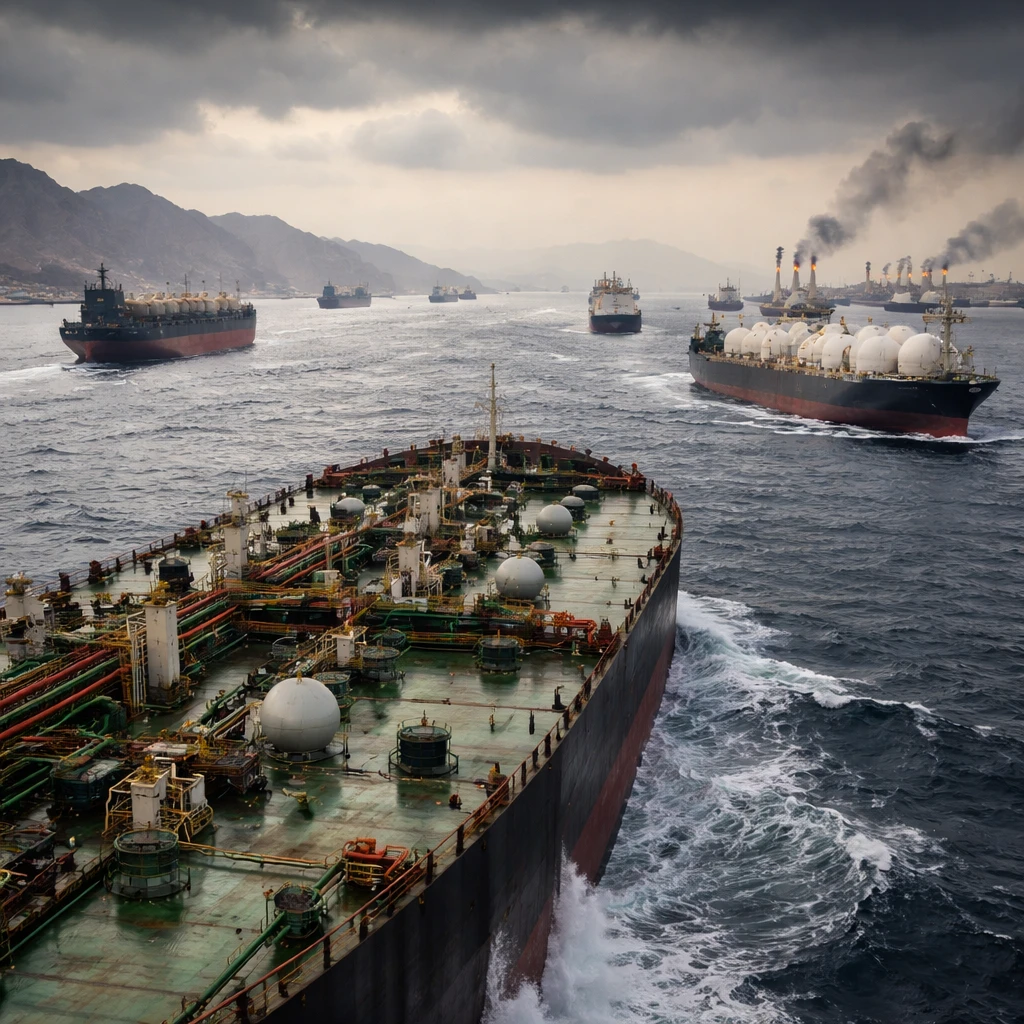
Jefferies released an analysis examining how interruptions in maritime traffic through the Strait of Hormuz ripple across the global commodity complex. The firm underscores the strait's centrality to energy transport and details the economic and environmental pressures that follow when shipments are constrained.
The report notes that roughly 20 million barrels per day of crude oil and petroleum products transit the Strait of Hormuz. In addition, the passage accounts for about 20% of global liquefied natural gas trade. Jefferies says the disruption has affected multiple layers of commodity markets rather than a single segment.
One key consequence identified by the firm is a threefold shock to food prices. Higher logistics costs, increased fertilizer prices and greater competition between food and fuel each push consumer food prices upward. Jefferies points out that almost all internationally traded food is moved by sea or by diesel-powered road freight, so rising transport costs are embedded across food categories.
The analysis highlights the role of natural gas produced in the Gulf as the primary feedstock for ammonia, which underpins nearly all nitrogen-based fertilizers. Jefferies emphasizes that, unlike oil, there is no comparable international strategic stockpile for fertilizers akin to the IEA's oil reserve mechanism. As a result, gas supply interruptions have direct and immediate implications for fertilizer availability and pricing.
Rising crude prices also create direct competition between fuel and food. The report observes that when crude trades sharply higher, converting crops into biofuels becomes more economically attractive. At crude prices above $100 per barrel, Jefferies says most biofuels are generally more competitive, with the exact crossover points varying by region and by the prices of soft commodities.
On power generation, Jefferies states that at current crude prices, solar and wind remain the cheapest source of new electricity in a large majority of countries. The firm suggests this cost dynamic strengthens the economic rationale for accelerating renewables on energy security grounds. However, it cautions that emergency policy responses to immediate energy shortfalls could produce the opposite effect.
Specifically, Jefferies warns of a countervailing risk: governments facing acute energy deficits may approve new coal capacity, commit to long-term LNG offtake agreements, or expand domestic oil and gas extraction under terms that create stranded asset risk. The firm says such steps would increase near-term emissions through coal-for-gas substitution.
With LNG prices elevated, utilities in Europe and Asia would face incentives similar to those that triggered a surge in coal generation in 2022, when expensive or scarce gas led operators to burn more coal to meet demand. Jefferies notes that the magnitude of any increase in global emissions will depend on the duration of the conflict and how long Qatari production remains offline.
Jefferies also cites the World Meteorological Organization's State of the Global Climate 2025 report, released on World Meteorological Day, which states that the global climate is in a state of emergency and that every key climate indicator is flashing red.
Impacted sectors: energy, agriculture, fertilizers, shipping and power generation.