
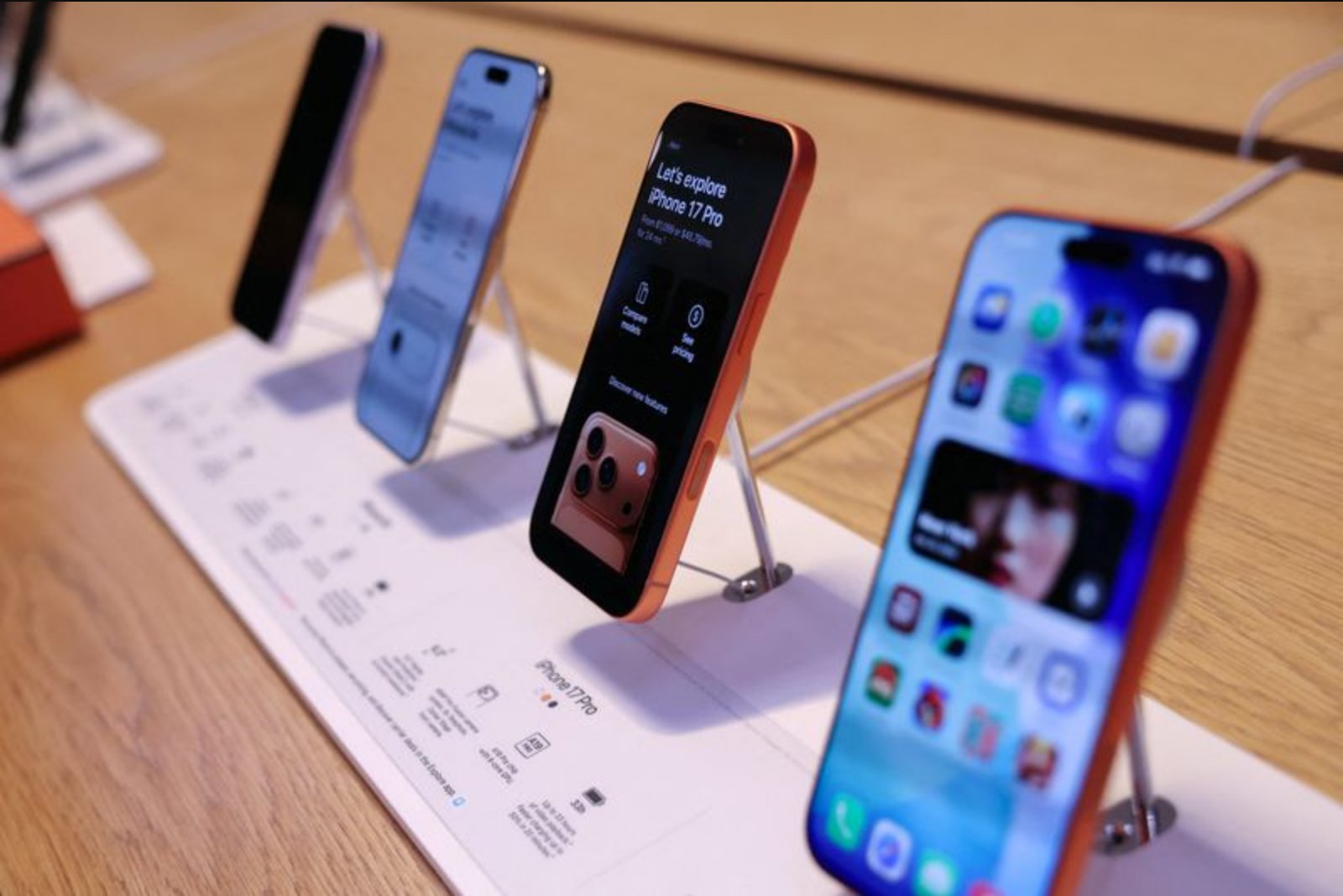
Apple is expected to report a notable rebound in iPhone volumes for the October-December fiscal quarter as sales of its high-end Pro models strengthened globally. The company is preparing to introduce new artificial intelligence features based on technology provided by Google, while investors await commentary on how Apple will manage rising costs from a global memory chip shortage.
Analysts surveyed ahead of Apple’s results anticipate that iPhone unit sales climbed 13.8% in the quarter, a pace that would represent the firm’s strongest growth in over four years, according to LSEG polling. Total revenue is projected to have risen 11.4% to a record $138.43 billion, supported in part by a 14.1% increase in Apple’s services segment.
Market research firm Counterpoint places Apple at the head of the global smartphone market for the past year, estimating a 20% share compared with 18% in 2024. Visible Alpha data point to roughly a 15% increase in sales in Greater China during the quarter. The latest iPhone 17 series appears to have attracted buyers in China and in emerging markets with a refreshed camera design and higher storage options on the higher-end Pro models.
Google collaboration marks major AI pivot
Apple’s decision to adopt Alphabet-owned Google’s Gemini models as the engine for a revamped Siri and additional Apple Intelligence features represents the biggest change so far in the company’s approach to artificial intelligence. The move has drawn favorable feedback from many investors and Wall Street strategists, who argue it enables Apple to leverage its installed base of more than two billion active devices without committing the same level of spending required to build state-of-the-art models from scratch.
"The Google deal should demonstrate to the market the iPhone will remain the consumer device of choice for accessing new AI tools", Goldman Sachs analysts said.
Observers note that, to date, AI functionality has not been a primary driver of smartphone purchases. Even so, sales of the latest iPhone 17 lineup were strong in the quarter that is traditionally Apple’s busiest.
Costs, regulation and supply chain dynamics
Investors will also monitor Apple’s strategy for handling a tightening memory chip market. Analysts warn that constrained memory supplies are likely to push up component costs for consumer electronics makers, including smartphone vendors, and could weigh on margins. Rosenblatt Securities cautioned that tight memory supplies could increase Apple’s costs for building iPhones going into the fiscal second quarter.
"But Apple has shown great skill in navigating supply chain disruption," Rosenblatt said. "We expect the playbook to include using its market-leading scale to pressure suppliers for concessions and to lock in supplies."
Industry analysts expect the broader memory chip squeeze to temper demand for a range of consumer electronics products, including smartphones, personal computers and gaming consoles. The effects are likely to be felt most heavily in lower- to mid-range devices.
Meanwhile, Apple’s services business — which includes the App Store — faces regulatory scrutiny in Europe. Regulators have investigated the company’s payment practices, and Apple has been fined hundreds of millions of euros for abusing its dominant position in the mobile app market. Such regulatory pressure could create headwinds for the segment even as it continues to post revenue gains.
Market reaction and investor perspectives
Apple’s stock gained 8.5% over the last year, a performance that fell short of AI-driven rallies at some large technology peers, where Microsoft rose 14.7% and Alphabet climbed 65.3% over the same period. Some investors argue that Apple can extract commercial benefit from AI features without incurring the massive capital commitments that rival firms have announced.
"Apple can probably generate a positive return on very little AI investment, thanks to its distribution," said Gerrit Smit, manager of the Stonehage Fleming Global Best Ideas Equity fund, which holds Apple shares.
As Apple publishes its quarterly results, market participants will weigh the upside from stronger iPhone demand and the strategic benefits of the Google partnership against rising component costs and regulatory challenges in key markets.
Promotional content excerpt included in reporting materials
Some market commentary included a promotional section inviting investors to evaluate Alphabet (GOOGL) with an AI-driven stock selection product. The promotional text highlighted that the product assesses companies using more than 100 financial metrics and cited past winners such as Super Micro Computer (+185%) and AppLovin (+157%).