
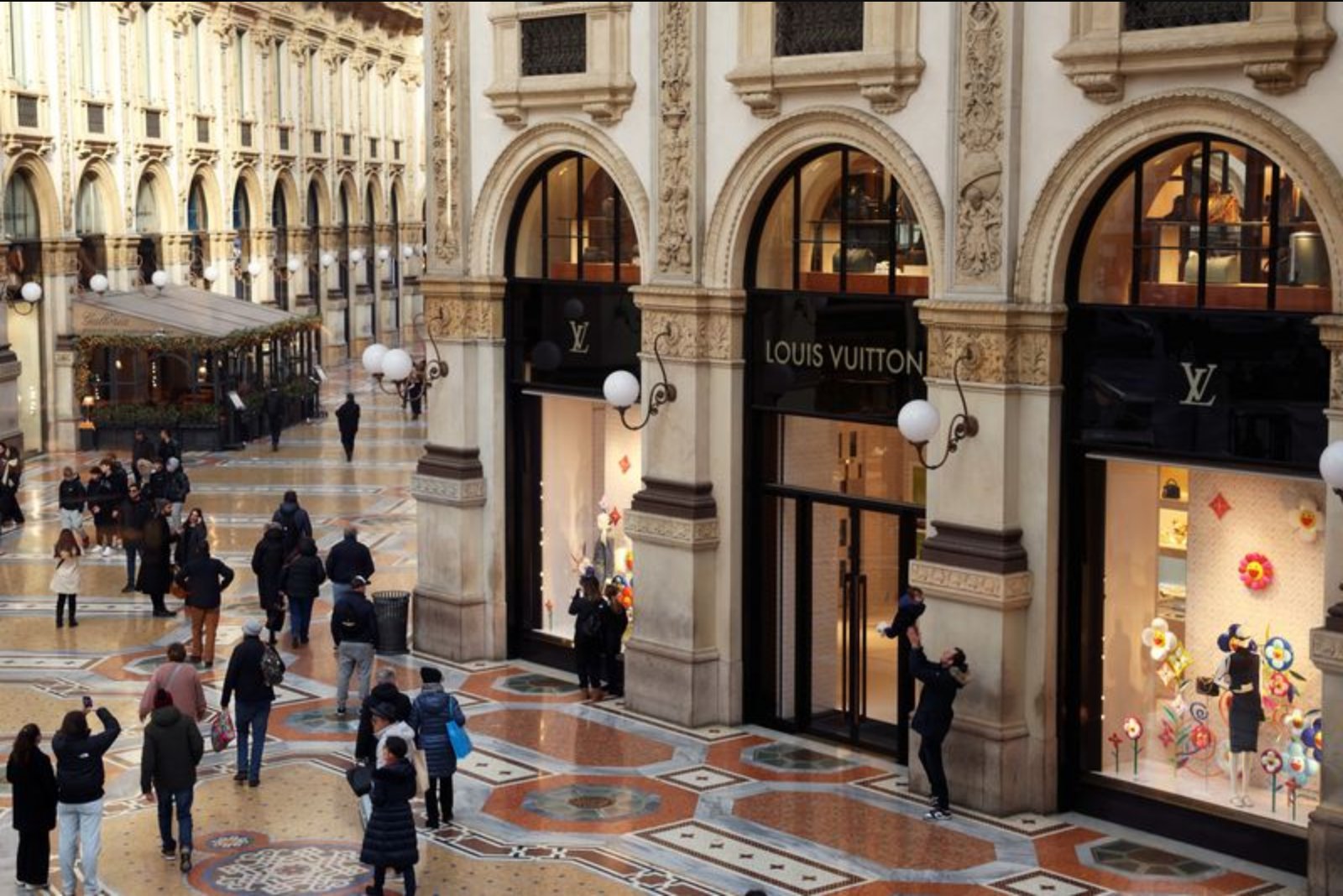
Investors are approaching LVMH's annual results with cautious optimism, hoping for clearer evidence the luxury group is recovering after an extended slowdown. Yet many shareholders say the company needs more active measures from its leadership to reconnect shoppers driven away by steep price increases.
Shares of the Paris-based luxury conglomerate surged in October when early signs of a rebound in China prompted investors to pile in, fueling an $80 billion rally across the luxury sector. Since that rally, however, LVMH's stock has given back most of the gains, falling about 9% since the start of this year as market sentiment was affected by tensions between Europe and the U.S. over Greenland.
"There’s a greater hope that luxury spend is going to be a little bit better," said Paul Moroz, portfolio manager at Mawer Investment Management, which holds LVMH shares. "But there is a risk some consumers are tapped out," he added, noting the group may struggle to keep raising prices or to push demand purely through new product introductions.
Return to extraordinary post-pandemic growth appears unlikely
During the post-pandemic boom, LVMH's fashion and leather goods division recorded revenue of 42 billion euros in 2023, almost double its 2019 level. Several investors, however, told Reuters they do not expect that type of stellar growth to be replicated. Analysts polled by Visible Alpha forecast a modest 0.3% decline in fourth-quarter organic sales, which strips out currency effects. Operating profit for 2025 is estimated at 17.15 billion euros, down from 19.57 billion euros the prior year.
The slowdown in sales has prompted LVMH to pivot its focus back toward so-called "aspirational" luxury shoppers, a cohort that has been increasingly drawn to more affordable labels such as Coach and Ralph Lauren. With the exception of Hermès, many luxury houses are planning minimal price hikes of under 2% this year, according to Ariane Hayate, portfolio manager at Edmond de Rothschild in Paris. That constrained pricing strategy means these groups will need to rely on higher unit sales to drive revenue growth.
Hayate also pointed to intensifying competition from Chinese brands as a structural challenge. She cited names including Bosideng, Songmont and Laopu Gold as gaining traction among consumers.
Product plays: beauty and accessories to lure buyers
LVMH has been rolling out initiatives aimed at bringing aspirational shoppers back into stores. Louis Vuitton's entry into beauty, which includes a lipstick priced at $160, is one such example. Caroline Reyl, head of premium brands at Pictet Asset Management in Geneva, views the beauty range as part of the strategy to attract less affluent luxury shoppers.
Accessories are another element of that push. Global demand for playful bag charms, spurred by the popularity of Labubu dolls, has given LVMH an opening to appeal to younger buyers. Portfolio manager Sean Sun at Thornburg Investment Management noted that some Chinese consumers may be downgrading on core handbags but then investing in distinctive accessories to personalize their look. Louis Vuitton's own doll-like "Vivienne" bag charms are priced from $850 to $1,810, and in October the smaller LVMH-owned leather brand Moynat released a collection in collaboration with Labubu creator Kasing Lung.
Josie Gardner, head of buying for accessories at Harrods in London, said aspirational accessories have assumed a crucial role as prices of mainline handbags and major leather goods have risen significantly in recent years.
Outlook for investors
Investors will be watching LVMH's annual results for signs that the company can navigate subdued consumer spending, renewed competition in China, and limits to pricing power. The group is seeking to counter those headwinds by widening its appeal to younger and less affluent luxury consumers through beauty and accessory initiatives.
Currency reference: $1 = 0.8441 euros.