
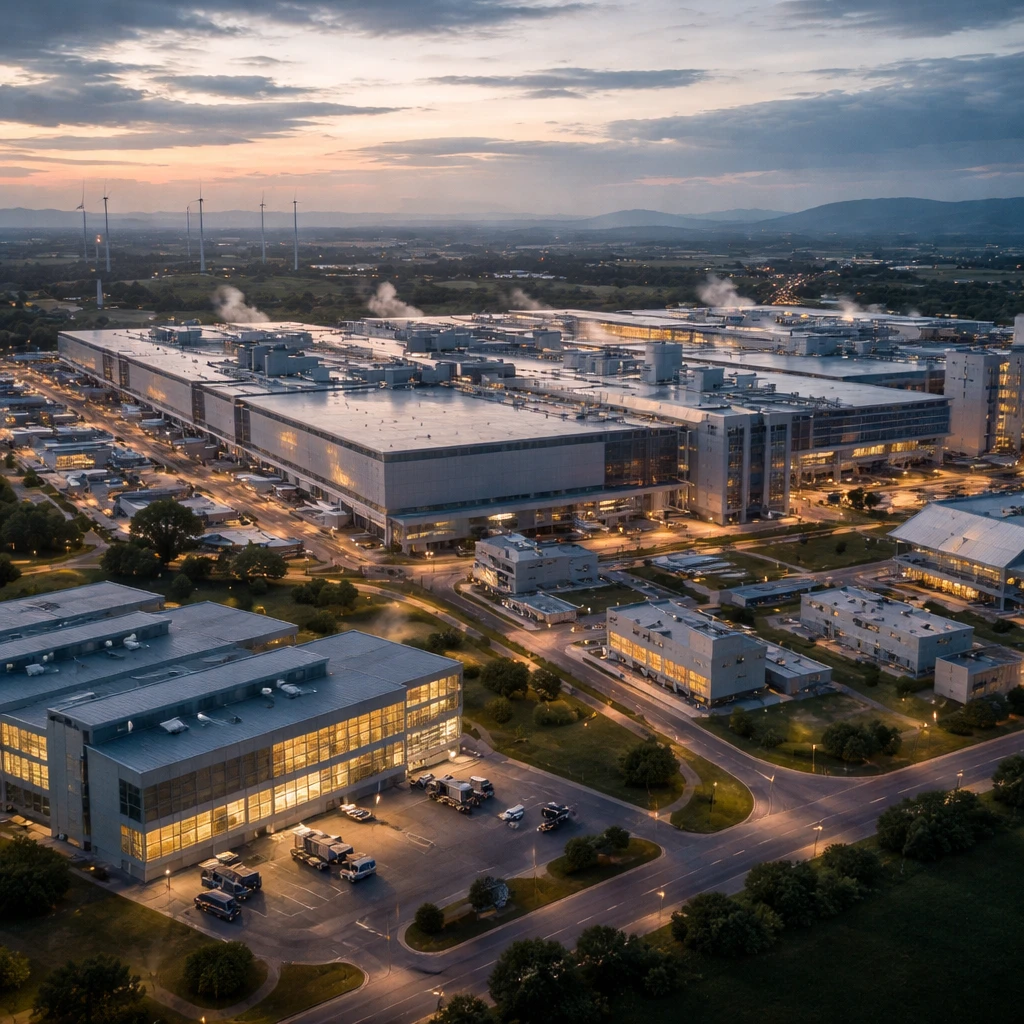
Intel Corporation (NASDAQ:INTC) shares rose 2.5% on Wednesday as the stock benefited from a broader uplift in technology names and from a firm announcement regarding its Ireland manufacturing campus. The company said it has reached a definitive agreement to repurchase the 49% equity interest in Fab 34 that Apollo-managed funds and affiliates had acquired in 2024.
The repurchase price is $14.2 billion and restores full ownership of the facility to Intel. Apollo purchased the stake in 2024 for $11.2 billion, a transaction that had given Intel access to equity-like capital while allowing the company to preserve balance-sheet flexibility during a pivotal period of manufacturing expansion.
Intel said it will fund the repurchase using cash on hand plus about $6.5 billion in new debt. The company indicated that the transaction is forecast to be accretive to ongoing earnings per share and to strengthen its credit profile in 2027 and beyond.
Balance-sheet and strategic context
Chief Financial Officer David Zinsner framed the move as the result of improved financial positioning, saying the company now has a stronger balance sheet, better financial discipline and an evolved business strategy. According to Intel, the 2024 arrangement with Apollo had provided flexibility that helped accelerate important manufacturing work - notably the buildout of Intel 4 and Intel 3 processes in Europe and Intel 18A in the United States.
Fab 34 remains central to Intel's global manufacturing footprint. The Ireland facility uses Intel 4 and Intel 3 process technologies to produce chips, including Intel Core Ultra and Intel Xeon 6 processors, and supports production for customers developing AI-enabled systems.
Capital spending and debt management
Intel reiterated that it expects to retire debt maturities as those obligations come due in 2026 and 2027. The company also said it is making significant capital investments at its Ireland campus to expand capacity and improve execution.
Apollo Partner Jamshid Ehsani commented that the initial partnership began at an important stage in Intel's advanced manufacturing roadmap, with Apollo's long-term strategic capital playing a meaningful role in accelerating next-generation chip production.
Implications for markets
The announcement combined corporate finance action - the repurchase and associated funding plan - with operational commitments to expand production capacity. The stated outcomes are earnings accretion and a projected improvement to credit metrics after 2027, while the facility itself continues to support production of chips used in AI-enabled systems.