
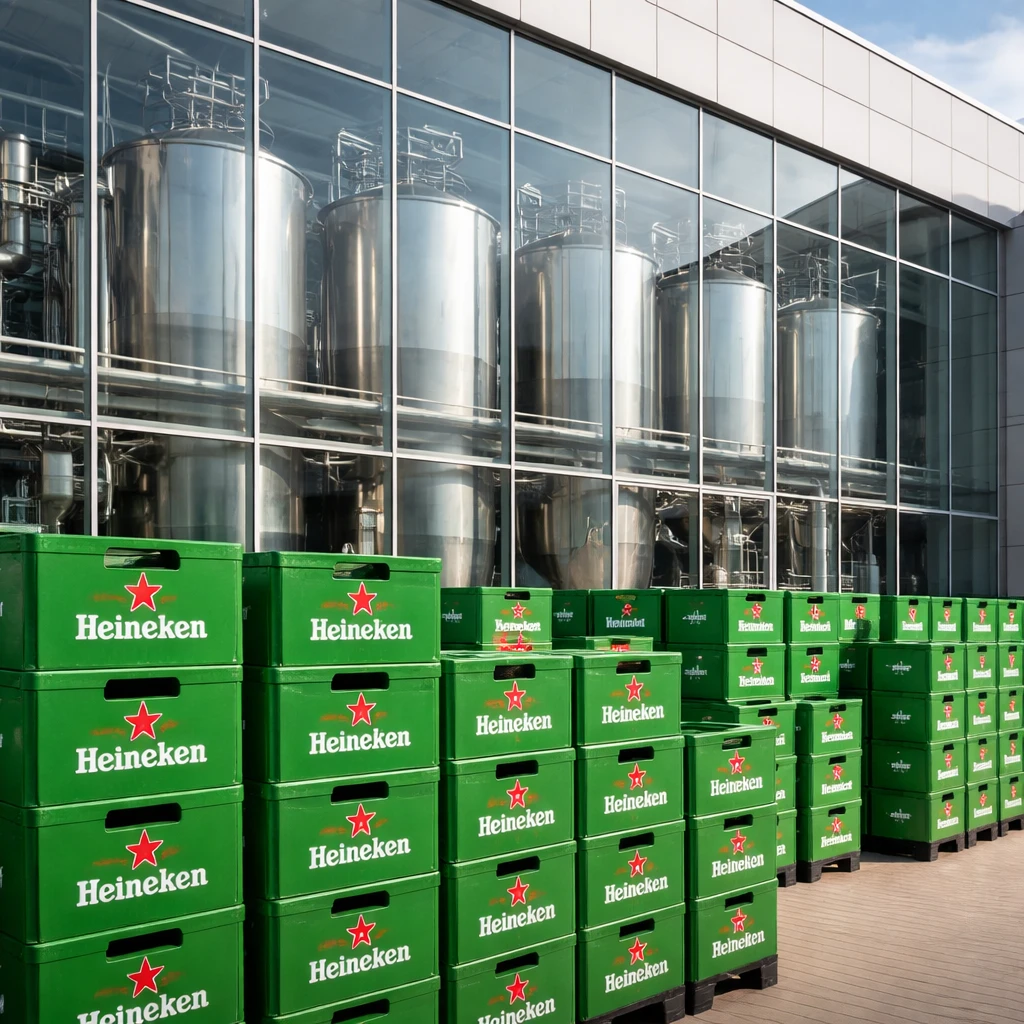
HSBC has revised its recommendation on Heineken, moving the Amsterdam-listed brewer from a hold rating to a buy while keeping a target price of €85 unchanged. That target implies a 29.3% upside from Heineken’s closing share price of €65.72 on March 30, according to a note dated Wednesday.
On a valuation basis, HSBC points out that Heineken is trading at 12.3 times estimated 2027 earnings. The brokerage’s analyst, Carlos Laboy, says the market appears to be assuming a 0.75% terminal contraction rate in HSBC’s discounted cash flow framework, a figure the analyst characterises as "quite pessimistic." In contrast, the note states, "We don’t subscribe to the idea that a long-term contraction to the firm’s cash flow is in its future."
The upgrade is partly contingent on an impending appointment of a new chief executive. HSBC expects the incoming CEO to prioritise building a stronger performance culture, to shift the balance between volume growth and pricing, and to step up development of digital tools for business customers and direct-to-consumer channels. Those strategic priorities form a key part of the broker’s rationale for moving the stock to buy.
For the first quarter, HSBC forecasts a modest 0.3% decline in organic volumes, offset by 3.0% organic revenue growth. Heineken’s results are scheduled for release on April 23. The brokerage notes that Europe’s consumer backdrop remains soft, but it expects retail trade negotiations to support a sequential recovery in volumes from the second quarter onward.
Regionally, HSBC highlights several dynamics underpinning its forecasts. Brazil should benefit from favourable weather and easy macro comparisons, with the FIFA World Cup providing an additional boost to social consumption in the final month of Q2 and the first month of Q3. Asia Pacific momentum is expected to be supported by a recovery in Vietnam, and Africa is expected to be underpinned by normalisation in South Africa.
HSBC’s full-year 2026 projections show consolidated revenue rising 3.9% to €30.10 billion and EBITDA increasing 10.2% to €6.63 billion, with an EBITDA margin expanding to 22.0% from 20.8%. The brokerage’s 2026 earnings per share estimate is €5.07, up from €4.78 in 2025, versus consensus of €5.17.
The discounted cash flow valuation underpinning the €85 fair value uses a 7.2% weighted average cost of capital, which HSBC derives from an 8.4% cost of equity, a 3.5% pretax cost of debt and a 20% debt-to-capital ratio, along with a 1.5% long-term growth rate. That produces an equity value of €49.01 billion across 576 million shares. The present value of projected free cash flows from 2026 through 2035 totals €25.08 billion, while the terminal value is estimated at €37.91 billion.
On the balance sheet side, net debt is modelled to increase to €17.19 billion in 2026 from €14.51 billion, before falling to €15.08 billion by 2028. HSBC projects return on equity of 15.2% in 2026 and a dividend yield of 3%.
HSBC also lists a set of downside risks that could undermine its bullish case. These include inflationary pressure and higher input costs stemming from the Middle East conflict, volume declines in core markets including Europe, Mexico, Nigeria and Vietnam, lower-than-expected synergies from Africa integration, and a digitalisation path that emphasises logistics at the expense of brand marketing and client service.
What to watch
- Heineken’s published results on April 23 will provide the first quarterly read on the trends HSBC expects.
- The identity and stated priorities of the incoming chief executive will be closely scrutinised for confirmation of the performance, pricing and digital agenda laid out by HSBC.
- Regional developments in Brazil, Vietnam and South Africa will be important to validate the firm’s geographic recovery assumptions.