
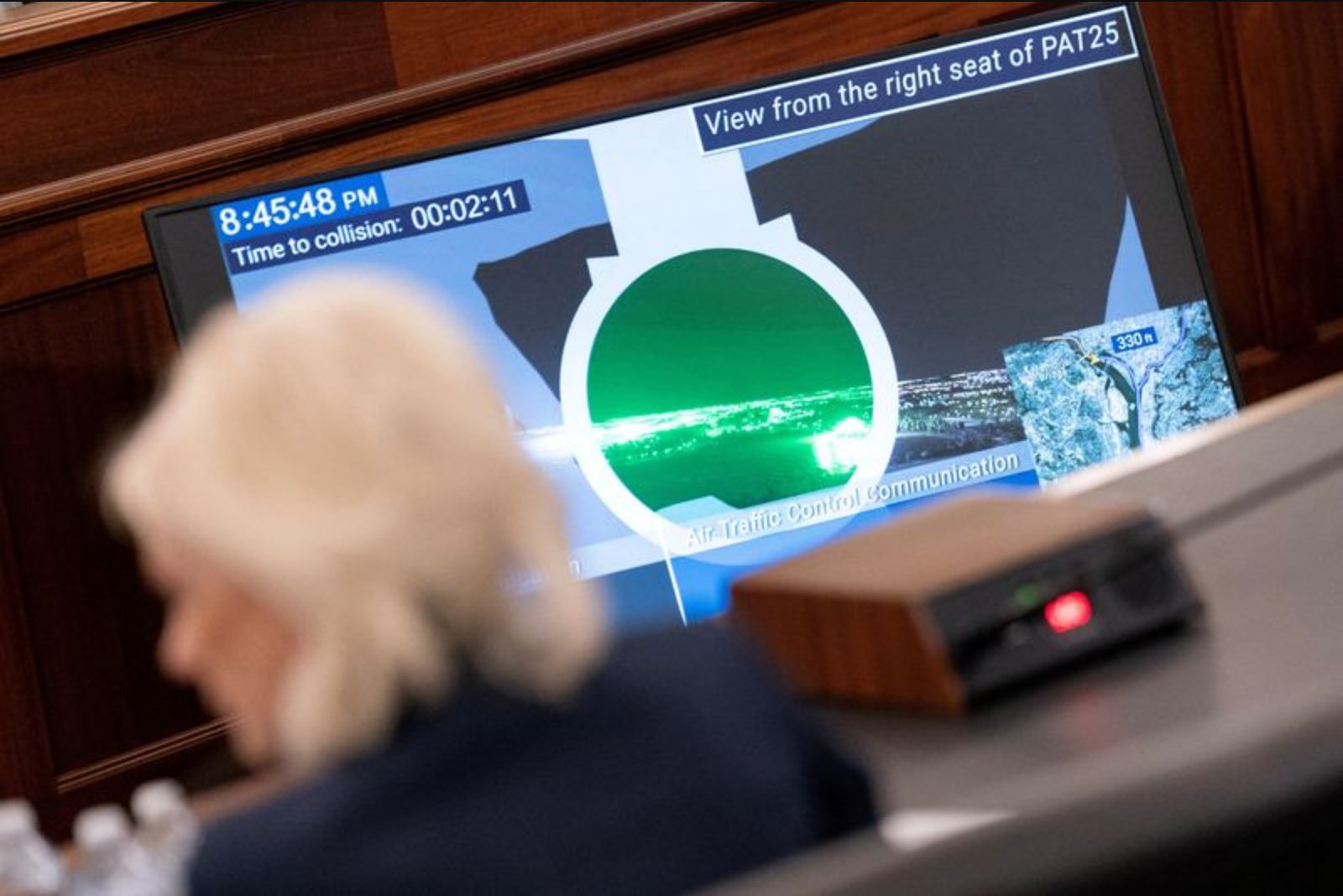
WASHINGTON, March 25 - Two U.S. House committees are scheduled on Thursday to examine sweeping aviation safety reform legislation intended to put into law a substantial portion of recommendations issued after a deadly mid-air collision in January 2025.
The crash, involving an American Airlines regional jet and an Army Black Hawk helicopter, resulted in 67 fatalities. In a follow-up analysis, the National Transportation Safety Board set out a series of findings and recommendations from a year-long probe of the incident.
The revision to the ALERT Act that is slated for consideration largely directs that the recommendations from the NTSB investigation be implemented. Central elements of the bill would require broader installation of collision mitigation technologies on both airplanes and helicopters, a step the legislation frames as a technical fix to reduce the chance of similar collisions.
Beyond equipment mandates, the measure seeks to confront what the NTSB identified as deficiencies in the safety culture at the Federal Aviation Administration. The bill would also focus on improving air traffic control training and operational procedures, aiming to reduce human and procedural failures that can contribute to catastrophic events.
Another explicit objective of the legislation is to strengthen safeguards for the airspace around Reagan Washington National Airport, the location near which the fatal collision occurred. The proposed changes target both technical and organizational practices intended to enhance overall safety in that airspace.
As the two House panels review the revised ALERT Act, lawmakers will consider how the package translates investigative recommendations into statutory requirements. The approach in the bill combines equipment standards with procedural and cultural reforms at the aviation regulator and air traffic control operations.
Summary of the bill's main components:
- Mandates equipping collision mitigation technologies for airplanes and helicopters.
- Directs implementation of the NTSB's recommendations following its year-long investigation.
- Aims to address FAA safety culture shortcomings and to enhance air traffic control training and procedures.
- Seeks strengthened safety measures for airspace around Reagan Washington National Airport.