
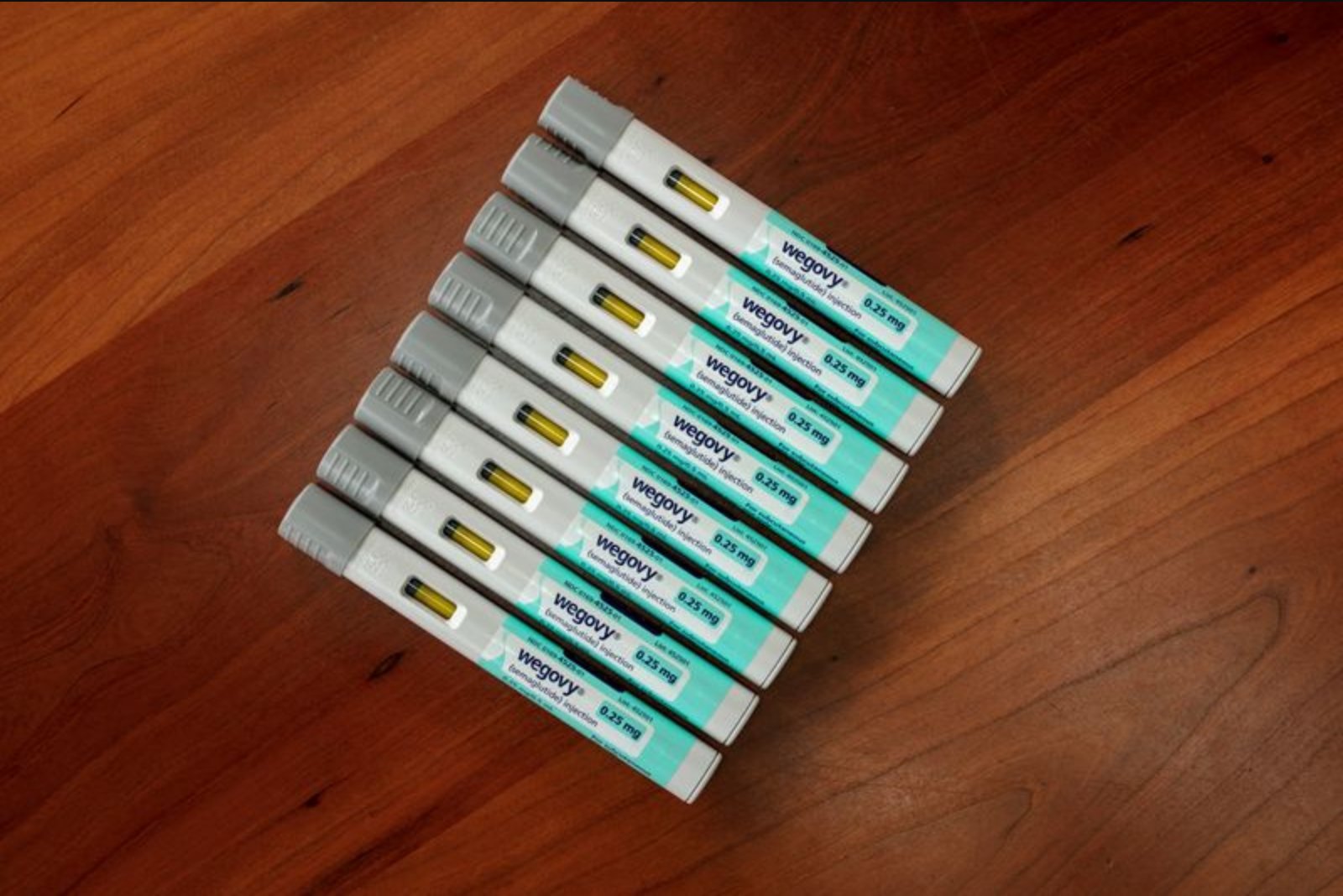
Hims & Hers said it will make available a compounded pill version of the active ingredient in Novo Nordisk’s Wegovy at an introductory cost of $49 per month. The company said the offering will follow clinical guidance and individualized treatment decisions, reflecting the same personalized approach it has used for compounded injectable weight-loss drugs.
The launch prompted an immediate market reaction: shares of both Novo Nordisk and Eli Lilly fell following the announcement amid investor concern that lower-cost alternatives could pressure margins for the large branded makers of GLP-1 treatments.
Market participants and analysts provided a range of reactions after the Hims & Hers disclosure, highlighting themes that include headline risk around GLP-1 drugs, potential for continued robust demand, questions over the legal and regulatory environment for compounding rivals, and operational limits on scaling low-cost alternative production.
David Wagner, portfolio manager at Aptus Capital Advisors, framed the current environment as one where headline risk tied to GLP-1 therapies will persist. Wagner characterized the situation as an "arms race" for both market share and pricing. He said Lilly has established itself as a dominant competitor in the space and that its shares typically withstand headline-driven volatility - acting like "teflon" - but that price drops created by such headlines can present buying opportunities.
Brian Mulberry, a portfolio manager at Zacks Investment Management, emphasized that an oral GLP-1 pill could substantially expand the market for these therapies, enabling revenue growth for both Lilly and Novo. He noted Hims & Hers' emergence as a large distribution hub and found it notable that the company opted to compound the Novo formulation. Mulberry also pointed out that Lilly is developing direct-to-consumer channels, which he said should limit the competitive damage.
"The new pill form of the GLP-1 is going to open up the market so significantly that both Lilly and Novo can demonstrate strong growth in revenue," Mulberry said.
Michael Nedelcovych, an analyst at TD Cowen, described the prevailing compounding dynamic: compounders can produce copycat versions of branded drugs provided they introduce minor tweaks aimed at patient-specific benefits. In the GLP-1 context, he said those tweaks commonly take the form of intermediate or lower dose options compared with commercially available products, which leaves ample room for compounders to argue clinical utility.
Nedelcovych also commented on the guidance ranges provided by Novo, observing that the company’s forecasting band is broad and that the lower end of that range is fairly modest. He suggested the recent development is unlikely to be a cause for Novo to revise its guidance lower, and he said market reaction for Lilly may reflect speculation about whether oral formulations of other therapies could be next.
Markus Manns, a portfolio manager at Union Investment and a shareholder in both Novo and Lilly, said the Hims approach appears to him to carry potential legal problems. He added that it is unclear how long it might take for Novo to pursue action or for regulatory bodies to intervene, and that this uncertainty introduces additional risk into the obesity investment narrative.
Karen Andersen, an analyst at Morningstar, warned that if regulators allow the launch to proceed, it raises the prospect that compounders could replicate future branded entrants, including oral versions of drugs that are expected to receive approval in the months ahead. Andersen said this would imply either inadequate legal protections for branded drugs, weak enforcement of those protections, or both.
Andersen also highlighted manufacturing and capacity questions. She noted Hims tends to cater to patients seeking very low doses of semaglutide, a strategy that reduces production capacity needs for injectables. However, she said for an oral pill a much higher dose is required to be effective even when formulation technologies such as SNAC are applied. Andersen expressed skepticism that Hims would have the capacity to become a meaningful competitor on the pill front if it intends to use doses consistent with clinical effectiveness.
Michael Cherny, an analyst at Leerink Partners, described the compounded semaglutide pill as a logical extension of Hims & Hers’ existing weight-loss platform given expected demand for oral GLP-1 products. He said there is no obvious reason why the company would not evaluate similar launches for each new weight-loss product as the market evolves, even if Hims has not historically focused on alternatives such as tirzepatide.
Christian Moore, a health care specialist at Bernstein, said the Reuters report has unsettled investors and company stakeholders, raising questions both about the legality and the commercial viability of the move. Moore observed that the timing of the announcement - coming soon after earnings reports and outlooks from Novo and Lilly - is unfortunate because it adds another near-term concern for markets to digest.
Evan Seigerman, managing director and head of healthcare research at BMO Capital Markets, said the Hims announcement was likely to weigh on shares in the near term. He added that Novo’s management remains skeptical of the competitive profile of the product because of nuanced bioavailability issues associated with oral peptides.
Taken together, the responses from asset managers and analysts underscore a mix of investor concerns: potential for margin erosion as lower-cost, compounded alternatives emerge; legal and regulatory uncertainty about the permissibility of copycat compounding; clinical and technical limitations tied to oral peptide bioavailability; and practical manufacturing constraints that could cap the scale of such entrants.
While some commentators suggested the headlines could create buying opportunities when shares are pressured, others emphasized the potential for persistent uncertainty until legal and regulatory questions are clarified.