
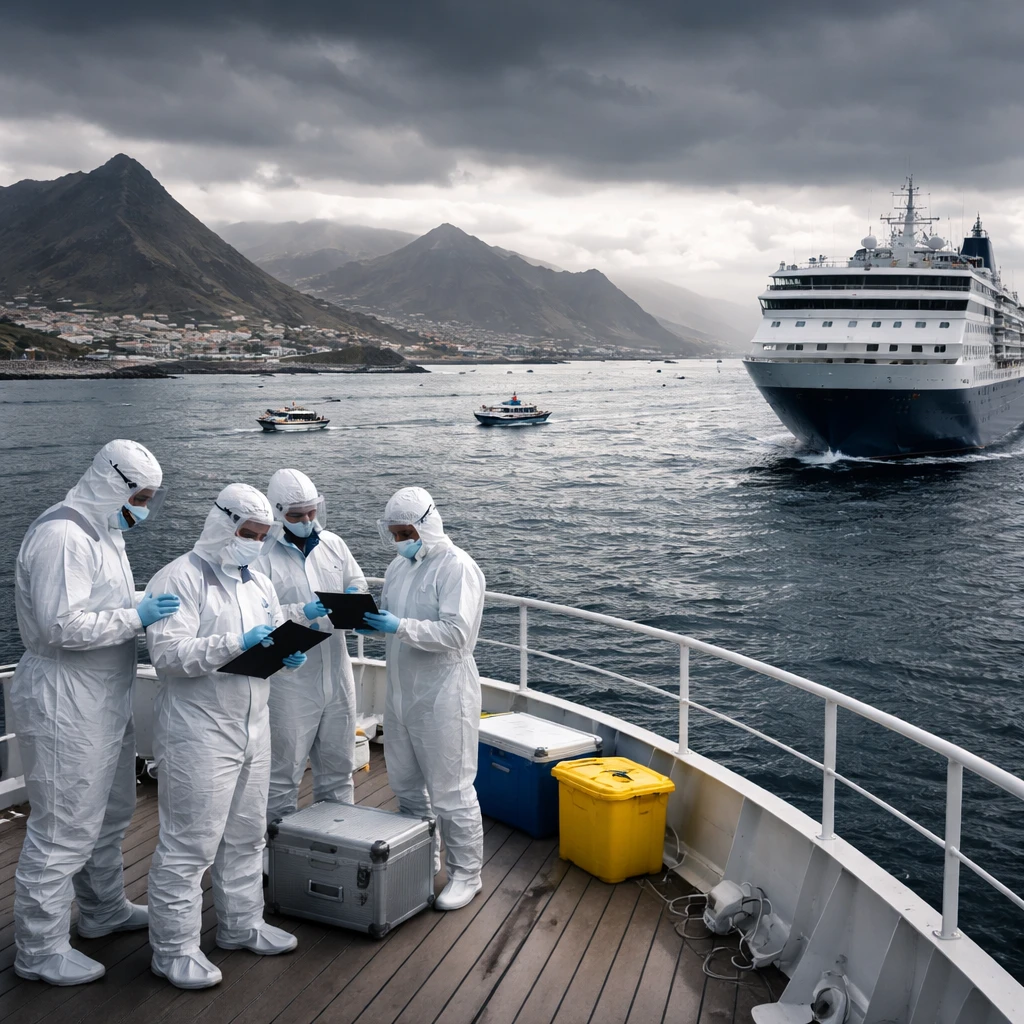
The cruise industry faces renewed public health scrutiny after an outbreak of hantavirus on a specialized expedition vessel prompted a stepped-up response from health authorities and international partners.
U.S. health officials elevated their response on Thursday, raising the Centers for Disease Control and Prevention action to Level 3 and activating Emergency Operations Centers as the MV Hondius proceeded toward Spain's Canary Islands. The incident has led to three fatalities and seven confirmed infections among passengers on the vessel, and it has drawn global coordination as the ship approaches port.
Health authorities reported seven cases as of May 4. The Hondius left Ushuaia, Argentina, on March 20 and called at multiple locations during its voyage, including mainland Antarctica, Tristan da Cunha, and Saint Helena. South Africa's National Institute for Communicable Diseases has identified the pathogen as the Andes strain of hantavirus, which the institute noted is the only hantavirus strain known to have demonstrated human-to-human transmission, although such spread is rare.
WHO expert Van Kerkhove flagged the possibility of limited person-to-person transmission in close-contact settings aboard the ship. "We do believe there may be some human-to-human transmissions happening, among very close contact... that’s our working assumption. Some people on the ship were couples; they were sharing rooms so that’s quite intimate contact," she said.
Political and diplomatic responses were swift. The White House indicated the president had been briefed and expressed hope the situation was "very much under control," adding, "It should be fine, we hope." The United Nations confirmed it is coordinating with Cape Verde and international partners as the vessel sails toward Tenerife, where docking is expected around May 9.
Context and industry implications
Although the outbreak occurred on a niche expedition vessel rather than on a mass-market cruise liner, the episode marks a novel public health event for the sector. WHO experts described this as the first known hantavirus outbreak on a cruise ship, placing the industry in unprecedented territory as it continues to recover from earlier pandemic disruptions.
Observers within the travel media and public health community have weighed in on potential operational consequences. Veteran cruise journalist David Yeskel suggested that operators might impose stricter pre-boarding procedures for departures from Ushuaia, including more detailed travel histories covering the prior eight weeks, as a precautionary response. He also cautioned that broader, long-term effects on bookings are unlikely, noting that "modern cruise ships adhere to hygiene standards that exceed those of land-based resorts."
Public health experts have pointed to the outbreak's limited scale. Daniel Bausch, Visiting Professor at the Geneva Graduate Institute, told Reuters that the ship's origin in Argentina is notable and said: "The good news is ... this is not going to be a big outbreak."
Market reaction
Equity markets that track cruise operators have so far shown a muted response to the public health incident. Over the last week, Royal Caribbean Cruises Ltd has risen 5.8%, Carnival Corporation is up 1.3%, and Viking Holdings has gained 3%; those moves were characterized as largely reflecting lower oil prices. Norwegian Cruise Line Holdings Ltd was the exception, falling 8.5% after issuing a disappointing outlook earlier in the week.
Investors and analysts will be monitoring several concrete developments as the situation unfolds:
- Contact tracing efforts - authorities are tracking passengers who disembarked at different ports to determine exposure and potential spread.
- Booking trends - consumer demand and near-term reservation patterns could show sensitivity if public concern widens.
- Regulatory responses - potential changes to health screening requirements or pre-boarding procedures might emerge as authorities assess risk.
- Operator actions - how major cruise companies adjust onboard protocols and hygiene measures will be watched for both risk management and communications impact.
While the hantavirus incident is rare, it adds another element to ongoing public health scrutiny of the cruise industry as operators work to restore consumer confidence.
Summary takeaway
The outbreak aboard the MV Hondius has triggered an elevated public health response and coordinated international action as the vessel heads to Tenerife. Identified as the Andes strain, and with limited evidence of transmission among close contacts, the event remains a contained but unprecedented occurrence for the cruise sector. Market movements among major cruise stocks have been driven primarily by fuel cost dynamics, though industry participants and investors will closely follow contact tracing, booking data, regulatory developments, and operator safety measures in the coming days.