
Luxury carmakers that have relied on wealthy Gulf buyers for rich margins are confronting a sudden and severe interruption to that business after the outbreak of war on February 28. The market contributes less than 10% of volumes for most premium brands, but the profits from bespoke commissions, limited editions and heavily optioned vehicles have historically outsize influence on results.
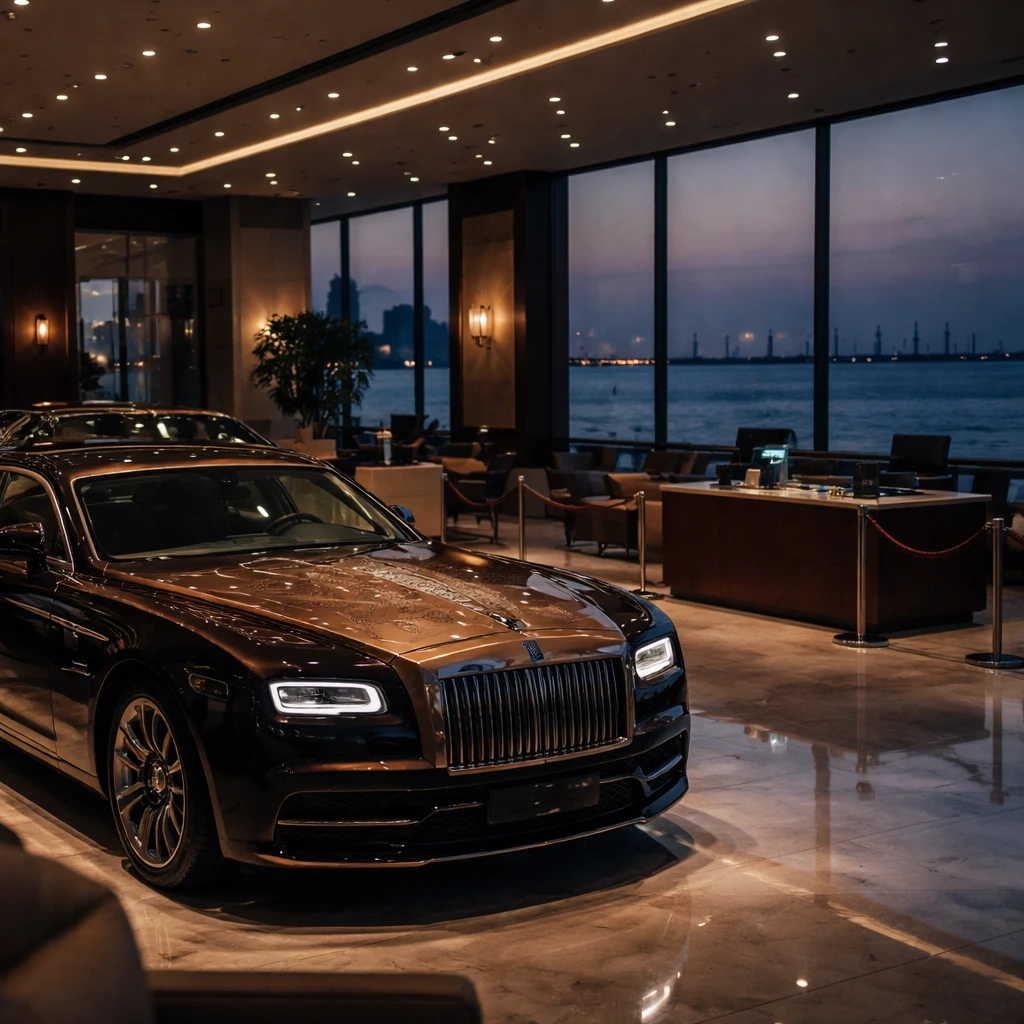
One recent example of the Gulf’s influence on product and pricing was a bespoke Rolls-Royce Phantom Arabesque, featuring a laser-engraved hood inspired by Arabian architecture and a coordinated wood-trim interior, commissioned by a Dubai customer and presented in February. A standard Rolls-Royce Phantom carries a starting price near 430,000 pounds ($572,416), and the tailored additions often requested by Gulf clients can push that figure significantly higher - in some cases doubling or tripling the base price.
Rolls-Royce Motor Cars, owned by BMW, unveiled its Arabesque creation just one week after opening a second showroom in Dubai, timing that preceded U.S.-Israeli strikes on Iran and subsequent strikes by Iran on targets in the Gulf. The automaker said it is "closely monitoring" the situation in the Middle East and added that, "Given the fluidity of the situation, it would be premature to speculate on longer-term impacts."
Across the Gulf, showrooms temporarily closed when the conflict began. Several manufacturers paused deliveries in the weeks that followed - Ferrari and Maserati, the latter a Stellantis unit, halted deliveries this month but reported that their showrooms have since reopened. Independent dealers in Dubai report a material fall in showroom traffic.
F1rst Motors, a Dubai-based dealer that handles marquee brands, shut for the initial days after the fighting began and has now resumed operations. Director Chris Bull described the outlet as best known for Ferraris and Bugattis and said its inventory spans roughly $250,000 to $14 million. Since reopening, he said overall business is down about 30%, although transactions above $1.4 million have steadied and sales outside the United Arab Emirates remain robust. Bull noted that some customers will pay up to 30,000 euros ($34,512) to arrange transport for a $7 million vehicle out of the country.
Executives at global manufacturers have stressed the strategic importance of the Middle East market. "It’s the best market in the world," said Bentley Chief Executive Frank-Steffen Walliser earlier this month. Volkswagen Group Chief Executive Oliver Blume likewise highlighted the profitability of Gulf sales, calling them "very high margin," and conceded that the Iran conflict will have an effect.
Many luxury and premium automakers do not disclose regional profit margins; some, including Bentley and Rolls-Royce, no longer publish global sales figures. Ferrari, however, reported that Middle East volumes accounted for 4.6% of its global sales last year - more than it sold in China and up from 3.5% the prior year - and a company spokesperson said sales in the region are stable for now.
A distinct commercial model in the Gulf has been limited-edition runs and heavy personalization, which allow brands to extract substantial premiums. In 2024, Jaguar Land Rover sold 20 examples of its "Sadaf" edition Range Rover Sport SV at about 330,000 pounds each - roughly three times the UK starting price for the model. Former Aston Martin Chief Executive Andy Palmer recalled that during his tenure manufacturers would often first target wealthy Middle Eastern collectors for high-margin special editions, adding that the demand was essentially automatic.
Industry participants said that bespoke orders and limited-edition sales in the Middle East have largely stalled since the conflict began. "People in the Middle East have other thoughts than looking for a new Bentley at the moment," Walliser said.
The disruption comes at a difficult time for the sector more broadly. U.S. volumes have been buffeted by tariffs, European and Chinese demand have softened, and companies are increasingly confronted with fewer outlets to sustain revenue growth. Some producers are considering production adjustments if the current situation persists.
Bentley’s sales declined 5% last year, and Chief Financial Officer Axel Dewitz told reporters the company does not yet see a need to cut output. "However, if the current crisis endures for a couple of weeks, I think we would need to revisit the situation," he said.
Lamborghini Chief Executive Stephan Winkelmann said the company has contended with multiple post-pandemic challenges. He noted there is no obvious additional U.S. market capacity to offset shortfalls, and he cited halted sales in Russia after Moscow’s 2022 invasion of Ukraine, a collapsed luxury market in China, tariffs hitting the U.S. and now a standstill in the Middle East.
For some industry veterans the current convergence of market shocks is unparalleled. Former Aston Martin CEO Andy Palmer described the circumstances as unlike anything he remembers, saying, "For a manufacturer of premium and luxury cars in particular, it’s an utter disaster."
Companies remain cautious about making long-term pronouncements while conditions in the Gulf remain fluid. Until the conflict and its regional repercussions settle, executives and dealers say they expect continued volatility in sales patterns, a slowdown in bespoke commissions and pressure on margins that have benefited from the region’s appetite for exclusive, highly optioned vehicles.
Currency conversions used in the reporting are: $1 = 0.7512 pounds and $1 = 0.8693 euros.