
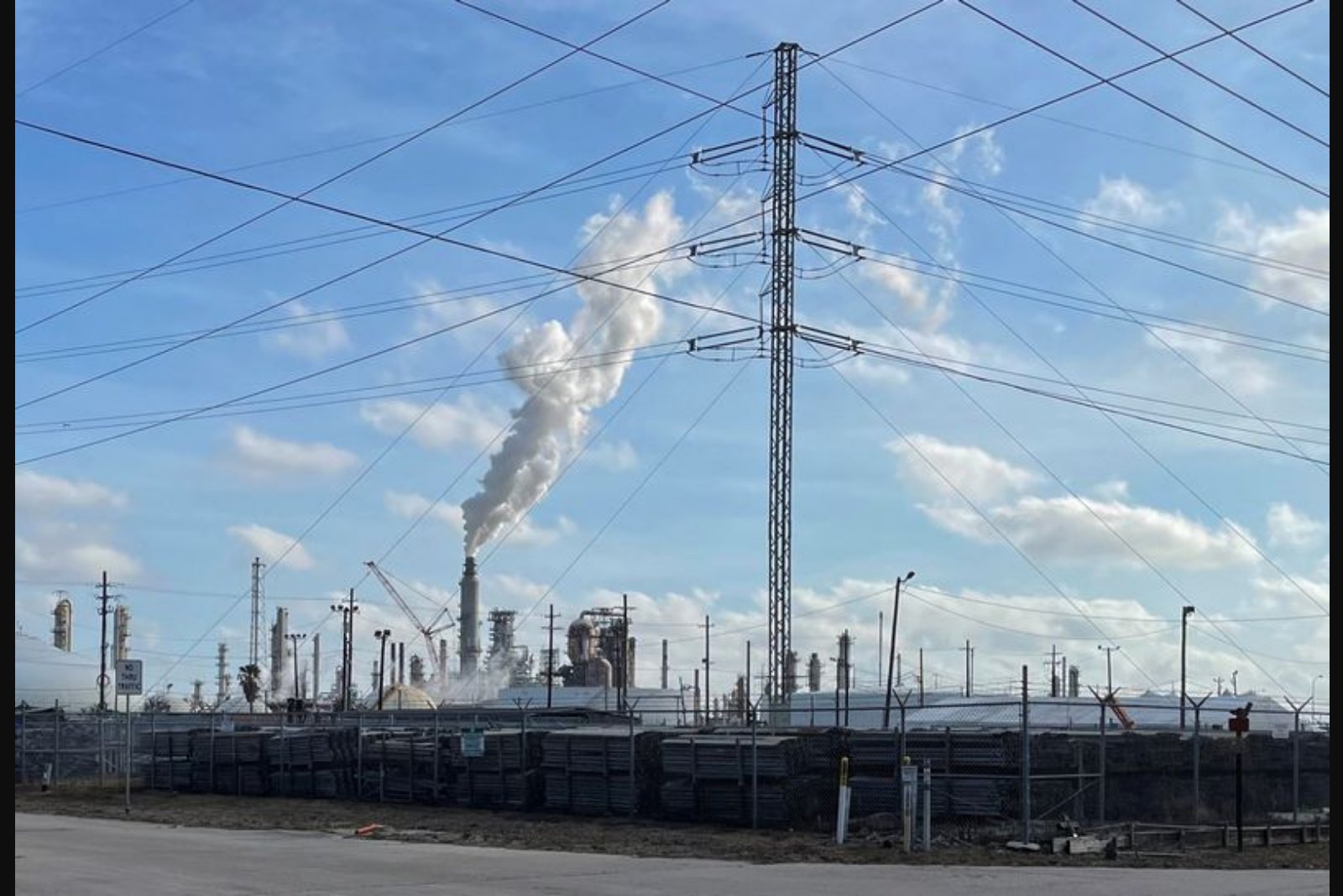
U.S. refiners on the Gulf Coast are seeing some of their best margins in years as disruptions to Middle Eastern oil and fuel shipments tied to the Iran war have increased global demand for American refined products, industry analysts and market participants say.
Refining hubs in Asia and Europe have borne the brunt of a sharp decline in crude exports from the Middle East after Iran’s effective blockade of the Strait of Hormuz forced some overseas refiners to curtail processing runs. In response to the tighter availability of Middle Eastern barrels and finished fuels, buyers in those regions have sought supply from alternative sources, creating a stronger market for U.S. exports.
On Tuesday, U.S. President Donald Trump said he had agreed to a two-week ceasefire with Iran provided the Strait of Hormuz is reopened. Despite that announcement, tanker traffic remains constrained and uncertainty persists over whether the fragile truce will hold.
U.S. refiners are relatively less dependent on crude from the Middle East, and that positioning has enabled them to increase shipments from the Gulf Coast export hub to markets facing shortages. The United States operates roughly 18 million barrels per day of refining capacity, a large share of which is concentrated on the Gulf Coast - an origin point for major export flows.
Major independent refiners located on the Gulf Coast - including Marathon Petroleum, Phillips 66, Valero Energy and PBF Energy - are among the primary beneficiaries of the current market dynamics, analysts note. These companies are situated along critical inland and coastal infrastructure such as the Colonial Pipeline and marine terminals, facilitating rapid expansion of overseas sales when demand in distant markets spikes.
U.S. refiners have the upside opportunity of selling into markets facing scarcity, while not having to suffer any meaningful disruption to their own feedstock supply, said Jeff Krimmel, founder of consulting firm Krimmel Strategy.
Operational metrics reflect the shift. U.S. refinery utilization climbed to nearly 92% last month, with Gulf Coast utilization averaging above 95%, up from about 90% a year earlier, according to U.S. Energy Information Administration data. The Gulf Coast’s utilization is also markedly higher than its five-year seasonal average of roughly 82%.
By contrast, Asian refinery utilization has eased into the low-to-mid 80% range after visible run cuts through March and April, consultancy Rystad Energy reported, underscoring the divergence between regions facing crude and fuel shortages and the U.S. Gulf Coast, which has spare processing capacity to redirect to exports.
EXPORT MARGIN BOOST
Ship-tracking data show U.S. refined product exports reached a record in March. That export surge has provided a sharp uplift to refining margins after a period in which global oversupply had pressured profitability. Higher overseas demand means refiners receive stronger prices for barrels sold abroad even as U.S. retail fuel prices move toward record levels at the pump.
The most pronounced effects are evident in diesel and jet fuel markets. Those product streams and the high-yield crude grades that produce them have been especially affected by the Iran conflict, since the Middle East is a significant supplier in global markets for these fuels.
U.S. ultra-low sulfur diesel futures were trading at more than a $72-per-barrel premium to U.S. West Texas Intermediate crude futures, up from about $40 before the Iran war. U.S. gasoline futures were near a $26-per-barrel premium to crude, compared with roughly $18 prior to the conflict.
Strength in global diesel markets is expected to pull barrels from the U.S. Gulf Coast, ultimately contributing to further upward pressure on domestic prices, said Alex Hodes, director of energy market strategy at StoneX.
INSULATION LIMITS
Despite the windfall from elevated product prices and booming exports, U.S. refiners are not fully insulated from increases in feedstock costs. Stronger global crude demand has sent spot premiums for West Texas Intermediate to record levels, tightening margins from the other direction.
Offers for WTI Midland crude to North Asia for July delivery were quoted at premiums of $30 to $40 per barrel over regional benchmarks, rising from about $20 in late March. Meanwhile, bids for WTI into Europe have climbed to a record near $15 per barrel over dated Brent. These moves indicate intensifying competition for U.S. and other non-Middle Eastern crude streams.
Market participants also report that Asian refiners are competing more aggressively for South American barrels that historically flowed to the United States, further pressuring available crude supplies for domestic refineries.
Some refiners have already recorded financial impacts from shifting commodity prices. Phillips 66 said on Monday that rising commodity prices produced nearly $900 million in pre-tax mark-to-market losses in the first quarter. Krimmel noted that while rising oil prices hit the value of Phillips 66’s hedges in the short term, the company will realize meaningful gains as it sells additional refined products into a market with elevated product prices.
Overall, the current configuration of stronger export demand, elevated refined product premiums and record export volumes from the Gulf Coast has materially improved refining economics in the United States. At the same time, higher feedstock premiums and the potential for further global disruptions mean the gains could be partially offset by rising crude costs and increased competition for alternative barrels.