
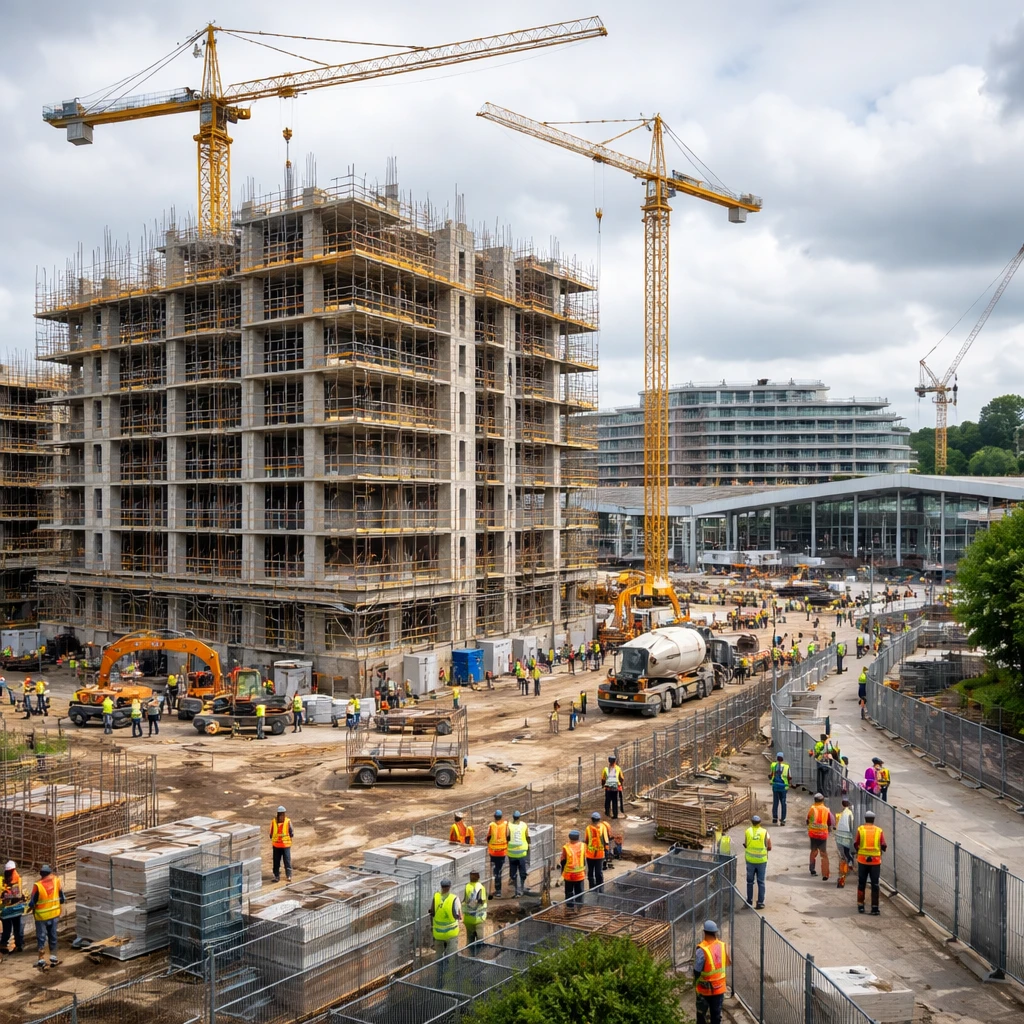
Grainger Plc has started on-site work for its second build-to-rent (BTR) development at Guildford Station, a project that will deliver 179 homes backed by a £75 million commitment from the company.
The new scheme increases Grainger’s presence in the Guildford cluster to 277 homes and follows more than £116 million of investment in the immediate area to date. The development is being delivered in partnership with Solum, the joint venture formed by Network Rail’s property arm and Kier Property.
This BTR project sits within a larger regeneration programme for the Guildford station quarter valued at £150 million. That wider plan includes £25 million allocated to station improvements, which the project brief lists as a new ticket hall, upgraded pedestrian connections and a multi-storey car park.
Grainger expects construction to run through to 2028, with leasing to commence after completion. Management has stated the development will contribute to the company’s earnings for the fiscal year 2028 once leasing begins and occupancy builds.
Commenting on the expansion, Helen Gordon, Grainger’s chief executive, said: "This landmark regeneration project builds on our successful partnership with Network Rail, which has delivered 857 rental homes and includes plans for up to 2,000 more." Her remarks point to continued collaboration between the landlord and Network Rail as the Guildford cluster grows.
The firm has framed the scheme as consistent with government objectives announced in November 2025 that support high-quality housing near transport hubs. Grainger has also reiterated that its strategy focuses on well-connected locations with strong employment links, with Guildford Station cited as an example of that approach.
Context and implications
The Guildford project represents a targeted, capital-intensive expansion of Grainger’s build-to-rent footprint in a location tied to transport-led regeneration. The stated timelines and linkage to station upgrades make this development part of a multi-component urban renewal effort that combines residential supply with transport and access improvements.