
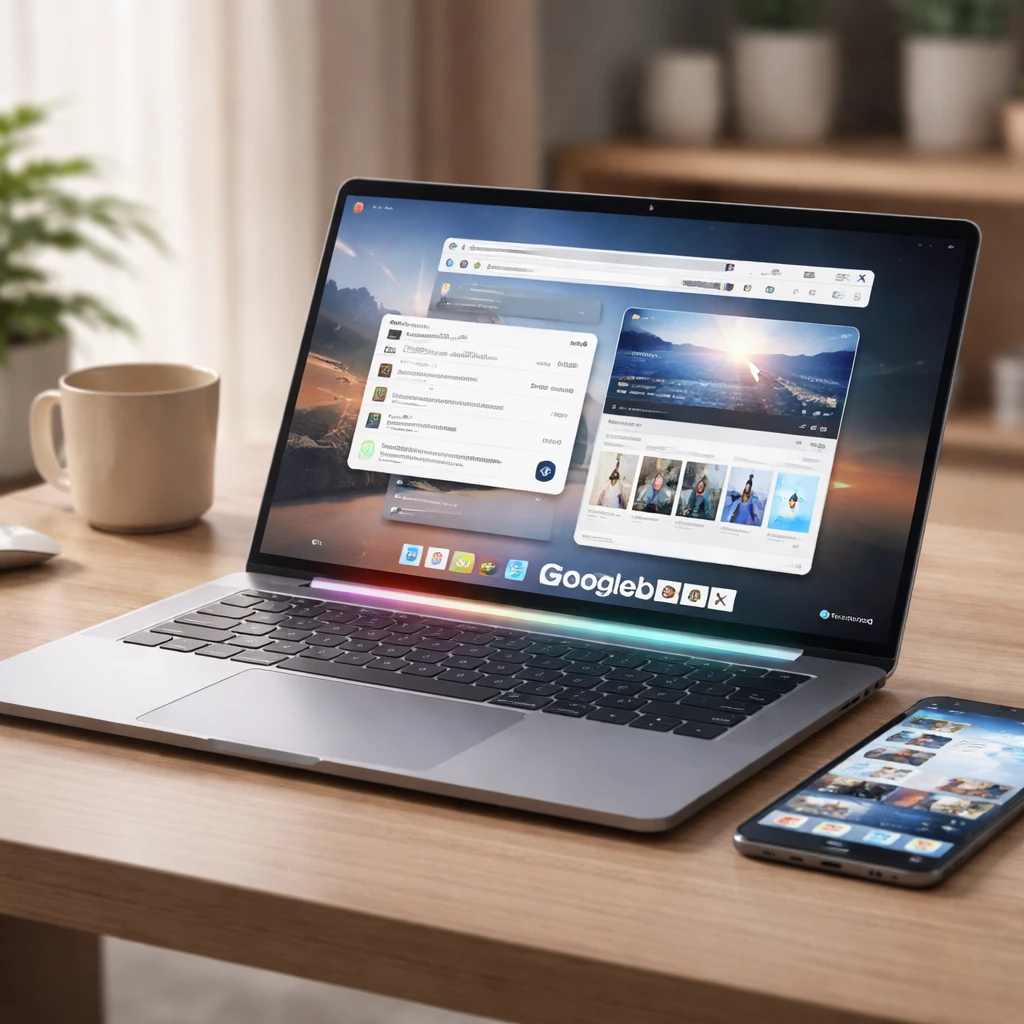
Google announced Tuesday that it is introducing Googlebook, a new class of laptops that place its Gemini artificial intelligence system at the core of the user experience and are engineered to integrate with Android devices.
According to the company, Googlebook marks a departure from conventional operating systems toward what it calls an intelligence system - a platform that combines features of Android and ChromeOS. The devices will allow users to run Google Play applications and use the Chrome browser, preserving familiar app and browsing functionality while adding AI-driven capabilities.
One of the headline features is Magic Pointer, developed in collaboration with Google DeepMind. Magic Pointer activates when users wiggle their cursor and offers contextual suggestions based on what is visible on the screen. Google provided examples of the tool converting dates in emails into calendar events and helping visualize furniture placements by selecting images - actions that are triggered by screen content and the cursor interaction.
Googlebook will also include Create your Widget, a feature that generates custom desktop widgets from text prompts. The company said these widgets can draw information from Gmail, Calendar and internet searches to assemble personalized dashboards containing items such as flight information and restaurant reservations.
For cross-device workflows, the laptops will support Quick Access, which lets users view and insert files from their Android phones directly within the laptop's file browser without transferring the files. Users will further be able to open Android phone applications on Googlebook displays, reflecting the product's emphasis on tighter integration with mobile devices.
Google said it is teaming with Acer, ASUS, Dell, HP and Lenovo to produce the initial Googlebook models. The company said the new devices will include a distinctive design element it calls a glowbar on each laptop.
Google noted that it introduced the Chromebook platform more than 15 years ago and indicated that additional information about Googlebook will be released later this year.
Key features highlighted:
- Gemini AI as the central intelligence system combining Android and ChromeOS elements.
- Magic Pointer for contextual, cursor-activated suggestions created with DeepMind.
- Create your Widget for text-prompted custom widgets pulling data from Gmail, Calendar and web searches.
- Quick Access to view and insert files from Android phones without transferring data and the ability to run Android apps on the laptop screen.
- Initial manufacturing partnerships with Acer, ASUS, Dell, HP and Lenovo and a distinctive glowbar design element.
The company framed Googlebook as a new approach to personal computing centered on an intelligence layer rather than a traditional operating system, and said further technical and product details will follow later in the year.