
General Fusion, a Canadian enterprise developing experimental nuclear fusion technology, revealed on Thursday its intention to become a publicly traded company in the United States via a merger valued at approximately $1 billion with Spring Valley Acquisition Corp. III (SVAC III), a special purpose acquisition company.
The agreement incorporates a committed private investment in public equity (PIPE) worth $105 million, which was oversubscribed, alongside about $230 million of SVAC III cash held in trust. The company anticipates closing the deal by the middle of 2026 and commencing trading on Nasdaq under the symbol 'GFUZ.'
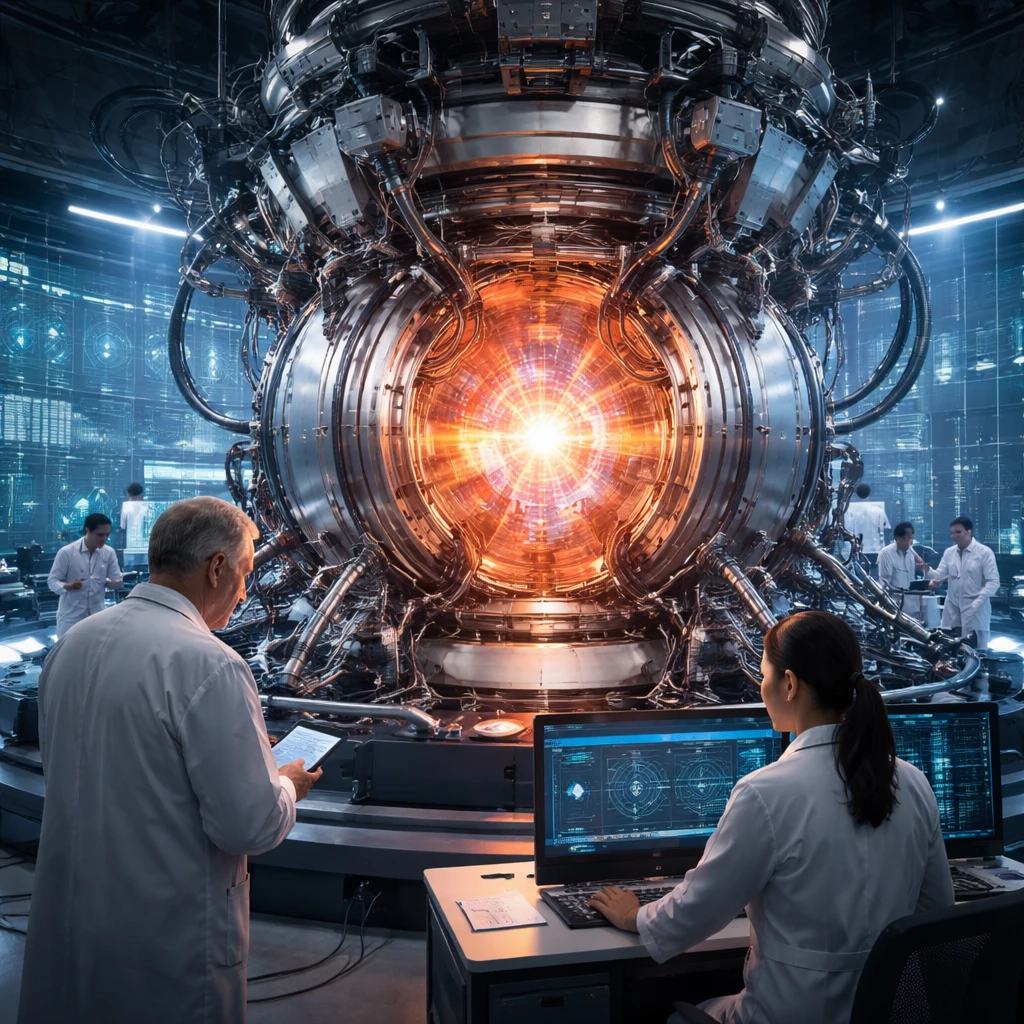
The firm is pursuing magnetized target fusion, an innovative method aiming to replicate the nuclear processes that energize the sun. This approach contrasts with conventional nuclear fission. While fusion has yet to be demonstrated as commercially viable, General Fusion has not yet constructed a reactor capable of producing net energy. The company aims to develop a pioneering power plant by the mid-2030s.
This planned public offering arises amidst increased attention towards nuclear energy in the U.S. following many years of limited progress. The uptick in interest is driven by growing electricity requirements originating from artificial intelligence data centers as well as broader electrification in industries like transportation and manufacturing.
General Fusion intends to deploy the transaction proceeds to advance the engineering and development of its magnetized target fusion system. Chief Executive Officer Greg Twinney emphasized the immense scale of energy demand, citing sectors such as AI and data centers, which current technologies alone cannot satisfy.
Additionally, General Fusion is collaborating closely with potential customers to ensure its technology aligns with operational, construction, financing, and usage needs in the future energy landscape.
The company's landscape includes competitors such as Bloom Energy, Oklo (backed by Sam Altman), NuScale, Centrus, and Nano Nuclear Energy. However, none of these peers focus exclusively on fusion technologies.