
Officials from the Group of Seven advanced economies are reportedly preparing to discuss a possible release of strategic oil reserves as a response to supply constraints tied to the ongoing conflict centered on Iran, media outlets have reported. The move is framed as an effort to calm tightening oil markets while the fighting continues to affect regional flows.
According to French and European Union sources cited by the reporting, finance ministers from G7 nations are due to meet today to evaluate the economic fallout from the clashes. The Wall Street Journal carried the reporting and noted prior coverage by the Financial Times.
The reports come as benchmark crude prices leapt above the $100-per-barrel mark, approaching levels last observed during the COVID-19 pandemic era. Traders and policymakers cited fears that the conflict will remain unresolved in the near term, sustaining pressure on supply.
Compounding market anxiety has been the announcement of Mojtaba Khamenei as Iran's next supreme leader. The reports describe Mojtaba as the son of former leader Ayatollah Ali Khamenei, who was slain in joint U.S.-Israeli air attacks at the outbreak of the conflict on February 28. U.S. President Donald Trump publicly labelled the nomination an "unacceptable" choice.
Violence across the Middle East has continued, with Iran reported to have carried out strikes on Israel and on U.S.-allied states in the Persian Gulf. Over the weekend, bombardments struck Iranian fuel-storage complexes, further raising concerns about the region's energy infrastructure.
Oil market reaction and macroeconomic warnings
International Monetary Fund managing director Kristalina Georgieva warned that a sustained 10% increase in crude prices could lift global headline inflation by 0.4 percentage points. Delivering a keynote address in Japan, Georgieva urged planners to "Think of the unthinkable and prepare for it."
By 06:56 ET (10:56 GMT) on the reporting day, Brent futures had advanced 14% to $105.71 per barrel, while U.S. West Texas Intermediate crude rose 14% to $103.64 per barrel. U.S. stock futures fell by more than 1% as major markets in Asia and Europe also retreated on the price surge.
Shipping, insurance and production disruptions
Since the initial bombardments more than a week ago, market participants have been particularly concerned about the operational status of the Strait of Hormuz - the narrow waterway just south of Iran. Around a fifth of the world's oil and gas supply moves through the strait, with a large share destined for Asian markets. Traders warned that continued closure or restricted traffic could materially affect global energy flows.
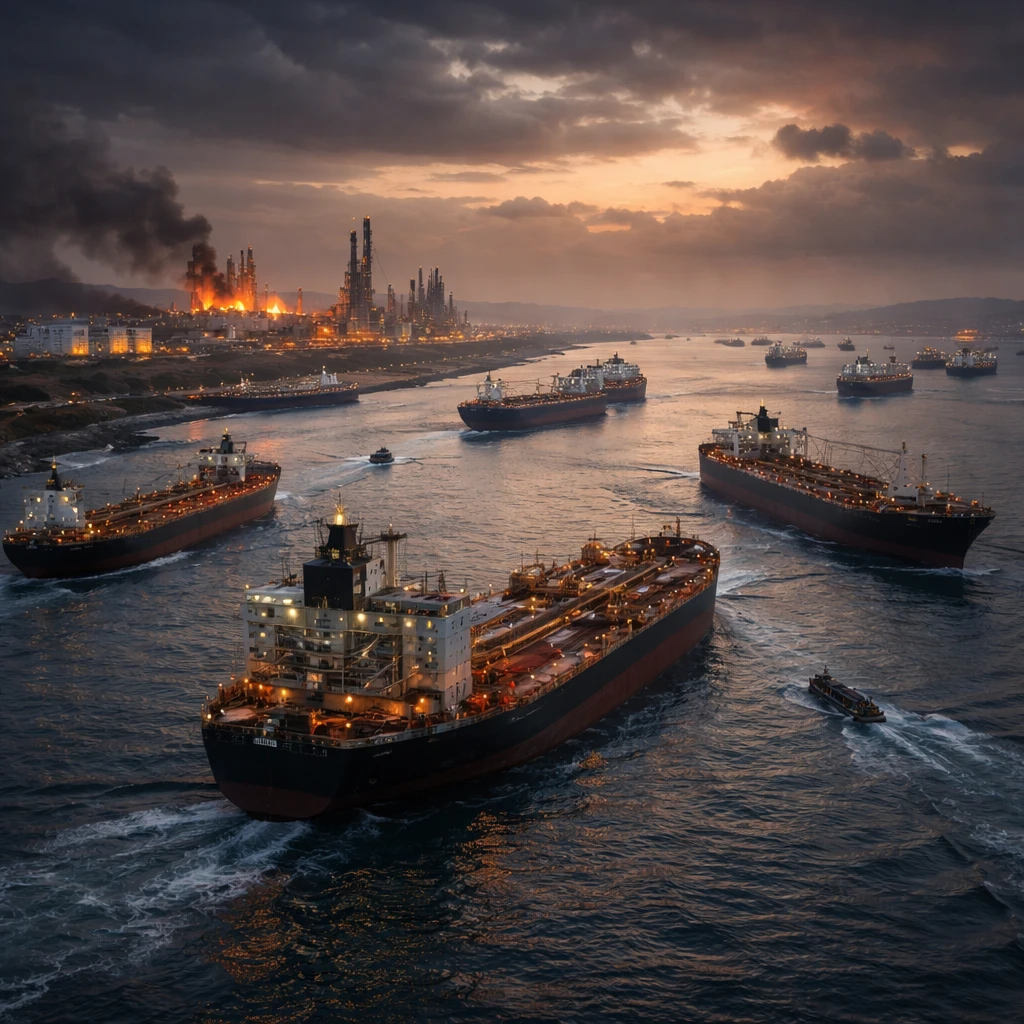
With crew safety and insurance coverage in question, vessels have been left waiting on both sides of the strait. Container shipping companies have begun diverting routes away from the region, the reports said, while upstream producers have initiated shut-ins as storage capacities tighten. Analysts at ING highlighted the emerging combination of reduced output and constrained logistics in a note to clients.
The combination of these production shut-ins and no signs of de-escalation in the war means the market is having to aggressively price in a prolonged supply disruption. The bottom line is that, as long as we don’t see oil moving through the Strait of Hormuz, oil prices will only move higher,
the ING analysts warned.
Supply-side responses and further disruptions
News that Saudi Arabia had signalled willingness to place additional crude into global markets briefly tempered some of the rally in prices, according to market commentary. However, subsequent reporting from Reuters indicated that Saudi oil producer Aramco has started to curtail output at two of its oilfields, which adds a further layer of uncertainty about near-term supply additions.
Separately, Bahrain's state-backed energy company declared force majeure on its operations, stating it could no longer meet contractual obligations in part because a recent attack had impacted a refinery. These developments underline how the conflict is reverberating across upstream supply, refining and logistics operations.
Market outlook and immediate considerations
With G7 finance ministers set to discuss strategic reserve releases, authorities appear to be assessing coordinated policy tools to offset shortfalls. At the same time, the market reaction to the conflict - sharp jumps in crude benchmarks and declines in equity futures - reflects the risk premium pricing in until there are clearer signs of de-escalation or sustained alternative supplies entering the market.
For now, shipping, insurance, upstream production and refiners remain among the sectors most directly affected by the evolving security situation and its impact on the Strait of Hormuz and regional infrastructure. The reports and market moves underscore how geopolitical shocks can translate quickly into commodity and broader financial market stress.