
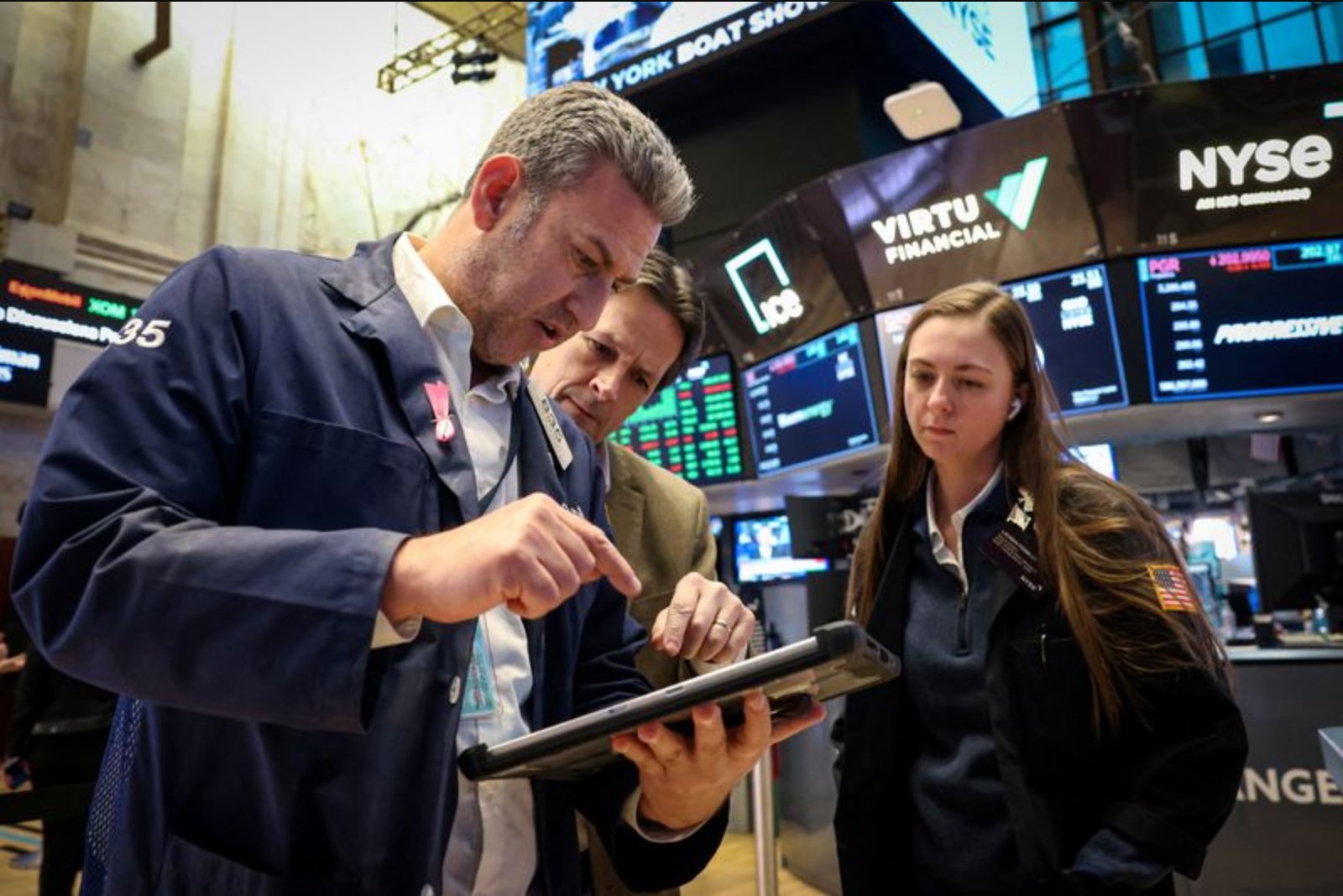
U.S. stock index futures were largely muted on Wednesday as investors continued to avoid many software and cloud names after a painful run of losses the previous session, and as Advanced Micro Devices (AMD) slid on a cautious revenue outlook.
The software and services index, which includes several leading cloud and software companies, extended its decline for a fifth consecutive session on Tuesday, falling more than 12% over that span. That sequence marked the index's steepest stretch of losses since March 2020. Traders appeared to take a more measured approach on the second day after the sharp drop, but concerns remained about how rapid advances in artificial intelligence could disrupt established software business models.
In premarket activity, CrowdStrike was down 0.4%, while Intuit and Adobe each slipped 0.5%. Advanced Micro Devices declined 7.2% after forecasting a slight dip in quarterly revenue, a projection that reignited doubts about AMD's ability to gain ground against Nvidia in the highly competitive AI market. "AMD reported into an ugly tape, with tech being sold and questions about AI spending driving a sentiment shift across the space," said Jake Behan, head of capital markets at Direxion. "The move was more about traders stepping back from an ostensibly crowded AI trade."
Not all chip-related names moved lower. Super Micro Computer jumped 12.4% after raising its annual revenue forecast, citing sustained demand for its AI-optimized servers as companies expand data-center capacity. That outsize gain provided a counterpoint to losses elsewhere in the technology complex.
At 05:29 a.m. ET, Dow E-minis were up 132 points, or 0.27%, S&P 500 E-minis were up 6.25 points, or 0.09%, and Nasdaq 100 E-minis were down 10.5 points, or 0.05%.
Alphabet climbed 0.9% in advance of its results due after markets close, while Amazon edged up 0.4% ahead of its quarterly report on Thursday. Investors said they would scrutinize the earnings reports from the largest technology companies for signals that massive capital-spending initiatives are producing returns that warrant their lofty valuations.
At the same time, an increasingly crowded AI trade has nudged some investors toward undervalued small caps and other market segments that have been overlooked. The small-cap Russell 2000 and the mid-cap S&P 400 both finished higher on Tuesday, rising 0.3% and 0.2%, respectively. The Russell 2000 was on track for a weekly gain of more than 1%, while the S&P 500 was posting a modest decline for the week.
Volatility remained elevated. Wall Street's "fear gauge", the CBOE volatility index, stood at 18.27 points after touching its highest level in two weeks in the prior session.
Pharmaceutical and consumer names also drew attention. Eli Lilly slipped 0.3% ahead of its results, which were due shortly after the premarket trading. Food and consumer companies flagged the tug-of-war between higher input costs and a cautious consumer. Mondelez forecast a subdued year and warned that price increases were deterring cost-conscious shoppers amid broader economic uncertainty, and the Cadbury owner's shares fell 4.1% on the update. Chipotle Mexican Grill slid 6.5% after the burrito chain said it plans to raise menu prices this year while projecting that margins will remain under pressure as consumers cut back on dining out.
On the macro calendar, U.S. President Donald Trump signed a spending deal into law on Tuesday, ending a partial government shutdown that had delayed the release of key labor-market data. With official gauges such as nonfarm payrolls and JOLTS running late, market participants said they would focus more intently on private-sector measures, beginning with ADP's national employment report for January, scheduled for release at 8:15 a.m. ET.
Overall, corporate earnings continued to illustrate the interplay between cost pressures and a cautious consumer, and the evolving narrative around AI spending and capital expenditure plans remained central to investor positioning across technology and related sectors.
Key points
- The software and services index fell for a fifth straight session, down more than 12% over the span - its largest run of losses since March 2020.
- AMD dropped 7.2% after lowering its quarterly revenue forecast, while Super Micro Computer surged 12.4% after boosting its annual revenue outlook thanks to demand for AI-optimized servers.
- Small-cap and mid-cap benchmarks outperformed the large-cap S&P 500 on Tuesday, with the Russell 2000 on track for a weekly gain of more than 1%.
Risks and uncertainties
- Ongoing uncertainty around how rapid advances in AI will affect traditional software business models is prompting de-risking in the technology sector, particularly among cloud and software names.
- Corporate margin pressure resulting from higher costs and a more cautious consumer - highlighted by guidance from Mondelez and Chipotle - could weigh on consumer-facing sectors.
- Delayed official labor-market releases and heightened volatility increase reliance on private data points, such as ADP's employment print, which may intensify short-term market swings.