
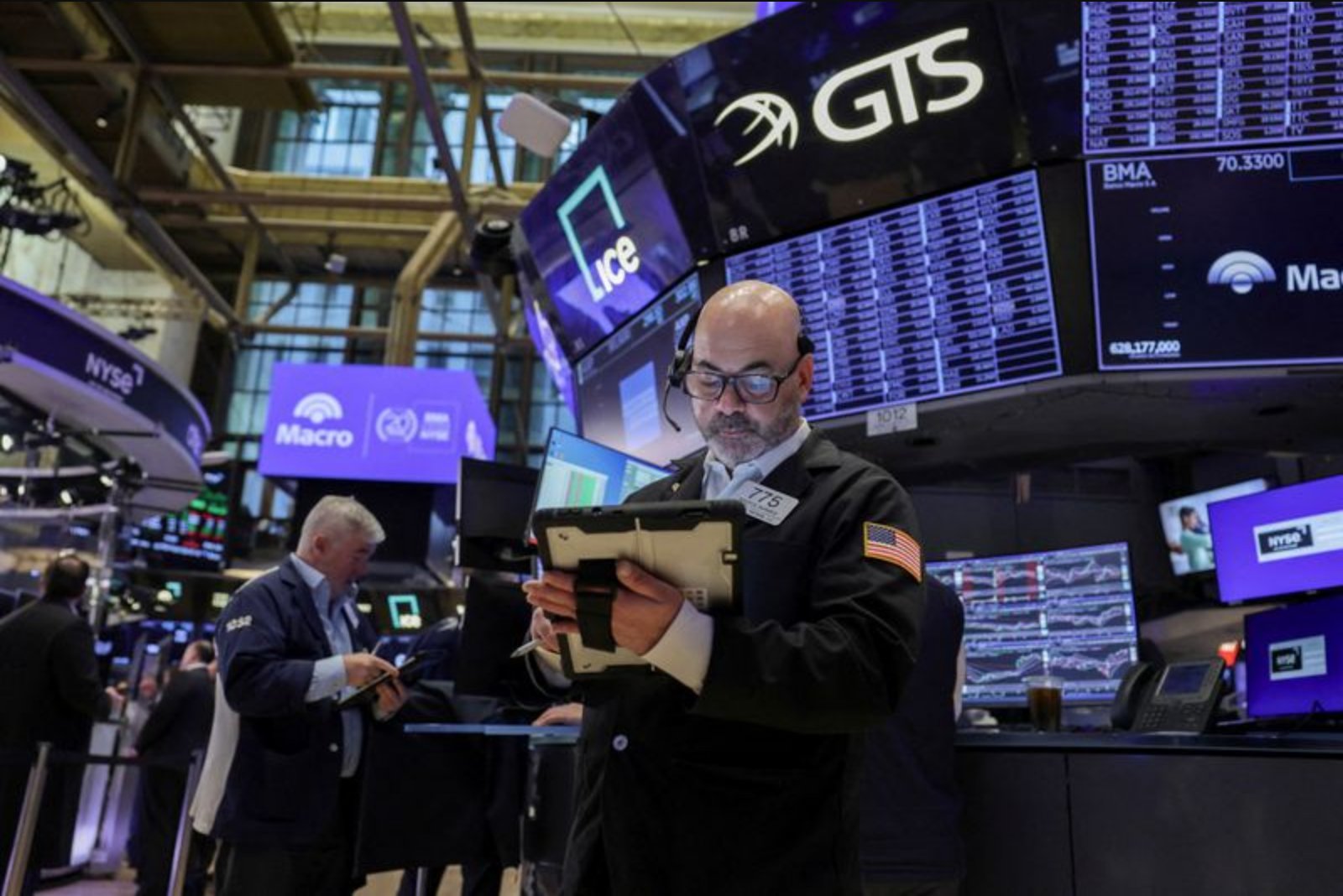
U.S. stock index futures moved higher on Tuesday as markets reacted positively to a report signaling a potential easing of the Middle East conflict that has driven major indexes toward sharp monthly drops. The Wall Street Journal reported that U.S. President Donald Trump told aides he was willing to end the military campaign against Iran even if the Strait of Hormuz remained largely closed - a development that helped calm some investor nerves after a month of turmoil.
The prolonged conflict has pummeled global markets, leaving the S&P 500 and the Dow on track for their largest monthly declines since September 2022. Oil prices continued to swing on Tuesday, though they were headed for a record monthly gain, and the energy sector within the S&P 500 was the only segment set to finish March in positive territory, with the S&P 500 energy index up more than 11% so far this month.
Market breadth weakened as major benchmarks confirmed pullbacks. The Dow and the Nasdaq ended last week roughly 10% below their record high closes, a level that confirms a correction, and the small-cap Russell 2000 reached that threshold earlier in the month.
At 05:08 a.m. ET, futures were trading higher across the board - Dow E-minis were up 417 points, or 0.92%, S&P 500 E-minis were up 57 points, or 0.89%, and Nasdaq 100 E-minis were up 194.25 points, or 0.84%.
Economists and strategists suggested the market reaction has been tempered by expectations that the conflict will not inflict sustained damage on economic growth. Isabella Mateos Y Lago, an economist at BNP Paribas, emphasized that investors largely maintained pre-war index targets and made few downgrades to earnings forecasts, adding that cash holdings remained below levels seen after President Trump’s tariff announcement.
"As long as the possibility of scenarios that inflict only manageable growth costs persists, it is preferable that financial markets do not amplify headwinds from higher energy prices and more hawkish central banks."
Investors are also shifting attention to domestic data and central bank commentary. The job openings and labor turnover survey (JOLTS) for February is due this week and is the first of the labor market reports in a holiday-shortened session. Fed officials are likewise in focus: remarks from policymakers including Austan Goolsbee and Michelle Bowman will be scrutinized for any hints on the Federal Reserve’s path, following Chair Jerome Powell’s comment on Monday that the Fed can wait to assess the impact from the war.
Heightened oil prices tied to the Iran conflict have reawakened inflation concerns. That spike has led money market participants to remove expectations for any easing from the Fed this year, compared with two rate cuts they had anticipated prior to the outbreak of the war, according to CME Group’s FedWatch Tool.
In premarket individual stock moves, McCormick shares rose 4.2% after Unilever said it was in advanced talks to combine its food business with the spice maker. Emerson Electric shares climbed 2.2% after Jefferies initiated coverage with a "buy" rating.
Separately, a portfolio-analysis product referenced McCormick (MKC) coverage, noting that an AI-driven tool evaluates thousands of companies each month using more than 100 financial metrics to identify potential opportunities and that the tool has highlighted past winners. The product description cited historical winners that included Super Micro Computer and AppLovin and posed whether MKC appears in current strategies.
With geopolitical headlines continuing to sway energy prices and central bank expectations, market participants appeared to be balancing cautious optimism about a possible de-escalation with persistent uncertainty over inflation and monetary policy.