
Days after Iran effectively blocked shipping through the Strait of Hormuz following the start of U.S. and Israeli attacks in late February, demand for electric motorbikes surged in Pakistan, even in cities roughly 1,400 km (875 miles) distant from the waterway.
Retailers and retrofitters across the country reported a sudden influx of enquiries and buyers. In Rawalpindi, Haseeb Bhatti, who converts petrol-powered motorbikes to battery drive, said his March sales rose by 70%. Ali Gohar Khan, owner of a seven-year-old electric motorbike franchise with branches nationwide, described the recent rise in purchases as the steepest he has seen. "People have this fear that maybe in the near future, they might not get petrol at all," Khan said.
The escalation in regional tensions has pushed global fuel prices higher, aggravating economic strain in Pakistan, where inflation and a post-pandemic downturn have already squeezed household budgets. Pakistan imports nearly all of its oil through the Strait of Hormuz, a fact that helped rumours of shortages spread quickly even after government reassurances about fuel availability.
Two- and three-wheeled vehicles dominate Pakistani roads. Industry data point to roughly 30 million of these vehicles, including autorickshaws, together accounting for about 40% of the country's petrol consumption. For many Pakistanis, cars remain a luxury while public transport is limited, so fuel costs on two-wheelers are especially salient for household budgets.
Officials and analysts say the current crisis could accelerate an electric vehicle (EV) shift in Pakistan. Unlike broader regional EV growth driven primarily by vehicle availability, Pakistan's transition may be powered in large part by the country's expanding access to low-cost solar electricity for charging e-bikes. A move away from petrol would also reduce oil imports, strengthen foreign exchange reserves, and lower emissions in a country projected to be among the most polluted in 2025.
Domestic pain from higher fuel prices is immediate. Following an 18% petrol price increase by the government last week, a household earning the median wage now spends about 31% of its daily income to buy a litre of petrol - a level higher than most countries tracked by globalpetrolprices.com and Our World in Data, with only 22 of 139 countries registering a higher share.
For many low- and middle-income workers, the rise has prompted quick action. "My monthly salary is 30,000 rupees. I can barely cover expenses for my family of six with this. How am I supposed to fill my bike?" asked Zahoor Ahmed, a security guard in Karachi. From professionals to students, a broader cross-section of riders has been moving toward electric alternatives.
Market figures reflect the shift. According to consultancy Renewables First, last year higher petrol prices helped push EV sales in Pakistan to around 90,000 units, nearly three times previous levels and equivalent to about 5% of all two-wheeler sales. This year, electric vehicles have comprised more than 10% of monthly two-wheeler sales for the first time, Talha Khan, CEO of EV logistics planner Orko, said. Khan added that charging an electric vehicle can be up to 10 times cheaper than refuelling with petrol in some cases, a key economic driver of the transition.
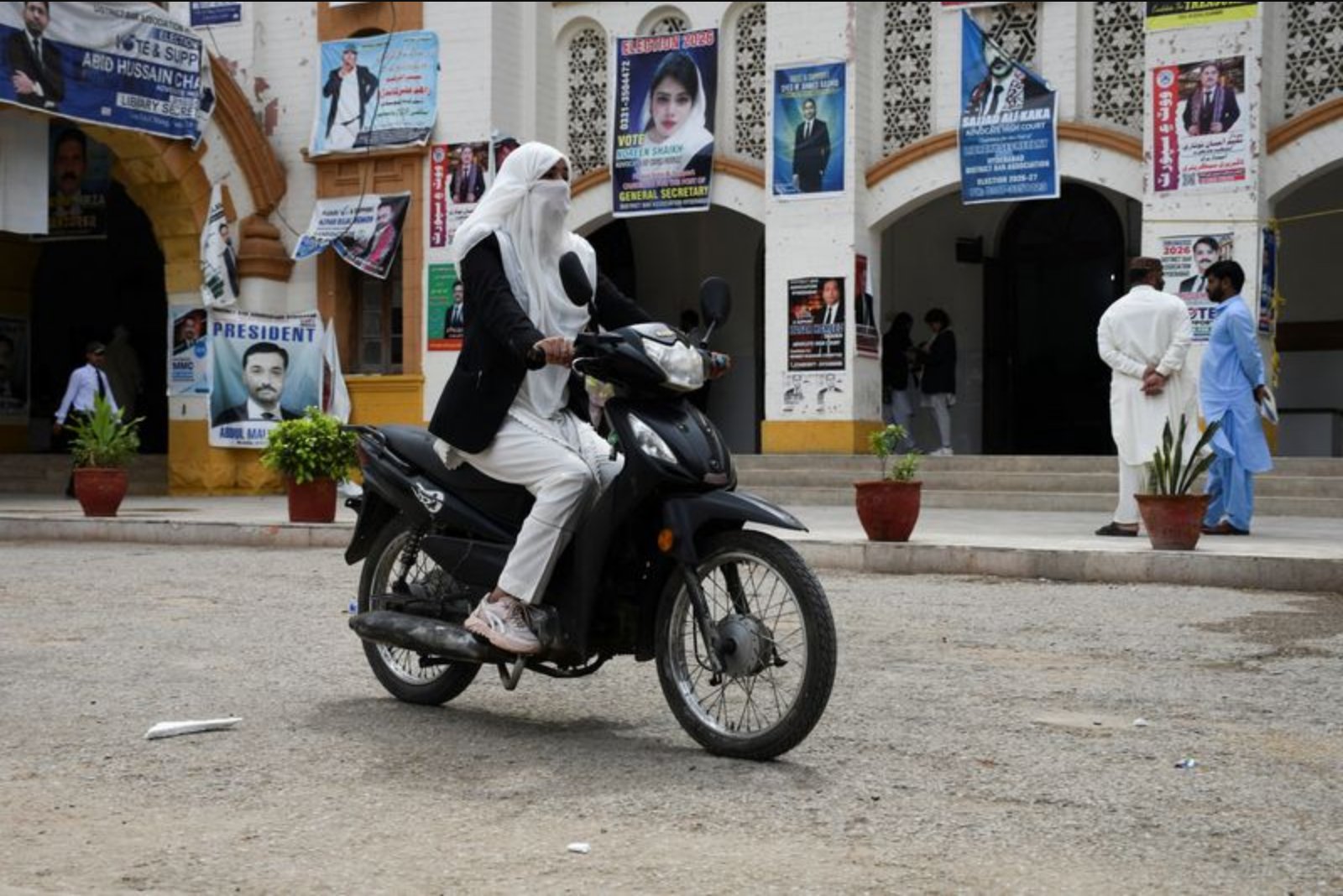
Consumers are responding. "Keeping inflation and fuel prices in mind, I took matters in my own hands and bought an electric scooter," said Mehvish Qureshi, a lawyer in Hyderabad.
Cost remains a barrier: a typical electric two-wheeler is priced at roughly 250,000 rupees, which is more than half of annual per capita income and about 56% higher than a popular petrol model, the Honda CD 70, which costs approximately 160,000 rupees. To address affordability, the government launched the Pakistan Accelerated Vehicle Electrification (PAVE) plan in February. Under PAVE, buyers receive a subsidy covering one-fifth of the vehicle price, with the remainder available through interest-free loans. The programme specifically targets electric bikes and autorickshaws.
PAVE has already attracted substantial interest. Finance Ministry adviser Adnan Pasha said the initiative has received roughly 270,000 applications, nearly seven times the first phase target that runs through June. The government aims to finance 2 million EVs over five years and plans to fund the scheme using existing levies on fuel sales. "Electrifying just 2 million vehicles could result in nearly half a billion dollars in annual savings, as we don’t have to import that fuel," Pasha said.
Pakistan's recent solar uptake is expected to amplify EV adoption. After IMF-driven electricity tariff increases in 2023, many households purchased low-cost China-made solar panels. The government is seeking to leverage that expansion: Pasha noted that charging stations and home chargers powered by solar can reduce electricity costs for EV owners. "Using solar can reduce electricity costs at charging stations, and make it more affordable to charge at home," he said.
Officials also argue that increased EV charging could stabilize the grid. Ammar Habib, an adviser to the power minister, said electrified transport is "great for the grid as the steady demand from electric vehicle charging will ease some of the daytime volatility linked to solar oversupply." The expectation is that predictable charging patterns will align with available generation and help manage intermittency in a system with growing rooftop and distributed solar.
Chinese manufacturers and suppliers are central to Pakistan's electric two-wheeler market, mirroring the country's solar sector. Brands such as Yadea and Jinpeng, along with locally assembled e-bikes using batteries and components from AIMA and Sunra, are positioned to meet rising consumer demand. Chinese EV major BYD has partnered with HUBCO Green to build charging stations nationwide and has signalled plans to support wider electrification that could eventually spur passenger car sales.
The government has encouraged local involvement in charging infrastructure and cited a 45% reduction in power tariffs for charging stations implemented last year as a further adoption incentive, Pasha said.
Despite strong demand and policy support, several risks could impede a smooth transition. Energy finance lead at Renewables First, Ahtasam Ahmad, noted that financial incentives could be strained if the regional conflict persists and that a shortage of local technical expertise and a charging network that is hard to scale present additional obstacles. Ahmad also emphasised the importance of after-sales service, saying that EVs are more susceptible to road damage and require robust servicing networks. He warned: "When Chinese players flood the market, it may look promising on paper, but with virtually no after-sales service infrastructure, they risk eroding consumer confidence in the technology." The article also noted that poor road conditions have created major service backlogs for e-scooters in neighbouring India.
Currency conversion used in reporting: $1 = 278.7000 Pakistani rupees.
Overall, Pakistan's current shift to electric two-wheelers is being driven by immediate economic pressures and strengthened by government subsidies, solar availability and major foreign suppliers. The move could reduce import bills and emissions, but its ultimate trajectory will depend on the stability of financial support, the build-out of charging and service networks, and how long regional tensions affect energy markets.