
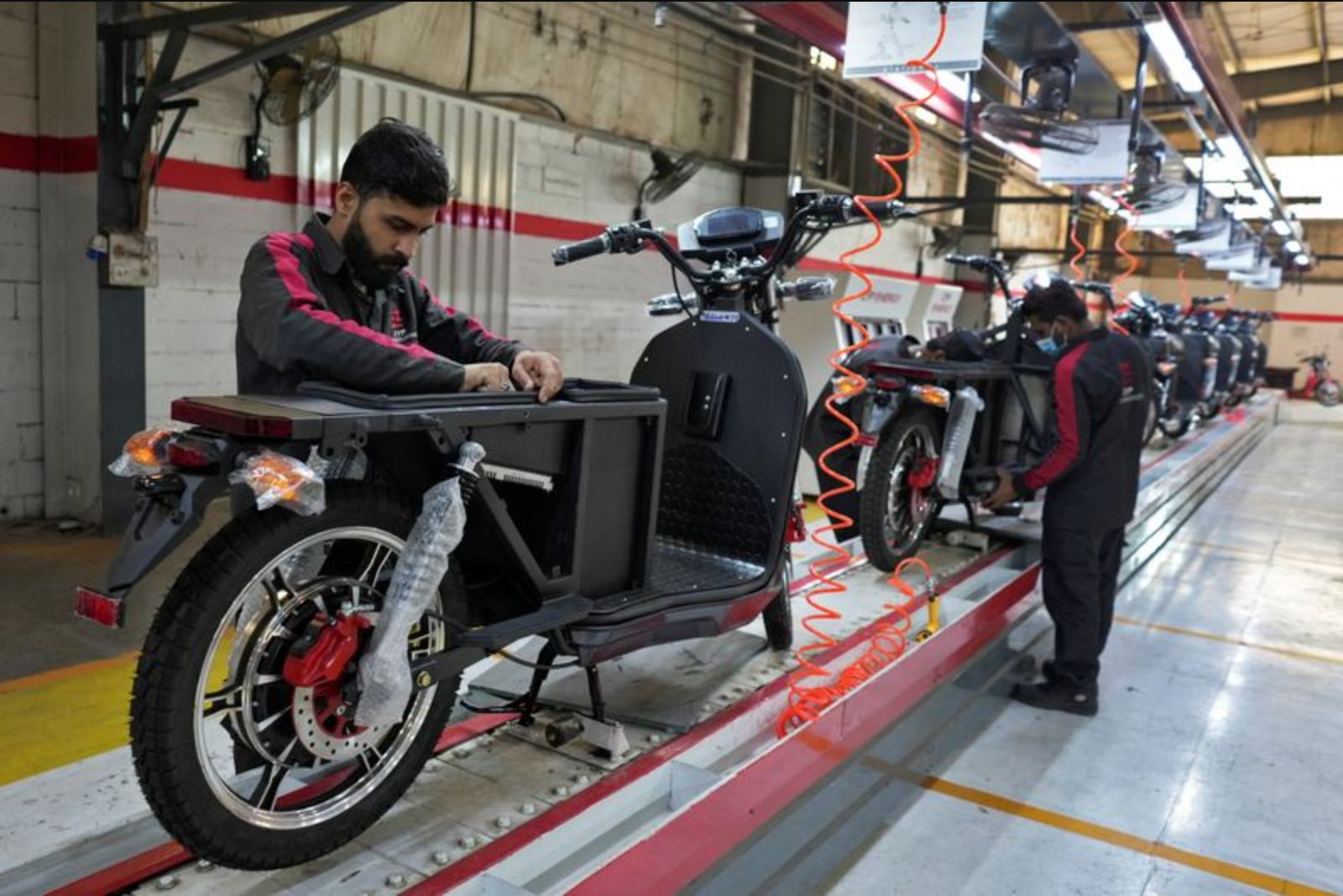
Across Pakistan, from retail showrooms to small retrofitting workshops, a sudden swell of interest in battery-powered motorbikes has taken hold following recent hostilities in the Middle East that disrupted shipping lanes and sent global fuel prices higher. The surge in enquiries and purchases has stretched outlets and installers even in cities hundreds of kilometres from the Strait of Hormuz.
In Rawalpindi, Haseeb Bhatti, who converts petrol motorcycles to battery propulsion, reported a sharp jump in demand in March. "My March sales surged 70%," he said, reflecting a broader wave of consumers re-evaluating their transport costs and fuel security. For Ali Gohar Khan, proprietor of a seven-year-old electric motorbike retail franchise with outlets across the country, the uptick in transactions represents the steepest increase he has witnessed since opening.
Underlying the spike is a palpable worry among Pakistanis that petrol supply could become constrained. "People have this fear that maybe in the near future, they might not get petrol at all," Khan said, echoing a sentiment that has pushed shoppers toward electric alternatives despite the relatively high upfront cost of a typical electric two-wheeler.
The broader economic context sharpens the appeal of electrification. The Middle East crisis compounded already rising domestic pain from inflation and a post-pandemic slowdown. Pakistan imports nearly all of its oil through the Strait of Hormuz, meaning rumours of shortages quickly resonated. Roughly 40% of the nation’s petrol consumption fuels the 30 million two-wheelers and three-wheeled autorickshaws that dominate travel in a country where car ownership is comparatively rare and public transport is insufficient.
Industry officials and analysts say the current conditions are likely to accelerate an electric vehicle transition for two- and three-wheelers in Pakistan. That shift is distinct from broader regional trends because Pakistan can tap into its widespread adoption of solar technology to charge e-bikes affordably. Reducing oil imports would also ease pressure on foreign exchange reserves and cut emissions in a country identified as among the world’s most polluted in 2025.
The immediate financial pinch is significant. Following an 18% government-imposed price rise in petrol last week, households earning the median wage now spend 31% of their daily income to buy a litre of petrol. That places Pakistan among the countries where filling a vehicle consumes a very large share of wages, according to tracking data referenced by global price monitors.
"My monthly salary is 30,000 rupees. I can barely cover expenses for my family of six with this. How am I supposed to fill my bike?" asked Zahoor Ahmed, a security guard in Karachi, describing the calculus pushing lower-income earners toward alternatives to petrol. Across demographic groups - from professionals to students - more riders are selecting electric bikes.
Market data captured the initial momentum. Higher petrol costs last year helped electric vehicle sales nearly triple to about 90,000 units, equating to roughly 5% of all two-wheelers sold, according to consultancy Renewables First. This year, electric models have represented over 10% of monthly two-wheeler sales for the first time, said Talha Khan, CEO of Orko, a company that focuses on EV logistics planning. He noted a simple arithmetic driver: filling a petrol vehicle can be as much as 10 times more expensive than charging an electric bike.
"Today, the war situation is bad, so petrol prices are going up. I think this (EV) is a very reasonable thing. Everyone should buy one," said Noori Shahbaz, a housewife purchasing an electric bike in Lahore. Female riders remain a minority but are a growing segment of buyers.
Cost, however, remains a barrier. A typical electric two-wheeler sells for around 250,000 rupees - equivalent to more than half of Pakistan’s annual per capita income and about 56% higher than the popular petrol-fuelled Honda CD 70, which costs about 160,000 rupees.
To bridge the affordability gap, the government introduced the Pakistan Accelerated Vehicle Electrification (PAVE) plan in February. The scheme provides a subsidy covering one-fifth of a vehicle’s price and offers interest-free loans for the residual amount. PAVE is aimed specifically at electric bikes and autorickshaws and has already seen strong demand: roughly 270,000 applications have been submitted, nearly seven times the target for PAVE’s initial phase running through June, Finance Ministry adviser Adnan Pasha told Reuters.
Pasha said the government plans to finance 2 million EVs over five years, funding the programme using existing levies on fuel sales. "Electrifying just 2 million vehicles could result in nearly half a billion dollars in annual savings, as we don’t have to import that fuel," he said, framing the shift as a macroeconomic lever to conserve foreign exchange.
The country’s residential pivot to solar after power tariff increases in 2023 has also created a complementary dynamic for EV adoption. Many households purchased affordable China-made solar panels, and the government seeks to leverage that installed base to lower charging costs. "Using solar can reduce electricity costs at charging stations, and make it more affordable to charge at home," Pasha said. Ammar Habib, an adviser to Pakistan’s power minister, added that EVs could benefit the grid by providing steady charging demand that offsets daytime volatility tied to solar oversupply.
Chinese manufacturers are central to Pakistan’s electric two-wheeler market, mirroring the pattern seen in the country’s solar boom. Brands such as Yadea and Jinpeng and locally assembled e-bikes using batteries and components from firms including AIMA and Sunra are expected to meet rising demand. BYD, the large Chinese EV automaker, has entered the Pakistan market through a local partner and is working with HUBCO Green to develop charging stations, with the company indicating plans to support electrification as a pathway to passenger car sales.
The government also seeks to encourage local enterprises to build out charging stations and pointed to a 45% reduction in power tariffs for charging stations last year as a supportive policy measure to spur adoption, Pasha said.
Despite the momentum, analysts warn of execution risks. Incentives may come under pressure if the Middle East conflict persists and fiscal or external constraints tighten. The scarcity of local expertise and the difficulty of rapidly scaling charging infrastructure are additional barriers, said Ahtasam Ahmad, energy finance lead at Renewables First.
After-sales service is another critical concern. Electric vehicles - particularly two-wheelers - are more sensitive to road conditions such as potholes, which are widespread on South Asian roads. Experience in neighbouring markets has shown how poor road conditions and weak servicing networks can produce long maintenance backlogs. "When Chinese players flood the market, it may look promising on paper, but with virtually no after-sales service infrastructure, they risk eroding consumer confidence in the technology," Ahmad warned.
As Pakistan navigates these trade-offs, the near-term picture is clear: the combination of higher petrol prices, fear of supply disruption, targeted subsidies and abundant solar potential is driving a meaningful shift in consumer behaviour toward electric two- and three-wheelers. Whether the policy framework and service ecosystem can scale fast enough to sustain that transition remains an open question supported by current market indicators and the risks outlined by industry analysts.
Key points
- Fuel price spikes and supply fears have triggered a surge in demand for electric two-wheelers across Pakistan, with some retailers seeing sales jumps of as much as 70%.
- Government incentives under the PAVE plan - including a 20% subsidy and interest-free loans - and existing solar adoption are central to expanding EV charging affordability and uptake.
- Chinese manufacturers dominate supply, while sectors such as energy, transport and vehicle retail/servicing are likely to be directly affected by the shift.
Risks and uncertainties
- Prolonged conflict in the Middle East could strain fiscal space and jeopardise subsidies and financing for EV programs, impacting the transport and public finance sectors.
- Insufficient local expertise and a slow rollout of charging infrastructure may limit the pace of electrification and strain energy distribution networks.
- Weak after-sales service networks and rugged road conditions could undermine consumer confidence and lead to high maintenance backlogs for EVs, affecting vehicle retail and servicing markets.